Precision Forged Components | ISO 9001-Certified Manufacturing | Prime Custom Parts

For over 30 years, Prime has been a leading manufacturer of custom metal forgings for global enterprises.Backed by ISO 9001 certification and 10 dedicated production lines, we engineer high-strength forged components with precision timing and cost efficiency. We are your one-stop partner from design to delivery.

ISO 9001:2015 Certified
Since 1993 · 30+ Years Forging Experience
Serving North America, Europe, Middle East & Australia
10 Production Lines · In-House Heat Treatment & Machining
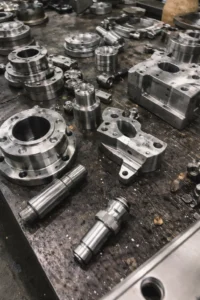
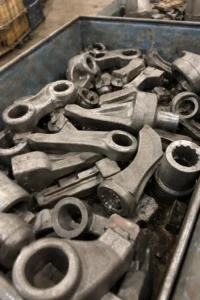
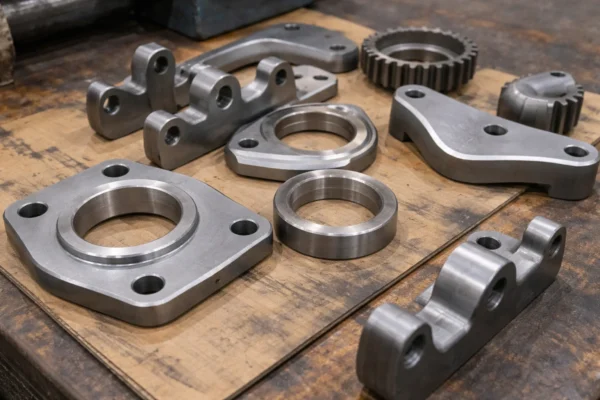
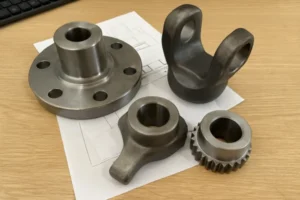
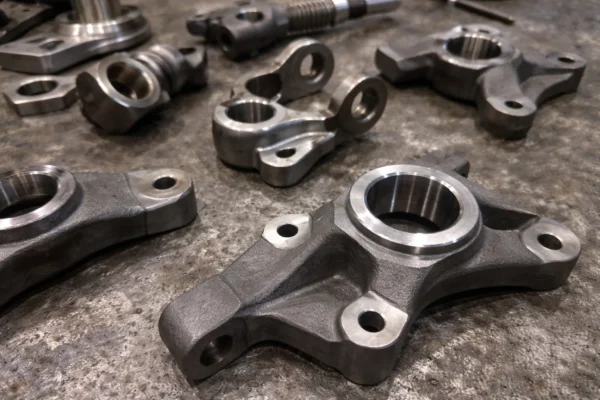
Custom forged metal components with machined surfaces, including lever arms and linkage parts.

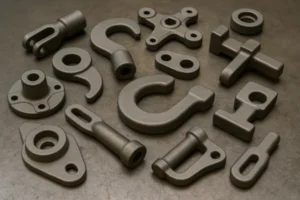
Custom forged parts of metal

As a professional metal forging supplier, we are committed to providing high quality, customized metal forging solutions to our customers around the world. With many years of industry experience and advanced production technology, our forgings are widely used in aerospace, automotive manufacturing, energy, machinery and equipment and other fields. We provide free forging, die forging, rolling forging and precision forging and other processes to meet the different needs of various customers. Whether small-scale customization or mass production, we can ensure high-precision, high-intensity products, and provide customers with quality after-sales service. Choose Us, you will get efficient, reliable metal forging products, help your business success.

Table of Contents

Why Choose Prime for Custom Metal Forgings?

From closed-die forgings to fully machined components, Prime combines certified quality, deep forging know-how, and factory-direct pricing to keep your projects on time and on budget.

Verified ISO 9001 Quality

Our forging plant runs under ISO 9001 quality management with full material traceability, controlled heat treatment, and dimensional inspection for every batch of custom metal forgings.

Three Decades of Forging Expertise

Since 1993, we have been supplying forged parts for automotive, construction, energy and industrial machinery, helping OEMs optimize forging design, cost and performance.

Full-Spectrum Customization

We support a wide range of forged materials, shapes and volumes – from prototype forgings to long-term production, including machining, surface treatments and assembly.

Guaranteed Timelines with In-House Control

In-house tooling, forging and machining allow us to control the full process and offer reliable lead times for custom forged parts, even on urgent projects.

Direct-to-Customer Pricing

As a direct forging manufacturer with optimized material yield and process flow, we offer competitive pricing without trading company mark-ups on your custom forgings.

Precision-Forged Components Manufactured by Prime

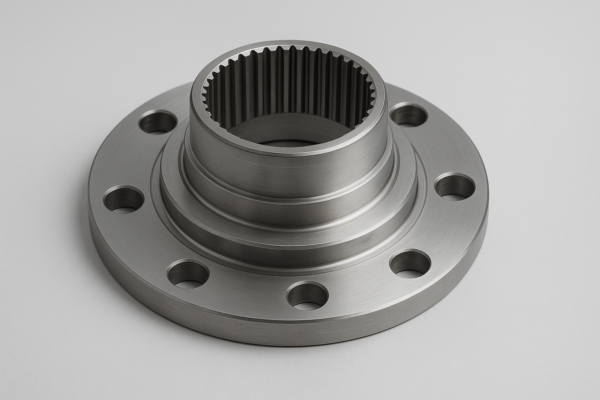
Closed-Die Steel Flange Forging

Closed-Die Steel Flange Forging

Closed-die forged flange with high tensile strength. Engineered for automotive, industrial machinery, and hydraulic applications. Optimized grain flow for superior structural integrity.

High-quality custom-made metal parts

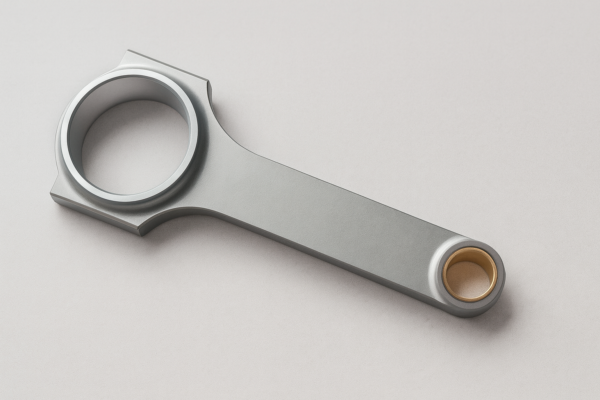
Alloy Steel Connecting Rod Forging

Engine-grade forged connecting rod with high fatigue resistance. Machining allowance reserved for finishing; supports heat treatment and surface coatings.

Alloy Steel Connecting Rod Forging

Aluminum Lightweight Bracket Forging

Lightweight aluminum forging (6061/6082/7075) engineered for strength and reduced weight. Common in aerospace, transport equipment, and structural assemblies.

Stainless Steel Shaft Collar Forging

Stainless Steel Shaft Collar Forging

Corrosion-resistant shaft collar forging with stable mechanical properties. Ideal for food machinery, marine parts, and industrial equipment.

High-quality custom-made metal parts

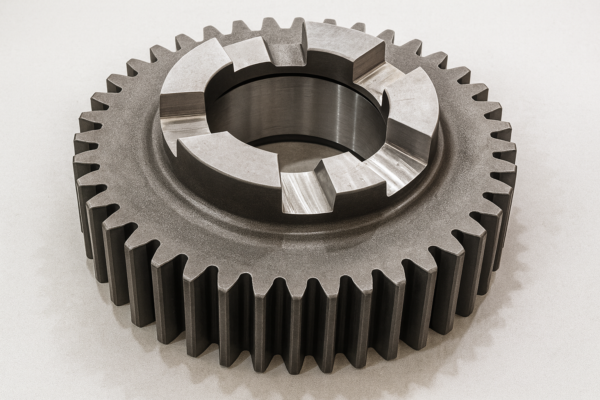
Custom Forged Gear Blank

High-precision forged gear blank designed for heavy-duty power transmission. Provides superior strength compared with casting or machining.

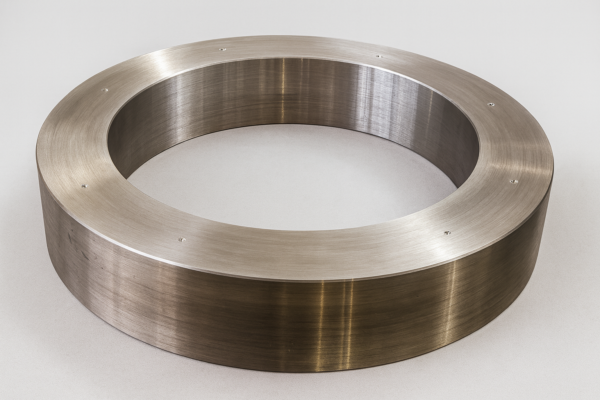
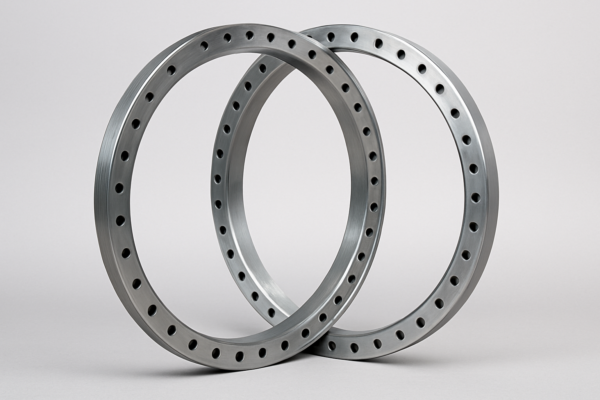
Seamless Ring Forging (Carbon & Alloy Steel)

Seamless Ring Forging (Carbon & Alloy Steel)

Hot-rolled seamless forged ring with excellent impact and pressure resistance. Suitable for bearings, reducers, wind-power, and industrial machinery.

Application fields of customized metal castings

Forging delivers high strength, improved grain flow, and reliable fatigue performance—ideal for critical components used in demanding industries. Below are common application areas we support with custom forging + CNC finishing.
High Strength Fatigue Resistance Stable Repeatability CNC Finish Available
Custom forged automotive metal components and machined interfaces
Automotive

Chassis, Steering & Powertrain Forgings

Strength-to-weight optimization for fatigue-critical applications

  • Control arms, knuckles, brackets, yokes
  • Gear blanks, hubs, flanges, shafts
  • CNC machined datums, bores & threads
4140 / 42CrMo4 Q&T CMM Inspection
Industrial machinery forged parts with precision machining
Industrial Machinery

Load-Bearing & Wear-Critical Components

Forged parts built for shock loads, torque, and long service life.

  • Mounting blocks, couplings, clevises
  • Bearings seats, precision holes, keyways
  • Heat-treat + finish machining for fit
SPC Ready Fixture Machining Traceability
Forged metal parts for oil and gas equipment with machined sealing faces
Oil & Gas

Pressure & Sealing-Interface Forgings

For harsh environments requiring robust material performance.

  • Flanges, connectors, valve components
  • Machined sealing faces & bolt patterns
  • MTR/EN 10204 3.1 documentation
NACE Options UT/MT Leak-Test Support
Forged parts for agriculture and construction equipment
Agriculture & Construction

Heavy-Duty Equipment Forgings

Designed for impact, abrasion, and extreme duty cycles.

  • Linkages, pins, hooks, brackets
  • Wear surfaces with hardening options
  • Coating + packaging for export delivery
Induction Hardening Shot Blasting Export Packing

General Hot Selling Products

Customized metal forgings can be divided into several main types according to the processing technology, each process has its unique characteristics and applications. The following are some of the common types of metal forging parts grouped by process and their characteristics and areas of application:

High-quality custom-made metal parts

Free Forging

Features:

Free forging is through mechanical forging hammer or hydraulic press and other tools, the metal billet heating to the appropriate temperature, through the beating, pressing and other ways to change the shape of the metal. This process does not depend on the die, the shape of the workpiece is relatively simple and the size is large.

Applications:

Free forging is widely used in heavy machinery, metallurgical equipment, pressure vessels, ships, mining machinery and other fields. Commonly used in the manufacture of large-size forgings, such as shafts, rings, discs and so on.

Die Forging

Features:

Die forging is the metal billet heating, into the mold through the press or hydraulic press for compression molding. Die forging can produce forgings with high precision and uniform size, and can handle parts with complex shape.

Applications:

Die forging is widely used in aerospace, automotive, electronics, engineering machinery and other high-precision requirements of the field. Especially suitable for the production of gears, bearings, automotive engine parts, aerospace parts.

High-quality custom-made metal parts
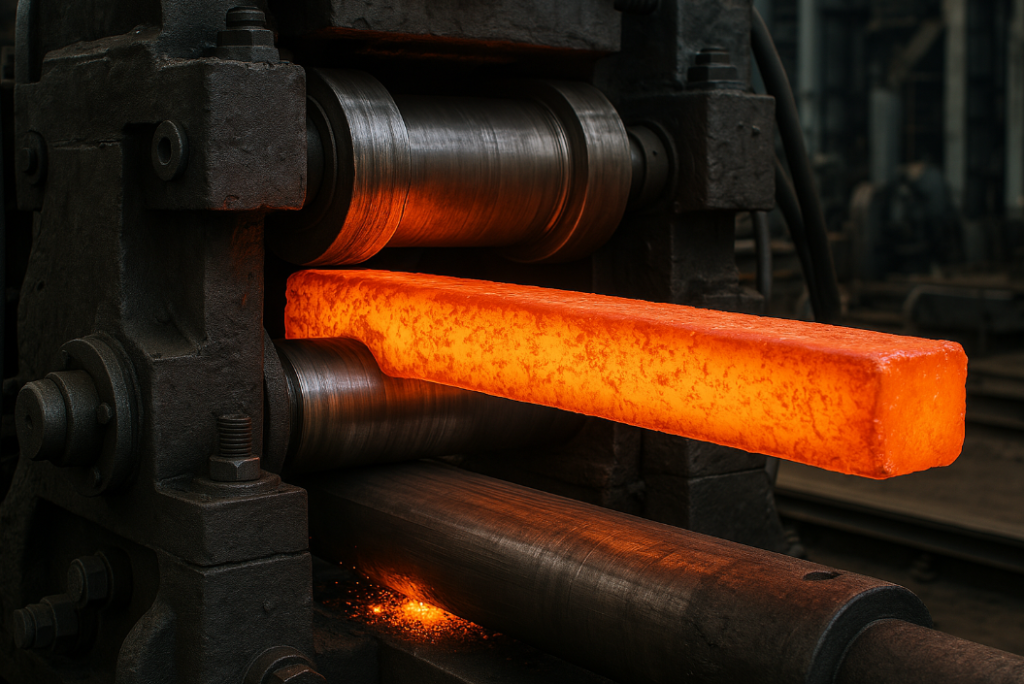
Rolling forging of a red-hot steel bar through industrial rollers for custom forged components

Rolling Forging

Features:

Rolling forging is through rolling tool on the metal billet for rotary forging, so that it gradually formed in the rotation of the required shape. This process can effectively improve the microstructure and properties of metal materials, and increase the strength and durability of parts.

Applications:

Roll forging is mainly used for shafts, gears, transmission parts and other parts that require high strength and long life. It is widely used in automobile, aerospace, railway and other industries.

Precision Forging

Features:

Precision forging is to improve the dimensional accuracy, surface quality and internal structure of products through more precise control on the basis of conventional forging process. Precision forgings often need no or a small amount of subsequent processing.

Applications:

Precision forging is mainly used in high-end markets with strict requirements on size and shape, such as aerospace, precision machinery, medical equipment and other industries. Commonly used in the manufacture of small complex parts, such as engine parts, instrument accessories, etc. .

High-quality custom-made metal parts
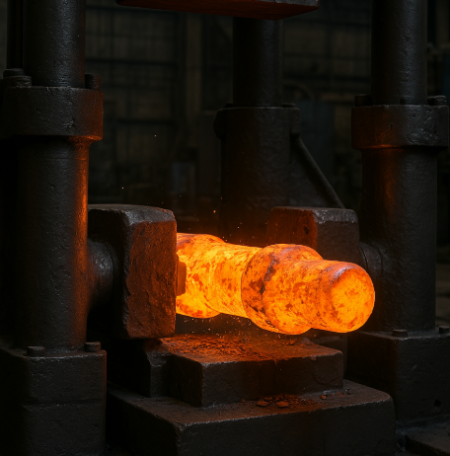
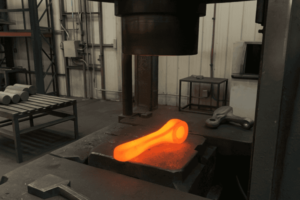
Open-die forging of a red-hot steel billet in a hydraulic press for custom forged shafts

Open die Forging

Features:

Open die forging is the use of open-die forging process, usually applied to simpler shapes. Compared with the closed die forging, the die cost is lower, and the process is suitable for small batch production.

Applications:

Suitable for forgings with larger size or irregular shape, such as construction machinery, mining equipment, building materials, etc. .

Closed die Forging

Features:

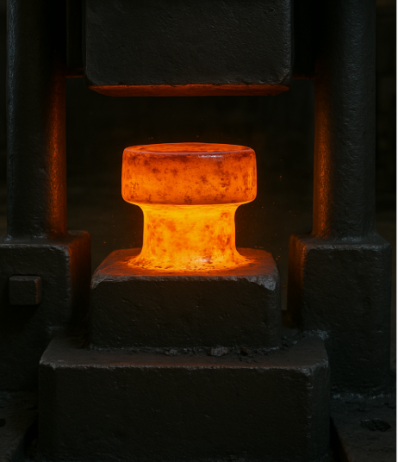
Closed-die forging is to put the heated metal blank into the precision die, and the metal is filled into the whole die cavity by the pressure of the hydraulic press or the press to obtain the high-precision forging. This process is suitable for mass production high precision parts.

Applications:

Closed-die forging compresses preheated metal billets within CNC-machined tooling under high-pressure hydraulic presses, achieving net-shape precision.

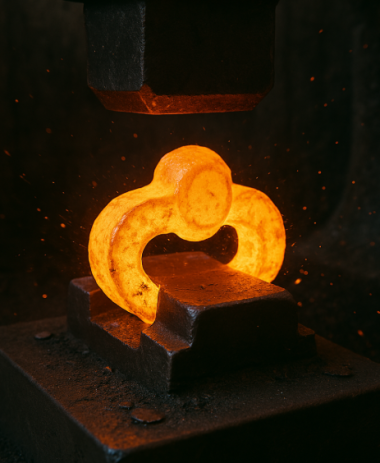
Closed-die forging of a red-hot steel preform under a forging press for near-net-shape components
High-quality custom-made metal parts

Superplastic Forging

Features:

Superplastic forging uses the superplastic characteristics of metal at a specific temperature and strain rate to carry out forming process. This process can produce extremely complex shapes, and the internal structure of the parts is more uniform.

Applications:

Mainly used in aerospace field, especially for complex parts with high requirements such as aero-engine, Turbine Blade, etc. .

In Summary

Different metal forging processes are widely used in different industries and application fields because of their characteristics and adaptability. Selecting the appropriate forging process can improve the production efficiency, reduce the cost, and ensure the mechanical properties and quality of the parts.

Common Raw Materials for Custom Forged Parts

Forging starts with the right billet/bar material. Below is a practical material table commonly used for OEM forged components—covering carbon steel, alloy steel, stainless, and aluminum forging options. We can supply mill test reports (MTR/EN 10204 3.1) and heat-treat certificates upon request.

Tip: On mobile, swipe the table left/right.
Material Category Common Grades / Equivalents Typical Heat Treatment Best-Fit Applications Selection Notes
Carbon Steel
Cost-Effective
AISI 1018 / 1020
C45 (EN 1.0503) / 1045
Normalizing / Anneal
Optional Q&T (by design)
Brackets, yokes, general-duty forged hardware Great value for non-extreme loads. Apply zinc/e-coat/powder coating for enhanced corrosion resistance in humid environments Use C45/1045 when higher strength than mild steel is needed.
Alloy Steel
High Strength
4140 / 42CrMo4 (EN 1.7225)
4340 (EN 1.6582) / 40Cr
Q&T (Quench & Temper)
Optional induction hardening
Automotive, power transmission, heavy-duty mounts Preferred for fatigue and shock loads. Define hardness range + mechanical property targets. Consider machining allowance and distortion control after heat treat.
Stainless Steel
Corrosion Resistant
304 / 304L (EN 1.4301 / 1.4307)
316 / 316L (EN 1.4401 / 1.4404)
Solution anneal (when needed)
Passivation optional
Marine hardware, food equipment, outdoor mechanisms Choose 316/316L for chloride environments. For appearance-critical parts, specify surface finish and pickling/passivation requirements.
Aluminum
Lightweight
6061 (forged/machined use)
7075 (high strength applications)
T6 (heat treated)
Anodizing optional
Lightweight brackets, sporting, aerospace-style fixtures 6061 balances machinability and corrosion resistance. 7075 offers higher strength but needs careful corrosion considerations (coatings recommended).
Alloy Steel
Wear Resistance
8620 / 20CrNiMo
52100 (bearing steel, selected cases)
Carburizing + temper (8620)
Through hardening (52100)
Gears, bushings, wear-critical forged components Use case hardening when you need a tough core + hard surface. Specify case depth, hardness profile, and grinding requirements if needed.
All Materials
Documentation
MTR / Heat No. Traceability Per spec: Q&T / Normalizing / Anneal / T6 OEM forged parts with stable repeatability For stable production, define: material standard + heat treatment + test requirements (chemistry, tensile, hardness) and agree on machining allowance + critical datums.

Quick tip: For load-bearing forged parts, alloy steel (e.g., 4140 / 42CrMo4) with Q&T is a common baseline. For corrosion exposure, upgrade to 316/316L or add protective coatings.

Send Drawing for Material Recommendation

Quality Assurance & Process

The production process of metal forging parts is accurate and efficient, ensuring that each part can meet the strict requirements of customers. Our manufacturing process consists of the following key steps:

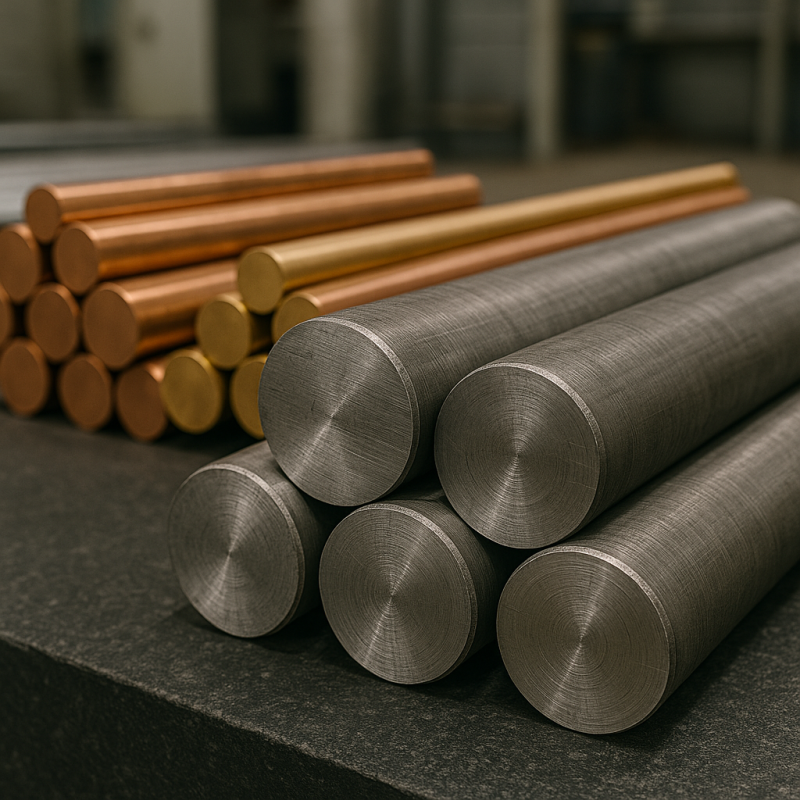
Step 1:Material Selection

Select the appropriate metal raw materials, usually steel, aluminum alloy, copper alloy, etc. according to customer requirements and product performance requirements, select different metal materials.

Metal bar stock selection with steel, copper, and brass rods for CNC machining and OEM parts
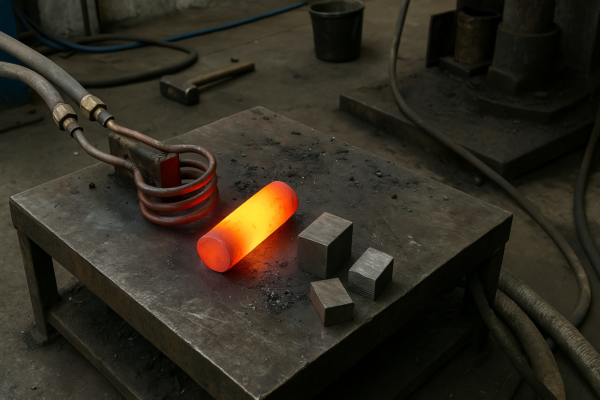
Heating steel billet with an induction coil before forging, with metal blocks on a workshop table

Step 2:Heat Up

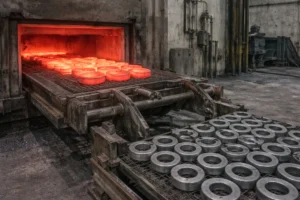
The metal raw material is heated to a suitable temperature so that it has enough plasticity for subsequent forging. Different materials are heated at different temperatures, usually between 600 °C and 1200 °C.

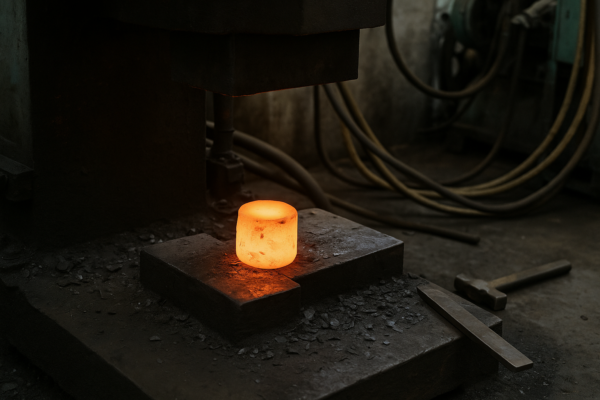
Step 3: Forging

The heated metal is placed in a forging die and shaped by mechanical force or pressure. Common forging methods include:

Free forging: shaping of metal blanks by direct action of a hammer or press.

Die forging: metal into a closed mold, the use of the shape of the mold on the metal pressure for shaping.

Hot forging setup with a glowing steel billet on an anvil block inside a forging press
High-quality custom-made metal parts

Step 4: Cooling

After forging, the metal parts need to be cooled. The cooling rate can be controlled according to the nature of the metal and requirements, cooling process can be used air cooling, water cooling and other methods.

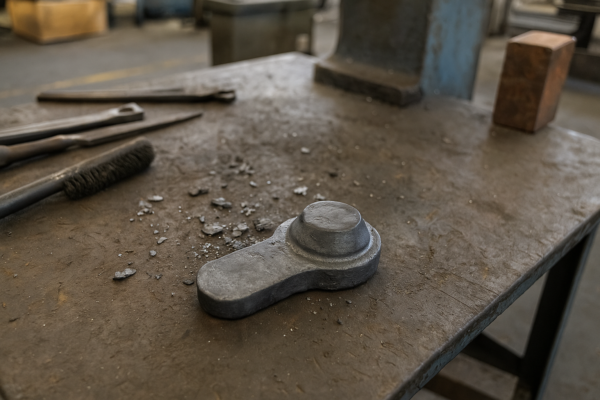
Step 5: Post-processing

In order to eliminate the internal stress and improve the microstructure of the metal, the forgings need to be treated after cooling. Common post-processing methods include:

Annealing: Slow cooling after heating to a certain temperature to reduce the hardness and brittleness of the metal.

Normalizing: Heating to high temperature and then air cooling to improve the structure and properties of metal.

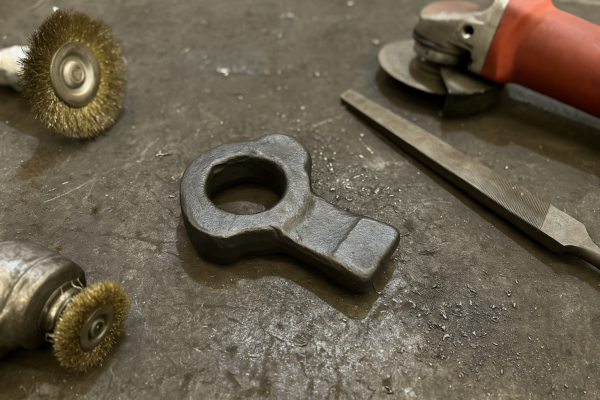
Post-processing a forged steel part on a workbench with wire brush wheels and angle grinder tools
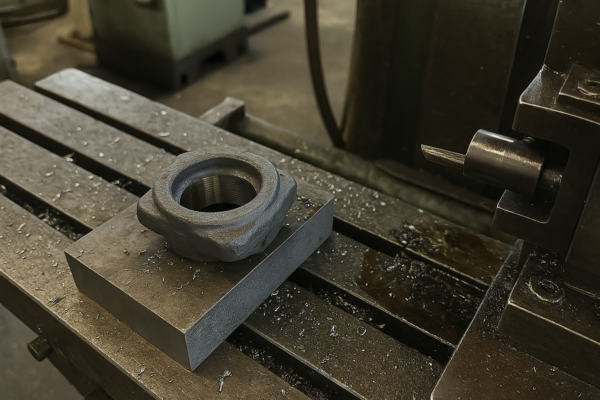
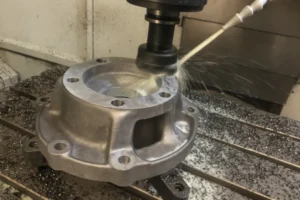
CNC machining a forged steel component with an internal bore on a machine table with cutting tool

Step 6:Machining

After the forgings have been post-treated, finishing may be required. This includes turning, milling, grinding, etc. to ensure that the product dimensions, Surface finish, etc. meet the requirements.

Step 7:Inspection And Testing

Carry out strict quality inspection and performance test on the forgings, including size inspection, hardness test, mechanical property test, etc. , to ensure that the products meet the design requirements.

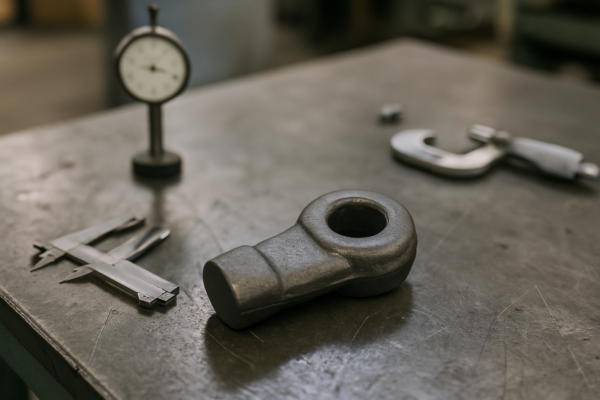
Inspection and testing of a forged steel eyelet part using calipers and a dial indicator gauge
High-quality custom-made metal parts

Step 8:Surface Treatment

If necessary, forgings may also be surface treatment, such as spraying, galvanizing, heat treatment, etc. to enhance its corrosion resistance, wear resistance and other properties.

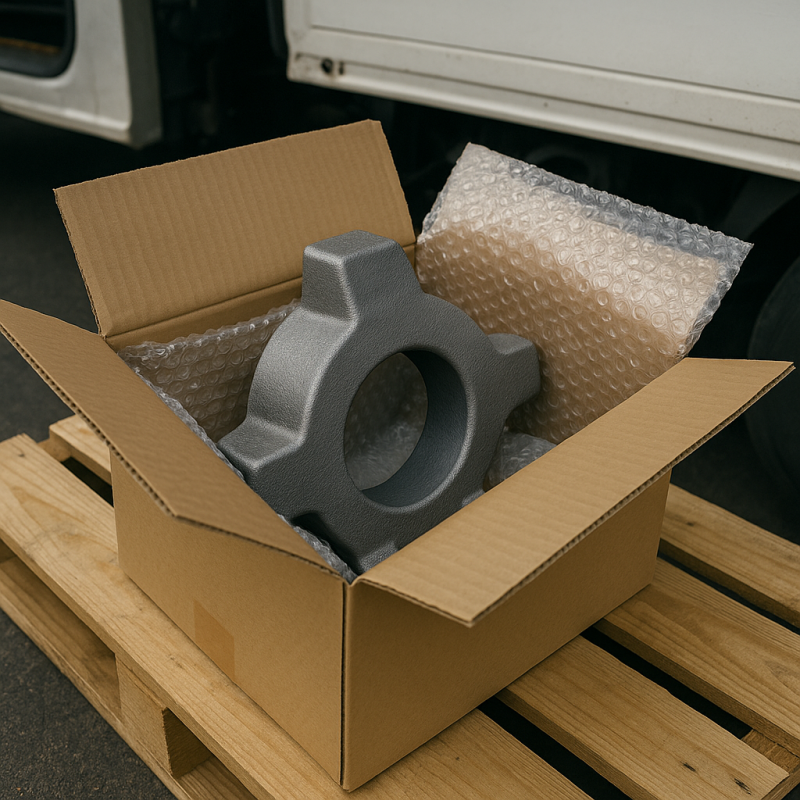
Step 9:Packaging And Delivery

After completion of all processes, the metal forgings will be packaged to ensure that they are not damaged during transportation for final delivery to the customer.

Packaging of a forged metal component in a cardboard box with bubble wrap on a pallet for delivery
High-quality custom-made metal parts

Step 10: Delivery Of Finished Product

Upon completion of all inspection and post-processing, the castings will become the final product, ready to be delivered to the customer or used for assembly.

Want to know how to compress lead times?

In order to shorten the production and delivery cycle, we suggest that you tell us your needs in detail, and we will adjust the strategy flexibly according to your requirements to ensure your production and help you succeed!

Surface Finishing for Custom Metal Forgings

Enhance part longevity, aesthetics, and assembly efficiency through advanced surface treatments

From scale removal to corrosion protection, PRIME helps you choose the right post-forging surface treatment based on material, tolerance, and end-use. Get consistent appearance, controlled roughness, and reliable coating adhesion — without adding unnecessary cost.

  • Scale / oxide removal
  • Deburring & edge smoothing
  • Coating-ready surface prep
  • Corrosion resistance
  • Appearance & branding
  • Traceability marking options
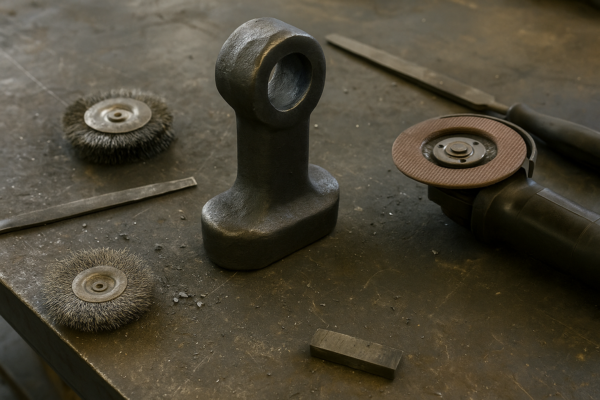
Custom forged steel parts after surface finishing on a workshop bench, clean edges and uniform coating-ready surface

Standardized finishing routes

Clear options for carbon steel, alloy steel, stainless steel, aluminum, and copper alloys — aligned with your drawing notes and specs.

Coating adhesion you can trust

Surface prep controls (cleanliness, profile/roughness, and contamination prevention) to improve paint/powder/plating consistency.

Inspection after finishing

Thickness checks, salt-spray targets, adhesion tests, and final dimensional verification — especially important for threaded and press-fit features.

Typical post-forging finishing flow

We recommend a simple, repeatable route. Your exact steps depend on forging scale, machining allowance, and coating requirement.

  1. 1) Scale removal & cleaning Shot blasting / tumble / alkaline wash to remove oxide scale and surface debris.
  2. 2) Deburring & edge smoothing Vibratory finishing / manual deburr for safe handling and better assembly.
  3. 3) Heat treatment (if required) Quench & temper / normalization / stress relief, followed by cleaning again.
  4. 4) Precision machining (if needed) Critical dimensions finished after forging to meet tight tolerances and surface roughness targets.
  5. 5) Surface protection Pickling/passivation, plating, black oxide, painting, powder coating, or oil film — based on your environment.
  6. 6) Final inspection & packing Thickness/appearance checks, corrosion packaging (VCI if needed), labeling, and traceability.

Finishing options (choose what fits your part)

Expand the items below to see what each treatment is best for.

Shot blasting / grit blasting Remove scale + create a clean, uniform profile
Best for: carbon/alloy steel forgings with visible scale.
  • Improves coating adhesion and visual uniformity.
  • Controls surface profile for paint/powder coating.
  • Can be combined with masking for critical fits.
Vibratory finishing / tumbling Deburr edges + improve touch & appearance
Best for: small/medium parts where edge safety matters.
  • Reduces micro-burrs and sharp edges from trimming.
  • Creates consistent “production-ready” look for batches.
  • Optional media selection to protect cosmetic surfaces.
Pickling / passivation (stainless) Remove iron contamination + enhance corrosion resistance
Best for: stainless steel forgings and assemblies.
  • Helps restore a protective oxide layer (after machining/welding).
  • Reduces risk of surface rust from handling contamination.
  • Ideal for food, medical, and outdoor environments.
Powder coating / e-coating / painting Durable protection + consistent color appearance
Best for: brackets, levers, automotive/industrial parts.
  • Wide color options and good salt-spray performance (with proper prep).
  • Masking options for threads, press fits, and datums.
  • Optional primer + top coat for harsh environments.
Zinc / nickel plating (select areas or full) Corrosion resistance + electrical/assembly benefits
Best for: steel components requiring corrosion protection and controlled appearance.
  • Optional clear/black finishes and thickness control.
  • Good for fastener-like features and mating surfaces.
  • Engineering note: specify thickness range + post-plate bake if needed.
Black oxide / phosphate / oil film Low-cost protection + good for internal parts
Best for: tooling parts, internal assemblies, and non-cosmetic components.
  • Helps reduce flash rust during storage and shipping.
  • Stable dimensions (thin layer), suitable for fits.
  • Pairs well with VCI packing for export.

Common finishing specifications & checks

If you already have a standard, just send it with your RFQ. If not, we can recommend targets based on your application.

Item Typical target / control Notes
Surface roughness (Ra) As-forged / blasted / machined as required Specify only on functional faces to control cost.
Coating thickness Defined range (µm) + masking plan Critical for threads, press fits, and tight tolerances.
Adhesion Cross-hatch / pull-off (by requirement) Depends heavily on cleaning and surface profile.
Corrosion performance Salt-spray hours or environment-based target Recommend VCI packing for ocean shipments.
Dimensional verification Final check after finishing Finishing can slightly affect fits; verify critical CTQs.

Note: For forged parts with tight fits, we can build a “masking + thickness window” plan to keep assemblies stable across batches.

Need the best finish for your forging?

Send your drawing (PDF/DWG/STEP), material, and corrosion requirement. We’ll reply with a recommended finishing route (prep steps, coating type, masking notes, and inspection checkpoints).
The Common Pitfalls When Purchasing

Please note that the final cost depends on the customized service you require, the specifications of the raw materials used, the relevant national laws, and the distance of transportation. Take the example of booking a tall container of products:

FAQS

What is your Minimum Order Quantity (MOQ)?

For custom parts, we don’t set a fixed MOQ. The economic quantity depends on the part’s size, material, and process (forging / casting / machining). For most projects, trial orders start from 50–200 pcs, while mass production usually begins from 500 pcs and up. If you are developing a new project or need engineering samples, we are flexible and can discuss a smaller first batch.

Yes. We can provide samples or pre-production parts for approval before mass production. Sample costs depend on the complexity of the part and whether new tooling is required. In many cases, the sample charge can be deducted from the first mass order. Courier freight is normally paid by the customer, or shipped on your account (DHL / FedEx / UPS / TNT).

Lead time depends on part complexity and quantity, but as a reference:

  • Tooling & initial samples: about 2–4 weeks after drawing confirmation and deposit.

  • Mass production: usually 3–5 weeks after sample approval.
    We will always confirm a detailed schedule in our quotation and keep you updated during production. If you have an urgent deadline, please tell us in advance so we can plan capacity accordingly.

We accept most common 2D and 3D engineering formats, including STEP (.step / .stp), IGES (.igs / .iges), Parasolid (.x_t), DWG, DXF, and PDF. For best accuracy, we recommend sending both 3D models (STEP/IGES) and 2D drawings with dimensions and tolerances. If you are unsure which format to use, send what you have and our engineers will review it for you.

Our Certificate

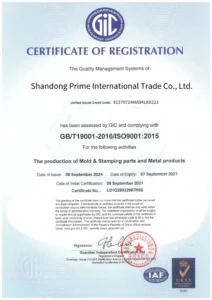
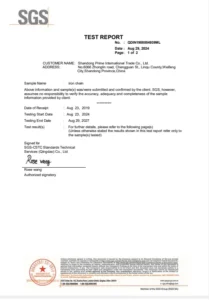
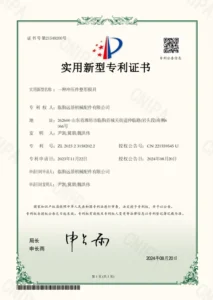
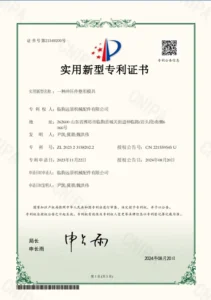
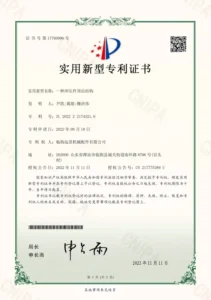
Third-party verification supports supplier approval. Below are our ISO 9001 certificate, SGS test report, and CNIPA utility model patents. If you need a PDF copy for internal review, tell us which document you require.

A Brief Self-Nomination​, Why Choose Prime?

Choose Us, you will get cost-effective, high-quality, on-time delivery of metal forgings solutions.

Why Choose Prime

Experience: We have more than 30 years of metal forging production experience, can provide a variety of industries with high-quality custom metal forgings.

Professional team: Our Team of Engineers is familiar with the forging process and can provide precise design and production services.

High quality assurance: We are ISO 9001 certified to ensure that each forging meets the highest standards of quality.

Rapid Response: We are committed to providing fast sample production and production cycle, to ensure that your needs can be met in a timely manner.

Global Services: No matter where you are, we can provide you with quality services to ensure the smooth progress of your business.

Your Trusted Resource for Metal Parts Sourcing

Get in touch

Custom Hardware Parts Made Easy

At Prime, we simplify the process of sourcing high-quality, customized hardware parts for your business. Follow these three simple steps to get started:

Tell Us Your Requirements

Share detailed information about your needs, including drawings, reference images, and any specific ideas or specifications you have in mind.

Receive Tailored Solutions & Quote

Based on your requirements and design, we’ll provide a custom solution and send you a detailed quote within 24 hours.

Approve for Production

Once you approve the design and quote, we’ll begin mass production and take care of the shipping, ensuring timely delivery.

Get a Free Quote

Reach out to us for a free quote and expert advice on your custom hardware needs. At Prime, we’ll provide the right solution for your project, ensuring quality and precision every step of the way.

Send a message