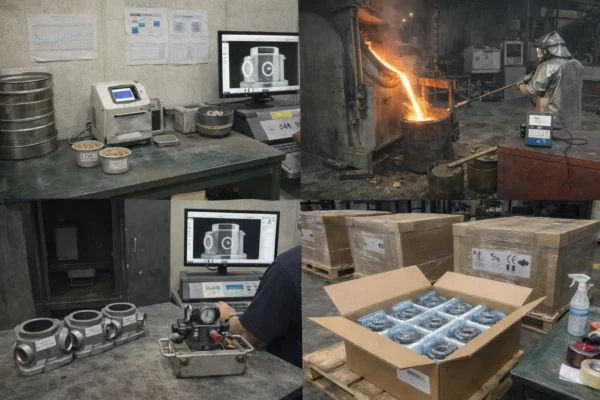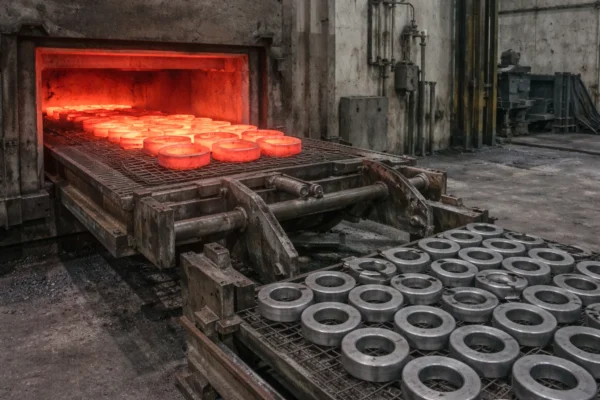
Finding a reliable CNC machining partner can feel impossible and puts you at risk of project delays, poor quality, and budget overruns. This guide gives you the framework to choose the right one.
You choose a CNC machining supplier in China by first defining your quality and delivery needs, then shortlisting ISO 9001–certified factories. Next, verify their equipment and tolerances, review case studies in your industry, and finally, run a small trial order with a clear RFQ before mass production.

At Prime, we are a direct CNC machining factory in China, not a trading company. I’ve worked with CNC machining and custom parts projects for over 30 years and have seen how the right supplier makes a project soar, while the wrong one causes endless headaches. That factory-side experience is what this guide is built on.
This guide is designed to help you find a supplier you can trust for the long term. Let’s start with why so many successful companies look to China.
Why Should You Outsource CNC Machining to China?
Your local manufacturing costs keep rising, directly impacting your profit margins. Outsourcing to a mature manufacturing hub like China is a proven strategy to solve this and gain a competitive edge.
Companies outsource CNC machining to China to leverage significant cost advantages, access massive and scalable production capacity, and tap into a highly developed supply chain for materials, tooling, and finishing services. This offers unmatched value for industrial buyers.

For decades, China has been "the world’s factory," but the landscape has evolved dramatically. Today, it’s about a total value proposition that combines cost, technology, and efficiency. We invested heavily in advanced CNC machines and quality control systems because global demand shifted. Buyers don’t just want cheap parts; they want high-quality, precision-engineered components delivered reliably. The infrastructure here is built for it. From raw material sourcing to complex logistics, the entire ecosystem supports high-volume, high-quality manufacturing, making China a strategic choice.
For a broader comparison of suppliers and service models, see our 2025 guide to top-rated CNC machining services for custom parts in China.
What Are the Steps to Choose a CNC Machining Supplier in China?
Finding the right partner requires a structured process, not guesswork. Following these steps systematically minimizes your risk and lays the foundation for a successful long-term relationship.
- Define Your Requirements: Clearly document part specifications, annual volume, target costs, and quality standards.
- Shortlist ISO 9001–Certified Factories: Use platforms like Alibaba, Google, or trade shows to find potential suppliers with verifiable ISO 9001–certified factories.
- Compare Technical Capabilities: Assess their equipment lists, stated CNC machining tolerances, and experience with your required materials.
- Request Quotes (RFQ): Send the exact same, complete RFQ package to your top 3–5 candidates for a true "apples-to-apples" comparison.
- Audit Sample Parts & QC Reports: Before placing a large order, get sample parts. Review them and their accompanying inspection reports meticulously.
- Start with a Pilot Order: Place a smaller, low-risk trial order to test their real-world performance on communication, quality, and delivery.
What Criteria Should You Use to Choose a CNC Machining Supplier in China?
Picking a supplier from a website is a gamble. Use a structured evaluation process based on tangible evidence to protect your business and ensure consistency.
A robust evaluation must include four areas: Quality Management Systems (QMS), Technical Capability, Communication, and Proven Experience. Asking for proof in these areas separates professional factories from simple workshops.

I remember a conversation with Kevin, a buyer for electronic components. His biggest pain point was inconsistency. A supplier would send a perfect first batch, but quality would drop on subsequent orders. This happens when a supplier lacks a repeatable, documented quality process. That’s why the first thing we show a potential partner is our ISO 9001 certificate. It’s proof that we have a system for everything.
Your Supplier Vetting Checklist
Use this checklist to systematically evaluate potential partners.
1. Quality Management & Performance
- Do they have ISO 9001 certification? (Ask for the certificate)
- Can they provide documentation such as First Article Inspection (FAI) reports, PPAP-style submissions, and 3.1 material certificates when needed?
- What is their On-Time Delivery (OTD) rate? (Ours is 98.5% over the last 24 months)
- What is their First-Pass Yield or a similar quality metric? (Ours is 99.2% on >1 million parts)
For a broader view on ISO-based supplier evaluation, see this step-by-step guide to ISO 9001 supplier management.
2. Technical Capability & Equipment
- Does their equipment list match your project’s needs (e.g., multi-axis CNC machining)?
- What are their typical CNC machining tolerances? (We hold ±0.01 mm, up to ±0.005 mm on critical features)
- What is their maximum work envelope? (Ours is 1000 x 600 x 500 mm)
- What materials do they commonly work with? (We handle Al 6061/7075, SS 304/316, Carbon Steel, Brass, Copper, and Engineering Plastics like POM, PEEK). For a full overview, visit our CNC machining services in China page.
3. Communication and Project Management
- Is their team fluent in English?
- What is their typical response time to RFQs? (Should be < 24 hours).
- Will you have a dedicated project manager?
Want a factory-side review of your drawings? Upload your CNC machining RFQ here and our engineers will send feedback within 24 hours.
For a deeper dive into high-precision work and materials, see our high-precision custom CNC metal parts cost, materials & application guide and our complete guide to sourcing high-precision CNC machined metal parts from China.
Recommended reading for CNC sourcing in 2025
- Top-Rated CNC Machining Services for Custom Parts in China: 2025 Guide
- How to Source High-Precision CNC Machined Metal Parts from China (Complete Guide for OEM Buyers)
- High-Precision Custom CNC Metal Parts: Cost, Materials & Application Guide
- How to Get Fast Quotes for Sheet Metal Parts (and CNC Components)
What Are Common Problems with CNC Suppliers and How Can You Avoid Them?
You’ve heard the horror stories: delayed shipments, bad parts, and communication breakdowns. Knowing the red flags is the first step to avoiding them.
The most common problems are poor communication, inconsistent quality, and unexpected delays. You avoid them by establishing crystal-clear requirements, insisting on a quality plan, and getting a firm production timeline before paying a deposit.

A new client once came to us in a panic. Their previous supplier had shipped 10,000 aluminum parts, but half had the wrong surface finish. To prevent this, we create a "Golden Sample" for every new project, signed off by both sides, and every production batch is checked against this approved reference sample.
Case Study: Rescuing a Failing Project for a US OEM
- Problem: A client making high-end audio equipment was experiencing repeated delays and an 8% rejection rate on anodized 6061 aluminum housings from their previous supplier.
- Our Solution: We re-engineered the work-holding fixtures for better stability and added a 100% visual inspection after the anodizing stage.
- Result: The scrap rate was reduced to under 0.5%, and we have maintained 100% on-time delivery over the last six production batches.
Our Approach to Packaging and Logistics
WWe also pay close attention to export packaging and logistics to prevent damage in transit. For CNC parts, we typically use anti-rust bags, foam or compartment trays, strong export cartons, and fumigation-free pallets. We can ship under FOB, CIF, or DAP terms and will share detailed packing photos and weight lists before your shipment leaves our factory.
What Should Your CNC Machining Request for Quote (RFQ) Include?
Vague RFQs get vague, inaccurate quotes. A complete RFQ gets you a fast, accurate price and signals that you are a serious, professional buyer.
A perfect RFQ must include 2D and 3D CAD files, material specifications, required quantities, specific tolerances for critical features, and all surface finish requirements. The more detail you provide, the better.**

The quality of the quote you receive is directly proportional to the quality of the RFQ you send. A well-prepared RFQ shows you know what you want and is the foundation for a smooth, professional partnership. If you want to speed up your quoting process, see our guide on how to get fast quotes for sheet metal and CNC parts.
Building the Perfect RFQ Package:
- Design Files: Provide both 3D CAD files (STEP, IGS) and 2D technical drawings (PDF).
- Technical Specs: Specify material (e.g., Aluminum 6061-T6), quantities, and surface finish requirements (e.g., Anodize Type II, Black).
- Commercial Details: Include your target price if you have one and the final shipping destination.
- Inspection Standard: If you already use an inspection standard (for example, ISO 2859 with AQL 1.0–2.5), include it in your RFQ so the supplier can quote the correct inspection scope and cost. (For more background, see how AQL inspection levels work in ISO 2859-1.)
Ready to see how we handle a professional RFQ? Upload your CNC machining drawings to our secure portal for a free, detailed quote within 24 hours.
Conclusion
Choosing the right CNC machining supplier in China is a strategic decision. If you’re currently comparing Chinese CNC suppliers, you can use this checklist with any factory—and if you’d like a factory-side review, you’re welcome to send us your RFQ package here.
CNC Machining Supplier FAQ
1. How long does CNC machining in China usually take?
Typically, samples can take 7–15 days. Mass production lead time is usually 20–35 days. A good supplier will provide a detailed timeline with their quote, factoring in material procurement, machining, finishing, and inspection.
2. Is it safe to share my engineering drawings with a Chinese supplier?
Yes, with a reputable factory. Professional suppliers like us take Intellectual Property (IP) protection seriously. We readily sign Non-Disclosure Agreements (NDAs) and have strict internal controls to ensure your designs remain confidential.
3. What is the typical Minimum Order Quantity (MOQ) for CNC parts in China?
This varies. For simple parts, MOQs might be 100–500 pieces. For complex parts, many factories are willing to start with trial orders of 10–50 pieces. We are flexible and often focus on Minimum Order Value (MOV) over MOQ.
4. How do I handle quality issues with an overseas supplier?
A good supplier has a clear, pre-agreed process for handling quality claims. Before production, align on inspection standards and what counts as a non-conforming part. If you still receive non-conforming parts, provide clear evidence (photos, measurements), and a reliable partner will offer to remake the parts or issue a credit without arguments.
5. Is it better to work with a trading company or a direct factory?
For industrial buyers seeking consistency and cost-effectiveness, working with a direct factory like Prime Fabworks is almost always better. You get direct communication with engineers, greater transparency, better cost control, and more robust quality assurance.
👉 Ready to evaluate a CNC supplier? Upload your drawings and RFQ to Prime for a factory-side review within 24 hours.