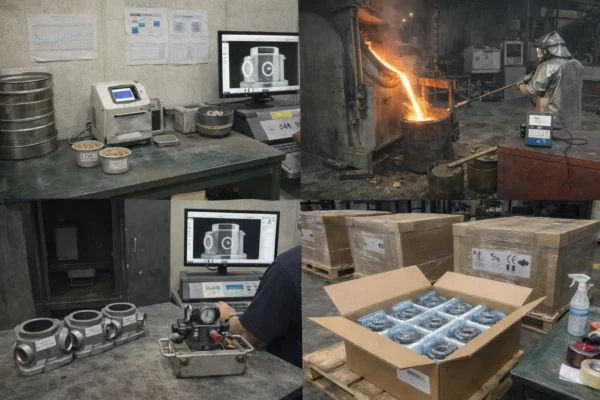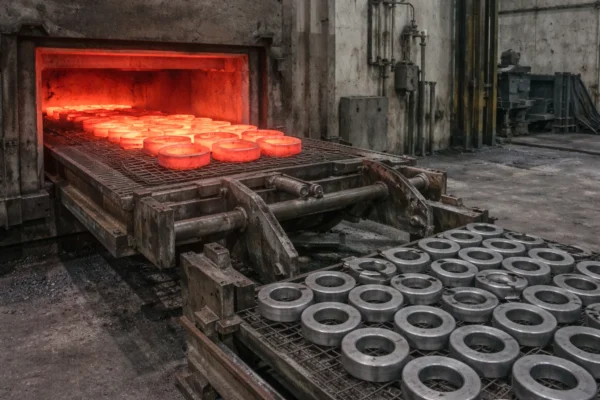

Cheap stamping quotes look safe on paper. But hidden die drift and coil variation bite later. I wrote this guide to stop that pain.
To source stamping parts with confidence, I verify die stability, coil consistency, and CTQ capability with evidence. I request die maintenance logs, same-coil first-off samples, and Cp/Cpk on critical dimensions. I separate unit price, tooling, amortization, and secondary operations. I manage lead time with gated tryouts and run-off proof at target SPM.
If you approve spend and carry risk, this fits your workflow. You can paste these tables into your RFQ. You can also use the FAQs to screen suppliers fast.
How do I verify die stability before I accept a stamping quote?
A low unit price can hide unstable tooling. I have paid for that “saving.” So now I push for proof early.
Die stability means the die holds burr height, flatness, and CTQ dimensions over time. I verify it with maintenance logs, repair history, and gated tryout evidence. I request T0 and T1 samples tied to the same die version. I also require Cp/Cpk targets on CTQ features during run samples.

What I accept as proof, not sales talk
When a supplier says “stable die,” I ask one question. I ask, “What do you record per die?” That changes the tone fast.
I want dates, hit counts, and actions. I also want replaced punch names and reasons. Because a die that eats punches tells the truth.
Here is the evidence list I trust:
- Preventive maintenance log pages from similar dies
- Punch and insert replacement record with hit counts
- Breakdown log with root cause and correction
- Tryout history that shows T0, T1, and run-off notes
- Spare parts list for fast recovery
However I do not trust “maintenance as needed.” I also do not trust “final sample approved.” Those lines hide risk.
The CTQ targets I put in every RFQ
I keep CTQs tied to function. I also keep them measurable. That makes approvals clean.
| CTQ control | Typical target range | How I check | What it protects |
|---|---|---|---|
| Burr height | ≤ 0.03–0.08 mm | Burr gauge + photos | Fit and safe handling |
| Flatness | ≤ 0.10–0.30 mm | Surface plate + dial | Assembly alignment |
| Hole position | ± 0.05–0.20 mm | CMM report | Fast assembly |
| Critical bend angle | ± 0.5–1.0° | Angle gauge or CMM | Stack-up control |
| Cpk on CTQs | ≥ 1.33 (or higher) | SPC on run samples | Repeatability |
I set ranges because parts differ. But I always force a number. Numbers end debates during disputes.

How I gate tryouts to protect lead time
Tryout loops decide the true schedule. A supplier can promise any ship date. The die decides the real pace.
So I ask for a gated plan with outputs. I also ask for evidence at each gate. That keeps the timeline honest.
| Gate | What I ask to see | What I approve | Why it matters |
|---|---|---|---|
| DFM + strip layout | Station map + grain note | Layout and risks | Prevents warp later |
| Die design freeze | Design pack | Design revision | Avoids late ECNs |
| T0 tryout | 5–10 pcs + quick CTQs | Direction only | Finds big defects |
| T1 tryout | Full CTQ report | CTQ pass | Locks geometry |
| Run-off | Video at target SPM | Rate stability | Confirms capacity |
| Submission pack | Control plan + trace rules | Launch | Stops disputes |
I also ask for one owner per gate. One name saves days of chasing answers.
A buyer-facing mini case from my shop visits
A customer once asked me to rescue a delayed bracket launch. Their old supplier had three rework loops. The die kept drifting after short runs.
We asked for die logs and coil IDs. The logs showed irregular punch changes. The coil lots also varied in yield range.
So we reset the gates. We ran T0, then T1 with full CTQ checks. We also ran run-off at target SPM, with video proof.
The buyer approved the pilot run in one review call. Their line ramp stayed on schedule after that decision.
How do I lock coil consistency and grain direction for flat parts?
Coil variation creates warpage and springback shifts. I see it most on brackets and covers. So I lock coil rules early.
Coil consistency starts with lot traceability, incoming checks, and same-lot first-off approval. Grain direction control starts with strip layout review and drawing notes. I require limits for thickness variation and yield range. These actions reduce warp, cracks, and late die “tuning.”

The traceability rule that stops finger-pointing
I do not accept “same grade” as a control plan. I want heat numbers and coil IDs. That gives me root cause power.
I ask the supplier to link four items:
- Mill certificate with heat number
- Coil ID label on the skid
- Incoming inspection record for thickness map
- Work order record that shows coil usage
If a supplier cannot link those, I assume future arguments. Then I treat the quote as risky.
Grain direction and strip layout, in buyer terms
Many warped brackets come from lazy strip layout. The press can be perfect. The layout can still create stress.
So I add a grain arrow on the drawing. I also ban layout rotation without approval. That stops “silent changes” in nesting.
I review three points on the strip layout:
- Bend lines versus grain direction
- Carrier support to prevent twist
- Pilot strategy to avoid feed yaw
This review takes minutes. It can save weeks of rework.

Material comparison table I use in RFQs
Material selection shifts forming risk and cost. So I compare it in one table. That keeps engineering and sourcing aligned.
| Material | Best for | Forming feel | Corrosion need | Common risk | Cost feel |
|---|---|---|---|---|---|
| SPCC cold rolled | General brackets | Stable | Needs coating | Rust after handling | Low |
| Galvanized steel | Outdoor use | Harder | Better baseline | Coating cracks on tight bends | Low–Mid |
| SUS304 stainless | Harsh environments | Springy | Strong resistance | Springback variation | High |
| Aluminum 5052 | Lightweight | Softer | Often none | Surface marks | Mid |
| Brass / copper alloys | Conductive parts | Smooth | Often none | Burr sensitivity | High |
I do not force one material choice. I force a clear risk talk early.
Incoming coil checks that suppliers can run daily
I keep checks simple and repeatable. That increases compliance. It also makes data comparable across vendors.
| Coil check | Tool | Record I request | Why it matters |
|---|---|---|---|
| Thickness map | Micrometer | 5-point map per coil | Setup stability |
| Surface condition | Visual + photo | Worst-area photo | Plating appearance |
| Yield range | Cert review | Min–max window | Springback control |
| Width and camber | Tape + straight edge | Width and camber note | Feed alignment |
I also demand first-off parts from the same coil lot as production. That blocks fake approvals.
How do I compare true cost and lead time across stamping suppliers?
Piece price alone does not protect my budget. I separate every cost lever. Then I compare quotes fairly.
True cost includes unit price, tooling, amortization terms, secondary operations, inspection, packaging, and logistics. True lead time depends on die design, die build, and tryout loops. I compare suppliers with a shared cost table and a gated schedule. This reduces change orders and missed ship dates.

Cost factors table that keeps quotes honest
I refuse “all-in” lump sums. I want line items. Line items protect my approvals.
| Cost bucket | What I request | Typical hidden add-on | How I prevent it |
|---|---|---|---|
| Unit piece price | Price by volume tiers | Scrap assumption | Set scrap ceiling |
| Tooling | Die build + spare list | “Change fee” later | Freeze DFM gate |
| Amortization | Term and volume | Early cancel fee | Write clear terms |
| Secondary ops | Deburr, plating, tapping | Rush surcharge | Quote each op |
| Inspection | CMM, SPC, reports | Extra report fees | Define pack now |
| Packaging | Inner pack, labels | Repack labor | Provide spec |
| Logistics | Incoterms and route | Route changes | Align plan |
This table also helps negotiations. It keeps both sides clear and calm.
Lead time steps table that reflects real factory cycles
I treat tryouts as the critical path. The die sets the pace. So I request a schedule that names each gate.
| Step | Output | My approval point | Main delay risk |
|---|---|---|---|
| DFM review | Risk list + layout | CTQ agreement | Slow feedback |
| Tool design | Design pack | Design freeze | Late revisions |
| Tool build | Build photos | Build sign-off | Shop overload |
| T0 tryout | Quick CTQs | Direction | Big defects |
| T1 tryout | Full CTQ report | CTQ pass | Rework loops |
| Run-off | Video at target SPM | Rate pass | Fake capacity |
| Pilot run | 300–1000 pcs | Packing pass | Drift at volume |
If a supplier avoids gates, I assume surprises. Then I move on.
The PPAP-style pack I ask for, and why it builds trust
Many buyers ask for PPAP-like evidence outside automotive. I do the same, because it works. I keep it practical, not heavy.
| Pack item | What I want | Why I care |
|---|---|---|
| Ballooned drawing | Numbered CTQs | Faster review |
| Dimensional report | Full CTQ results | Clear pass/fail |
| Material cert | Heat and coil lot | Traceability |
| Control plan | Process checks | Repeat orders |
| MSA notes | Gauge method | Trustworthy data |
| Initial SPC plan | Sampling rules | Drift detection |
| Packaging spec | Inner pack and labels | Damage control |
At Prime, we keep these records under ISO document control. That keeps revisions clean. It also helps your internal audit trail.
Run-off proof that I actually trust
I do not trust a written “capacity” line. I trust a short run-off clip. I want to see stable feed and clean ejection.

I also want run-off tied to the coil lot. That linkage prevents switching material for demos. It also protects repeat orders.
When secondary operations matter, and how I price them
Some stamped parts need tapping, welding, or tight trimming. I treat that as a cost line item, not a surprise.
If your part needs CNC finishing, I prefer one traveler for traceability. Prime supports stamping plus welding and CNC secondary work. I only bring this up when your drawing needs it.
What are the most searched stamping parts FAQs, answered like a buyer?
I see the same questions in RFQs and calls. I answer them the way I audit. You can paste these into your supplier checklist.
Buyers search most for Cpk targets, T0/T1 timing, die logs, burr limits, and coil traceability. I answer each question with a direct first sentence. Then I list the evidence I request. This structure helps featured snippets and speeds supplier screening.

Q1: What is a good Cpk for stamping parts?
I use Cpk ≥ 1.33 for many CTQs. I push higher for safety parts and tight fits.
I also require sample size and gauge method notes.
Q2: What should I ask for at T0 and T1?
At T0, I want quick CTQs and photos. At T1, I want a full CTQ report.
I also want die version and coil lot on both.
Q3: What should a die maintenance log include?
I want date, hit count, action, parts replaced, and sign-off. I also want root cause for breakdowns.
If a supplier cannot show logs, I expect late fixes.
Q4: What burr height should I specify for stamped parts?
I set burr height by function. Many brackets accept 0.05 mm, and some need less.
I also define where burr gets measured.
Q5: How do I control coil lot consistency in production?
I require heat number and coil ID traceability. I also require same-coil first-off approval.
Then I request incoming thickness maps.
Q6: How do I separate stamping cost from tooling cost?
I request unit price and tooling price as separate lines. I also request amortization terms.
Then I price secondary ops as separate line items.
Q7: What is a realistic lead time for custom stamping parts?
Lead time depends on die complexity and tryout loops. So I require a gated schedule.
I also require run-off proof at target SPM.
Q8: What packaging details matter for import shipments?
I specify inner separation, labels, and rust protection when needed. I also confirm pallet compliance.
Then I request a packing photo before shipment.
Q9: How do I verify ISO practice beyond a certificate?
I ask how the supplier controls drawing revisions. I also ask for a corrective action example.
Then I ask how reports link to lots and dates.
Q10: What long-tail RFQ keywords help me filter better suppliers?
I use buyer-intent terms. Try these: custom stamping parts supplier, die maintenance log for stamping, coil lot traceability, Cpk for stamping parts, T0 T1 stamping samples, and stamping parts lead time.
Conclusion
When I buy stamped parts, I trust logs, lots, and gates, not promises.
If you want the same buyer-grade review, I will send a free DFM note set with your quote. I will also include a cost breakdown table and a gated tryout schedule. If you ask, I will share the Die Maintenance Log Excel template too.
👉 Upload RFQ / Contact Prime
Send your drawing, material, finish, annual volume, and CTQs. I will reply with a clear plan, stable quality targets, and a fast delivery timeline.