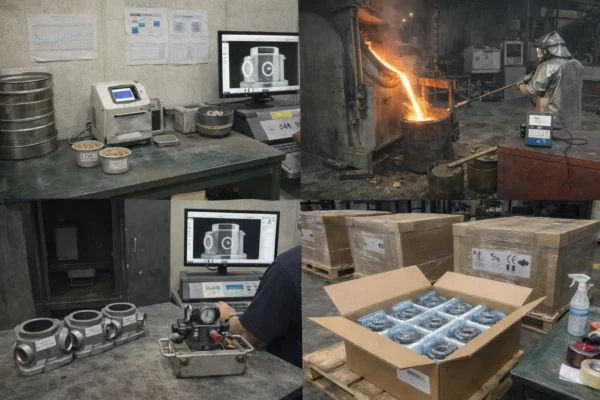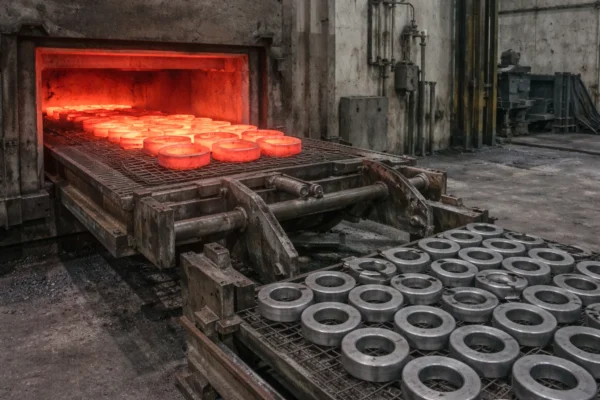

Unit price can look perfect. But hidden risk can break your launch. So experienced buyers choose process by risk + volume, not by piece price alone.
Investment casting usually fits low volume, steel alloys, and changing specs. Die casting usually fits stable, high volume aluminum/zinc programs with fast takt and strong cosmetics. The right choice comes from lifecycle cost: tooling, scrap, machining, lead time, and quality risk.
Buyer’s quick answer (use this in internal alignment):
Choose investment casting if your design may still change, you need steel/stainless, welding/leak-tight features matter, or annual demand is uncertain.
Choose die casting if the part is aluminum/zinc, geometry is stable, wall thickness is consistent, and volume is proven—because takt and unit cost can win at scale.
Key numbers buyers ask for are below (ballpark—validate with your supplier for your geometry and alloy).
Key Numbers Buyers Ask For (Ballpark Benchmarks)
| Spec buyers compare | Investment casting (lost wax) | Die casting (HPDC) | Why this matters in RFQs |
|---|---|---|---|
| Typical tooling spend | Often a few thousand to ~20k USD for wax tooling (varies by cavities/complexity). | Commonly ~20k–100k+ USD for steel die tooling (can go much higher for large/complex tools). | Tool regret is the #1 cost trap when specs move. |
| Typical tolerance grade (ISO 8062 context) | Often cited around CT5–CT7 (part + process dependent). | Often cited around CT4–CT6 (part + die design dependent). | Sets expectation for how much machining you’ll need for CTQs. |
| Typical as-cast surface texture | Often cited around 63–125 RMS (varies by alloy/shell/process). | Often cited around 32–63 RMS (varies by die condition/alloy). | Cosmetics, coating adhesion, and sealing behavior depend on this. |
| Typical “tooling → samples” timing | Often quoted ~4–6 weeks in many supply chains (capacity dependent). | Many programs quote ~12–18 weeks end-to-end (varies widely; tooling itself can be faster). | Schedule risk is often more expensive than unit price. |
What risks separate investment casting from die casting?
A cheap quote can hide expensive failure modes. Start with risk, then choose the process that protects schedule.
Most RFQs fail for three reasons:
- Specs move during NPI.
- Porosity disrupts welding and sealing.
- Weak control plans trigger late surprises.
Investment casting reduces early lock-in and supports alloy changes. Die casting can reduce unit cost at scale and boost takt. But die casting can raise porosity risk for welding and some finishes—so the decision must match downstream requirements.

We rank “change risk” before we rank cost
Before we talk piece price, we ask:
- How often will the print revise in NPI?
- Is GD&T still evolving?
- Is the material grade truly final?
When drawings move, investment casting often protects the program because wax tooling is typically lower-commitment than a full die-cast tool. That makes iteration faster and reduces regret.
Die casting typically demands earlier stability because the tooling investment is higher, and change requests can get expensive fast.
| Early program signal | What it usually means | Safer first choice |
|---|---|---|
| GD&T changes weekly | Specs still move | Investment casting pilot |
| Material grade not final | Alloy may change | Investment casting |
| Volume forecast uncertain | Demand may drop | Investment casting |
| Two repeat POs already exist | Demand looks stable | Consider die casting |

We treat porosity as a business risk
We ask early about:
- Welding, brazing, or critical heat-affected zones
- Leak tests (air/water/helium), sealing faces, and O-ring lands
- Anodize/paint cosmetics and “show surfaces”
High-pressure die casting can trap gas; porosity can affect welding consistency and some finishing outcomes. That doesn’t mean “never die cast”—it means you must specify porosity controls and validation when those requirements exist.
When porosity tolerance is low (welding is functional, sealing is critical), buyers often lean toward investment casting (especially in steels/stainless) and then machine CTQ faces/bores to close the risk.
If a die-cast part must meet higher integrity needs, some teams consider HIP (Hot Isostatic Pressing) for porosity reduction (application-dependent and not universal).

We request PPAP-style evidence when launch risk rises
When the launch window is tight, we don’t accept “trust us.” We ask for proof in a buyer-friendly format—before ramp.
At Prime, we run ISO-based routines and keep traceability from heat number to shipment label. That makes PPAP-style submissions easier when customers need them.
Here is the PPAP-style bundle buyers most often request:
- Process flow + control plan aligned to the real shop floor
- Material certs + heat traceability
- Dimensional report (CMM on CTQs and datums)
- Gauge/measurement approach (repeatability plan)
- Packaging spec (labels, rust prevention, export lane)
| PPAP-style item | Why buyers care | What “good” looks like |
|---|---|---|
| Process flow | Shows real steps | Matches the actual line |
| Control plan | Prevents drift | CTQs, sampling, reaction plan |
| Material certs | Protects compliance | Heat number traceability |
| Dimensional report | Proves fit | CMM report on datums/CTQs |
| MSA approach | Trusts measurement | Method, frequency, limits |
| Packaging spec | Prevents damage claims | Rust control + labels |
We use a risk-first decision table in RFQs
This keeps engineering and purchasing aligned, and it forces suppliers to quote with fewer assumptions.
| Requirement | Investment casting fit | Die casting fit | Buyer action |
|---|---|---|---|
| Steel or stainless material | High | Low | Shortlist investment casting |
| Welding required | High | Medium to low | Request weld trials/plan |
| Leak-tight surfaces | High (with controls) | Medium | Add test plan in RFQ |
| Cosmetics drive demand | Medium | High | Request finish samples |
| Rapid design iteration | High | Low | Pilot before hard tooling |
How do geometry, wall thickness, and material choice change the answer?
Geometry decides yield and machining. So we review sections, draft, and datums early.
Investment casting supports complex geometry in steels and stable tolerance planning. Die casting supports smooth surfaces and fast cycles, but prefers consistent walls and draft. Design choices must match the process window.

We start with wall thickness, then we check transitions
We map the thinnest ribs and thickest bosses, then look for sharp thickness jumps.
Die casting often benefits when walls are consistent and not “all over the map.” Many die casting references highlight draft and parting-line realities; ignoring them creates ejection and distortion issues.
If features crowd and GD&T is tight, buyers often lean investment casting and add machining pads for critical datums. That keeps measurement and assembly predictable.
| Geometry factor | Typical failure mode | Simple design fix |
|---|---|---|
| Thin ribs | Misrun/scrap | Add fillets + balance walls |
| Thick bosses | Shrink/warpage | Smooth transitions or core plan |
| Deep pockets | Ejection issues | Add draft + adjust split line |
| Tight position GD&T | Stack-up failures | Add datums + machining pads |
We use a material-first filter to avoid bad process matches
We confirm corrosion, strength, joining, and heat treat needs first—then remove processes that can’t satisfy the spec.
Die casting is widely used for non-ferrous alloys (especially aluminum and zinc) in high-volume applications.
Investment casting is commonly selected when buyers need steel/stainless choices alongside complex geometry.
| Material family | Best-fit process | Welding/heat treat | Buyer note |
|---|---|---|---|
| Stainless steel | Investment casting | Strong | Good for harsh environments |
| Low-alloy steel | Investment casting | Strong | Great for load parts |
| Aluminum alloys | Often die casting | Mixed | Great surface + takt |
| Zinc alloys | Often die casting | Limited | Fine detail + smooth skin |
We plan machining as a risk tool, not a penalty
We decide what must be machined, what can stay as-cast, and which datums control assembly.
At Prime, we pair casting with CNC machining so we can hold bores, threads, and sealing faces as true CTQs—while keeping the cast geometry cost-efficient. If you want examples of our CNC workflows and parts, see our CNC parts category.
| Feature type | Practical plan | Why it reduces buyer risk |
|---|---|---|
| Bearing bores | Machine to size | Controls roundness + Ra |
| Threaded holes | Drill + tap | Improves thread engagement |
| Sealing faces | Face mill | Controls flatness + leak risk |
| Datum pads | Light machining | Stabilizes GD&T reference |
We keep tolerance talk grounded in measurement
A buyer-friendly measurement plan avoids debates:
- Tag CTQs on the drawing
- Define datums for repeatable setup
- Specify CMM reporting on those datums
- Define sampling frequency per lot size
- Define the reaction plan for outliers
How do volume, tooling, and delivery risk set the switch point?
Volume decides amortization, but timing decides regret. The safest approach is staged.
Investment casting often wins when demand is under ~1,000 parts/year or specs may move. Die casting often wins after demand proves stable at higher volume. Many teams pilot 50–100 investment-cast parts, then convert after repeat POs.

We run a staged playbook to reduce tooling regret
A practical pilot-to-scale playbook:
- Run 50–100 investment-cast pilot parts.
- Measure CTQs with CMM reports.
- Test-fit in the real assembly.
- Refine datums, tolerances, and notes.
- Wait for two repeat purchase orders.
- Convert to die casting for takt (if the economics hold).
We compare lifecycle cost, not only unit price
We build the same cost model for both processes—then include scrap/rework and lead time risk.
| Cost driver | Investment casting impact | Die casting impact | How buyers control it |
|---|---|---|---|
| Tooling amortization | Lower upfront | Higher upfront | Tie spend to proven demand |
| Scrap sensitivity | Moderate | Can spike quickly | Flow + checks + trials |
| Secondary machining | Moderate | Moderate | Clear datum strategy |
| Finish risk | Stable for many steels | Great cosmetics | Validate finish samples |
| Lead time risk | Lower lock-in | Higher lock-in | Freeze revisions earlier |
We use a simple “switch threshold” table
| Program condition | Recommended path |
|---|---|
| Demand < 1,000/year | Start with investment casting |
| Specs likely to move | Start with investment casting |
| Steel alloy required | Prefer investment casting |
| Walls stable + consistent | Consider die casting |
| Two repeat POs confirmed | Evaluate conversion to die casting |
| Welding is critical | Prefer investment casting |
We share a delivery pattern buyers recognize
When timelines are tight, split shipments protect the line. Packaging locks early prevent claims.
| Week | What we do at Prime | What the buyer gets |
|---|---|---|
| 1 | DFM review + quote | Clear risks + options |
| 2 | Tooling + pilot plan | Approved schedule |
| 3 | Pilot casting + checks | Dimensional report |
| 4 | CNC machining + CMM | Assembly-ready first lot |
| 5 | Repeat run + packaging | Second lot for ramp |

We ship to North America, Europe, the Middle East, and Australia frequently. So packaging is designed for long transit and stable unloading—because hidden logistics cost is still cost.
FAQs buyers search for when comparing investment casting vs die casting?
These FAQs reflect real RFQs and alignment calls. Answers stay short, practical, and buyer-driven.
Q1: Should I choose investment casting vs die casting by unit price?
No. Choose by lifecycle cost: tooling, scrap, machining, lead time risk, and quality escape exposure.
Q2: What process fits low volume and changing specs?
Start with investment casting. Lower tooling commitment usually reduces lock-in during NPI.
Q3: When does die casting become the better choice?
Die casting tends to win when design is stable, walls are consistent, and volume is proven—because takt and repeatability can drive real savings.
Q4: Can I weld die cast parts reliably?
Sometimes, but risk rises with porosity. If welding is functional, add porosity controls and validation (or choose investment casting + machining).
Q5: Which process fits stainless steel best?
Stainless often points to investment casting—especially when corrosion resistance and weld/heat-treat workflows matter. For stainless material context, many buyers reference standards like ASTM A351.
Q6: What should I request for a PPAP-style casting submission?
Process flow, control plan, material certs, dimensional/CMM report, measurement approach, and packaging/label spec.
Q7: Can Prime provide ISO documentation and traceability?
Yes—Prime supports ISO 9001 documentation and heat traceability to shipping labels. For contact, use Prime’s contact page.
Q8: Can Prime deliver casting plus machining as one package?
Yes—Prime supports casting plus CNC machining for CTQs (bores, threads, sealing faces). See CNC parts examples here.
Q9: How fast can we move from RFQ to samples?
Typical timelines vary by complexity and capacity. Many investment casting supply chains quote ~4–6 weeks for tooling + samples, while die casting programs can be longer end-to-end—so align schedule expectations early.
Q10: What should I put in my RFQ to get accurate quotes?
Drawing + material + annual volume + target lead time + CTQs + inspection expectations + finishing/welding/leak-test requirements.
| Search phrase | What it signals | What to ask |
|---|---|---|
| custom investment casting supplier | NPI flexibility | Pilot plan + alloy control |
| ISO certified casting parts manufacturer | Audit needs | Traceability + reports |
| stainless steel investment casting manufacturer | Corrosion/strength | Heat treat + weld plan |
| aluminum die casting parts supplier | High-volume speed | Porosity controls + finish samples |
| investment casting vs die casting cost | Budget decision | Lifecycle cost breakdown |
| PPAP casting supplier | Launch discipline | Control plan + CMM reports |
Conclusion
Choose casting by risk, volume, and proof—then protect schedule, quality, and total cost across the full lifecycle.
➡️ Get a Free DFM + Process Recommendation (NDA Available)
Upload your drawing and targets. We’ll respond with a DFM review, a process recommendation (investment vs die casting), and a stable inspection + delivery plan.
Add This Block (place it right before/above your final CTA)
Explore Our Metal Casting Capabilities:
If you’re still deciding between investment casting and die casting, start with a quick look at what we actually build and control on the shop floor—materials, process windows, machining for CTQs, and inspection routines.
➡️ Metal Casting Parts