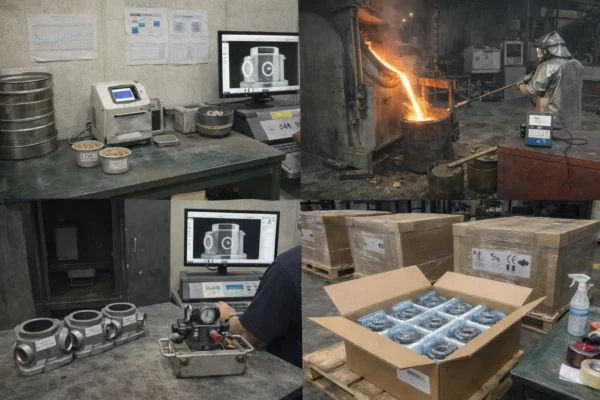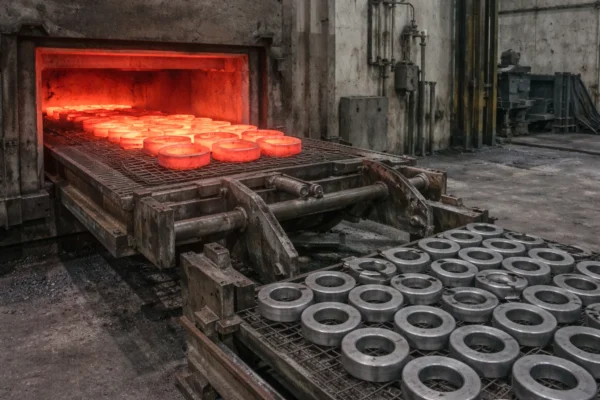
Sourcing sheet metal from China seems smart, but you worry about quality, delays, and communication. A bad supplier can ruin your project, budget, and reputation. A clear checklist is your best defense against costly mistakes.
Before placing an order for sheet metal fabrication in China, overseas buyers should check a supplier’s ISO 9001 certification, key equipment (laser cutting, CNC bending, welding), engineering support, material traceability, and quality control process. Verifying these points up front helps prevent delays, rework, and costly quality problems.

As the founder of Prime, I’ve seen it all since 1993, exporting custom sheet metal parts to OEMs in North America, Europe, and other regions. A client, Kevin, once showed me parts from another supplier with misaligned holes and bad welds. He had to scrap the whole batch and air freight replacements at his own cost, turning a potential profit into a major loss. That’s why I believe a checklist is the most important tool for any buyer. Let’s break down exactly what you need to look at.
Your Quick Pre-Order Checklist
For busy buyers, here is a scannable checklist. Use this to quickly compare potential suppliers before you dive into the details.
| Verification Point | What to Ask / Check For |
|---|---|
| 1. Certifications | Request a current, valid ISO 9001 certificate. |
| 2. Technical Capability | Do they have the right machines (laser, press brake) for your parts? Can they handle complex welding services? |
| 3. Quality Control | Ask for photos of their QC lab and a list of inspection tools (CMM, calipers, etc.). |
| 4. Material Sourcing | How do they prove material authenticity? Ask if they provide Material Test Reports (MTRs). |
| 5. Engineering Support | Do they offer DFM (Design for Manufacturability) feedback to improve your design and cut costs? |
| 6. Factory or Trader? | Are you speaking with an engineer at the factory or a salesperson at a trading company? |
| 7. Packaging & Logistics | Can they show export-ready packing photos and confirm standard lead times and shipping terms (FOB/CIF/DDP)? |

What Key Points Should You Check Before Placing an Order?
You’ve found a potential supplier, but how do you really know if they’re the right fit? A deep dive into their operations is necessary to protect your business. A good supplier welcomes your questions. Vetting isn’t about being difficult; it’s about mitigating risk and ensuring a smooth partnership.
In practice, most successful overseas buyers check at least:
- ISO 9001 and other relevant certifications
- Matching equipment and capacity for their part size and volume
- Proven material traceability with MTRs for each batch
- A defined FAI / PPAP process for new parts
- Clear packing standards and realistic lead times
A Step-by-Step Vetting Process
- Verify Quality Management System (QMS): Ask for their ISO 9001 certificate. For buyers, an ISO 9001 system (you can read the official summary on the ISO website) means reliability. It ensures traceability from raw material to final part.
- Assess Equipment and Facility: Request a detailed equipment list or a live video tour. Check if their machines are modern and well-maintained.
- Confirm Material Traceability: A great supplier will provide Material Test Reports (MTRs) for every batch, proving the metal is the exact grade you specified.
- Review Their Inspection Process: Ask how they perform a First Article Inspection (FAI). For critical parts, ask if they can provide a full PPAP (Production Part Approval Process) package.
- Evaluate Engineering Support: Send them a drawing and see if they provide constructive DFM feedback. This is a key test of their expertise.
- Request Project Examples: Ask for photos or case studies of projects similar to yours in complexity and material.

Factory vs. Trading Company: Who Should You Work With?
In China, you’ll encounter both factories and trading companies. For custom parts like sheet metal, the choice has a huge impact on your project’s success.
Working directly with a factory like Prime gives you a direct line to the people actually making your parts. This eliminates misunderstandings, reduces costs, and speeds up problem-solving. Trading companies are middlemen; they add cost and create a layer of communication that can lead to errors.
| Aspect | Direct Factory (Prime) | Trading Company |
|---|---|---|
| Price | Lower, no middleman markup. | Higher, includes their commission. |
| Communication | Direct access to engineers & technicians. | Talk to a salesperson who relays info. |
| Technical Expertise | Deep knowledge of manufacturing processes. | Limited; often just basic sales knowledge. |
| Quality Control | You have control; we own the QC process. | Unpredictable; they don’t own the factory. |
| Problem Solving | Fast and direct. | Slow and indirect. |
[image placeholder: Wide shot contrasting a real factory environment—Prime Fab Works’ shop floor with welding booths, assembly lines, and stacked finished enclosures—against a small office corner with only desks and computers, visually explaining the difference between working with a direct manufacturer versus an office-only trading company.]
What Typical Problems Arise, and How Can You Avoid Them?
You’re rightly concerned about what could go wrong. Communication barriers, quality fade, and unexpected delays are common fears for any buyer new to sourcing from China. Knowing the common pitfalls ahead of time allows you to put simple, preventative measures in place.

I remember a project shipping 500 server racks to California. The challenge was ensuring they arrived without a scratch after a month at sea. We designed custom foam inserts and double-walled crating. The extra effort meant the client received a perfect product. This is the kind of experience a seasoned factory provides for its sheet metal fabrication clients.
| Common Problem | How to Avoid It |
|---|---|
| Inconsistent Quality | Define clear standards on your drawings per ASME Y14.5. Require an FAI report. |
| Communication Gaps | Ensure you have a single, dedicated point of contact who speaks fluent English. |
| Delayed Shipments | Agree on a detailed production schedule with key milestones. Ask for weekly progress updates. |
| Material Substitution | Specify the exact material grade on your RFQ and demand Material Test Reports (MTRs). |
| Hidden Costs & Scope Creep | Ask for a clear breakdown of tooling, sample, unit, and packing costs. Put any design changes and their cost impact in writing before production. |
[image placeholder: Neatly arranged export cartons and custom wooden crates for large sheet metal assemblies, each carton clearly printed with the customer’s logo, PO number, and handling symbols. The packages are lined up on a loading dock beside an open shipping container, showing a professional logistics setup that reduces risk of damage and confusion.]
What Should an Ideal RFQ Include?
An incomplete RFQ is the root cause of most sourcing problems. Providing a comprehensive RFQ package is the single best thing you can do to get clear, accurate quotes. Include 3D models (STEP/IGS), 2D PDF drawings, material, quantity, and your desired finish from our surface treatment options. If you’re not sure whether your RFQ is complete, we can review your drawings and RFQ package together and suggest improvements before you send it to multiple suppliers.

Beyond the Unit Price: A Warning on Total Cost
Focusing only on the unit price can lead to big problems. A cheap price can hide costs like high tooling fees, poor packaging that leads to damaged goods, or slow delivery that makes you miss market deadlines.
Imagine Quote A is $10/part with a $2,000 tooling fee. Quote B is $10.50/part with a $500 tooling fee. For a 1,000-piece order, Quote B has a much lower total cost. Always calculate the full project cost, not just the per-piece price.
Are You Ready to Source Sheet Metal Parts From China?
You now have a deep understanding of what to look for. A reliable partner doesn’t just send you parts; they provide peace of mind. Ready to see how a professional, experienced factory operates?
→ Upload Your RFQ / Contact Prime
Conclusion
Sourcing sheet metal from China is simple when you know what to check. Use this expert guide to find a great manufacturing partner and get high-quality sheet metal fabrication in China for all your projects.
🌐 Visit: Sheet Metal Fabrication Services
Get a free quote, custom tool configuration, and fast delivery worldwide. Every order comes with setup support.