Your assembly line stops because of a tiny screw. These constant failures1 cost you time and money, creating frustrating delays. The fix isn’t another screw; it’s a better engineering partnership2.
Self-tapping screws fail due to a system mismatch between the fastener, the base material, and the installation process. The solution requires an engineering approach: selecting a precisely specified screw, calibrating tools for optimal clamp load, and partnering with a manufacturer who provides full traceability and process control, demonstrated through a PPAP.

From my vantage point as a factory owner for over 30 years, I can tell you that the smallest components1 cause the biggest headaches. A simple screw is often treated as a commodity. That is, until it becomes a major bottleneck2, crippling production and damaging a product’s reputation. It’s a costly lesson I’ve seen play out with new clients who come to us to solve a problem their previous supplier created.
In this article, I’ll draw on three decades of hands-on experience1 to break down not just what goes wrong, but why. This is the practical knowledge that separates a reliable component from a production liability2.
Is Material Incompatibility the Real Culprit Behind Screw Stripping?
You specified a screw for plastic, but it’s stripping out. Your products are failing quality checks, and your production is bottlenecked. What’s going wrong?
Yes, material incompatibility1 is a primary cause of screw failure. Using a screw with incorrect hardness or thread design for the base material leads to stripping or cracking. From a buyer’s perspective, this is where a generic spec sheet fails; you need a screw engineered for your specific substrate, like a glass-filled nylon2.

This is the most common and costly mistake. I remember a client, Mark, whose company was launching a new handheld medical device. His screws were stripping the plastic boss, causing a 20% failure rate just weeks before launch. He was using a standard self-tapper in an abrasive, engineered polymer. We quickly identified the issue and supplied a custom-engineered hardened screw2 with a thread profile specifically for that polymer blend. His failure rate dropped to zero.
Dive Deeper: The Science of the Substrate and Screw Interface
A secure joint1 is a system. It’s about the interplay between the screw, the material, and the hole it’s entering. This relationship is a core principle of mechanical design2, detailed in resources like the MIT OpenCourseWare for Mechanical Engineering.
The Critical Role of Pilot Hole Design
The pilot hole’s diameter directly impacts "thread engagement1"—how much material the screw threads grip.
| Base Material | Hole Condition | % Thread Engagement | Result on the Assembly Line |
|---|---|---|---|
| Soft Plastic (PP) | Hole too large | Low (< 50%) | Stripped threads, poor pull-out strength, rejected parts. |
| Hard Plastic (ABS) | Hole too small | High (>80%) | High drive torque, risk of boss cracking, line stoppage. |
| Aluminum | Ideal Hole Size | Optimal (65-75%) | Strong joint, consistent driving, high throughput. |
A commodity supplier gives you a box of screws. A manufacturing partner provides the engineering data, including precise pilot hole recommendations for your material.
Material Selection: Beyond the Basics
These materials are designated by international standards, such as those from ASTM International1, to ensure their properties are consistent and verifiable.
| Screw Material | Relative Cost | Performance Characteristics | A Buyer’s Watch-Out |
|---|---|---|---|
| Case-Hardened Carbon Steel | Low | Strong surface, ductile core. Prone to rust. | Ensure proper coating is specified and verified for your environment. |
| 410 Stainless Steel | Medium | Hardened. Moderate corrosion resistance2. | Not all stainless is equal; 410 is magnetic and less corrosion-resistant than 304. |
| 304 Stainless Steel | Medium-High | Excellent corrosion resistance2, non-magnetic. | Softer than 410; may not be suitable for tapping into hard metals. |
| 316 Stainless Steel | High | Superior corrosion resistance2 against chlorides. | Highest cost. Specify only if required for marine or chemical environments. |
Are Your High-Speed Tools Actually Wrecking Your Screws?
Your new automated drivers are fast. But now screw heads are camming out or breaking off. Your production speed is up, but so is your reject rate.
Absolutely. High-speed tools can cause failure if not calibrated correctly. This is a process control issue. The relationship between the torque you apply and the resulting tension is the single most important factor in joint integrity1, a topic covered extensively by bodies like the Industrial Fasteners Institute (IFI)2.

We worked with an automotive supplier1 whose robotic cell was shearing 15% of the screw heads on a sub-assembly, threatening their JIT delivery schedule. The problem wasn’t the screws; it was the installation protocol2. They were driving too fast and stopping too hard.
Dive Deeper: The Physics of Torque and Tension
The goal is not to make a screw "tight." It’s to create a specific clamping force (tension) to hold the joint together. Torque, as a rotational force, is simply the means to achieve that tension.
- Driving Torque: The force needed to tap the threads.
- Seating Torque1: The target torque required to achieve the necessary clamp load.
- Stripping Torque2: The torque at which the threads or the screw fails.
The ideal Seating Torque1 is a window: typically 60-80% of the Stripping Torque2. We can provide this stripping torque data for our screws in your material, allowing your engineers to program their tools with confidence.
Could Poor Screw Quality Be Your Assembly’s Weakest Link?
You found a cheaper supplier. The price was great, but the quality is inconsistent. This unpredictability is a nightmare for automated assembly.
Yes, inconsistent quality is a major risk. This is where factory-level certifications matter. Sourcing from a manufacturer with a robust quality management system, like the globally recognized ISO 9001:20152 standard, is your primary defense.

An ISO certificate on the wall is one thing. Seeing the process in action is another. For our clients in demanding sectors like automotive, we provide a full Production Part Approval Process (PPAP), a framework established by the Automotive Industry Action Group (AIAG), to validate that our process will consistently produce a part that meets every engineering requirement.
Dive Deeper: A Factory’s Commitment to Quality
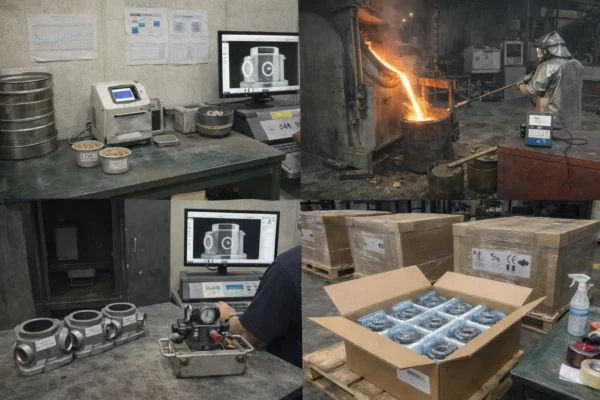
A reliable screw is the output of a controlled process. This is the level of detail our quality control system guarantees.
| Step | Process | Why It’s Critical for the Buyer |
|---|---|---|
| 1. Raw Material Inspection | Verify steel coil’s chemical composition and mill certificate. | Guarantees the part is made from the specified alloy. |
| 2. Cold Heading & Thread Rolling | Form the blank and threads. | Ensures dimensional consistency for a perfect fit with tools and parts. |
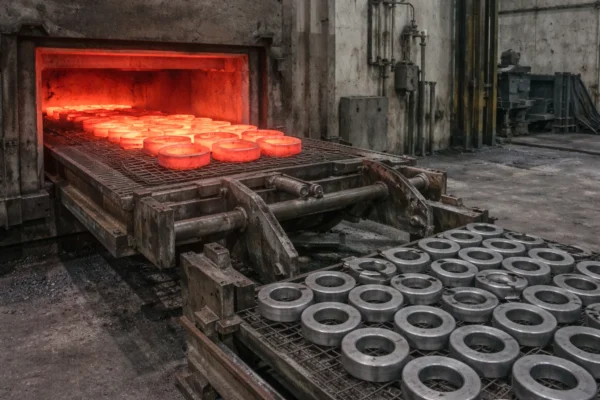
| 3. Heat Treatment1 | Heat and quench screws to achieve target hardness, a process governed by material science principles from organizations like ASM International2. | Creates a screw that can tap effectively without being brittle. |
| 4. Final Inspection | Optical comparators and Go/No-Go gauges check key dimensions. | This is our final sign-off. We provide a certificate of conformance. |
How Do Environmental Stresses Cause Delayed Screw Failure?
Your product passed tests at the factory. But months later, customers report loose joints or rust. This damages your brand’s reputation.
Environmental factors like vibration, temperature, and moisture cause long-term failure. A knowledgeable supplier will ask about the end-use environment before even suggesting a part. A major hidden risk in high-strength fasteners is hydrogen embrittlement1, which can cause sudden, catastrophic failure under load.

We helped a client in the renewable energy sector solve a vibration-loosening problem1 on their solar panel mounts. The standard screws were backing out during thermal cycling. We developed a custom screw with a pre-applied nylon thread-locking patch that solved the problem and saved them a fortune in warranty claims.
Dive Deeper: Designing for the Real World Environment
A quality manufacturer mitigates hydrogen embrittlement2 by performing a post-plating baking process to drive out the hydrogen. Skipping this critical step is a common cost-cutting tactic that puts your product at risk.
Comparison of Protective Coatings (Tested via ASTM B117 Salt Spray)
| Coating Type | Corrosion Resistance | Relative Cost | Common Application |
|---|---|---|---|
| Zinc Plating | Basic (24-72 hours) | Low | Indoor electronics, furniture |
| Yellow Zinc | Good (96+ hours) | Low | Automotive brackets, general hardware |
| Hot-Dip Galvanized | Excellent (500+ hours) | Medium | Outdoor construction, structural steel |
| Ruspert/Magni | Superior (1000+ hours) | High | Marine applications, high-corrosion zones |
Frequently Asked Questions (FAQs)
What is the difference between thread-forming and thread-cutting screws?
A thread-forming screw1 displaces material. It’s best for thinner metals and most plastics. A thread-cutting screw physically removes material. It’s used in harder plastics and softer, thick metals. The choice depends entirely on your base material.
How do I determine the correct pilot hole size2?
The ideal pilot hole size2 is not a universal number; it’s a specific recommendation based on your screw, material, and hole depth. As your manufacturing partner, providing this engineering data is part of our standard service. For a detailed analysis, contact our engineering team.
Can I reuse a self-tapping screw?
In manufacturing, never. The first installation work-hardens the threads and wears the screw. Reusing it leads to lower holding power and a higher risk of stripping. For a one-time repair, it might be acceptable, but for new production, always use a new screw.
Partner with a Proven Manufacturer
Ready to eliminate fastener failures and streamline your assembly line? Send us your drawings or technical requirements to get started. Our team will review your application and provide a comprehensive solution.
➡️ Upload Your RFQ & Contact Our Engineering Team
-
Explore this link to understand the benefits and applications of thread-forming screws in various materials. ↩ ↩ ↩ ↩ ↩ ↩ ↩ ↩ ↩ ↩ ↩ ↩ ↩ ↩ ↩
-
This resource will provide you with essential guidelines for selecting the right pilot hole size for optimal screw performance. ↩ ↩ ↩ ↩ ↩ ↩ ↩ ↩ ↩ ↩ ↩ ↩ ↩ ↩ ↩ ↩ ↩ ↩