Many buyers now feel stuck between classic self tapping screws and newer fastening methods for metal projects.
Self tapping screws still play a central role in modern metal fastening for cabinets, panels, and light frames. They reduce process steps, keep tooling simple, and support fast service in the field. However, they do not solve every structural or sealing problem, so I also compare them with welding, rivets, and structural adhesive. I explain this from both a buyer view and a factory view inside an ISO certified, PPAP ready supply chain.
I want you to see the real picture before you lock in new designs or long term supply contracts. So I share what I learned in three decades of metal fastening work with Siemens related projects, control cabinets, and industrial hardware assemblies.
Do Self Tapping Screws Still Deliver Real Value in Modern Metal Projects?
Many engineers tell me they feel pressure to drop screws in favor of “invisible” joints and adhesives. They worry that self tapping screws look old while their marketing team talks about sleek designs. At the same time, their plants still need fast assembly, simple training, and easy field service. So I first check real value instead of trend words.
Self tapping screws still give strong value when you fasten thin steel or aluminum panels in cabinets and housings. Workers use one tool and form the thread directly in the metal, so they skip separate tapping steps. This saves time, reduces line complexity, and makes service work simple. For many non structural joints, I still treat self tapping screws for metal panels as a first choice.

Where Self Tapping Screws Still Shine Today
I often meet this pattern in real projects:
- Indoor control cabinets and power distribution boards
- Machinery guards and safety covers
- HVAC housings and ducting
- Instrument boxes and junction enclosures
In these cases, self tapping screws help because:
- They cut drilling and tapping into one fast movement.
- They allow minor layout changes without new jigs.
- They let service teams open and close panels many times.
International standards support this role. For example, ISO 1478:1999 “Tapping screws thread” defines thread sizes and thread ends for sheet metal screws. ([International Organization for Standardization][1]) When your drawings follow this framework, you communicate clearly with any serious global factory.
If you want to see how we apply these rules in practice, you can also review our own self tapping screws for metal panels page and match head styles, drives, and coatings with your project.
When Self Tapping Screws Start To Struggle
I stay honest about limits, because long term trust matters more than one order. I usually avoid self tapping screws in:
- Heavy structural frames with high dynamic loads
- Pressure vessels and safety critical guards
- Very hard materials that damage drill points
Here I move toward bolts, nuts, or welding. I also pay close attention to pilot hole size and sheet thickness, because they strongly affect pull out strength. Technical guides from the Industrial Fasteners Institute explain how standards and tolerances shape fastener performance across many joints.
To give teams a fast overview, I often share this comparison table.
| Method | Main use area | Strength focus | Service behavior |
|---|---|---|---|
| Self tapping screws for metal | Panels, doors, light frames | Medium, very adequate | Very high, easy rework |
| Blind rivets | Thin sheet, one side access | Medium | Low, hard rework |
| Welding | Structural frames, fixed joints | Very high | Very low, hard changes |
| Structural adhesive | Mixed materials, sealed joints | Medium to high | Medium, needs repair kits |
So I do not say “screws are always the future”. I say “screws still lead in many practical, service heavy assemblies”.
Material Choices and Corrosion Planning
Material choice often decides whether a joint survives its lifetime. I usually compare three main paths with buyers.
| Screw material | Typical use | Main strengths | Watch points |
|---|---|---|---|
| Carbon steel, zinc | Indoor panels and machine guards | Low cost, easy sourcing | Limited corrosion resistance |
| Stainless steel A2/A4 | Outdoor boxes, food or medical equipment | Strong corrosion resistance, clean look | Higher cost, sometimes harder drilling |
| Alloy steel, coated | Higher loads, automotive style projects | Better strength and fatigue behavior | Needs careful coating and hydrogen control |
To help junior staff understand basic fastener types, I sometimes share the general screw overview on Wikipedia as background reading. Then I bring the team back to project data and our own test results to make real decisions.
If you source your brackets and panels from us as well, we align materials across stamping parts, CNC parts, and casting parts to control galvanic corrosion and appearance over time.

When Do Self Tapping Screws Beat Rivets, Welding, and Adhesive Today?
Many sourcing managers ask me for one simple rule to guide their teams. They want to know when self tapping screws1 clearly beat rivets, welding, or adhesive. Real projects mix sheet thickness, coatings, vibration, and service plans, so I use patterns from many cabinet and machinery cases.
Self tapping screws usually win in medium volume production with standard steel or aluminum panels. They shine when layout flexibility and field service both matter. They are especially strong when you build cabinets, covers, and light frames that may change during the product life. So they often give the best total cost2 when you count both production and maintenance.

I remember one export project where a customer planned welded studs and nuts for most cabinet doors. Welding made fixtures complex and slowed the line. Service teams also hated grinding and repainting if they needed changes. We redesigned many joints to use self tapping screws for metal panels instead. The customer then reduced jig cost, raised throughput, and improved service access.
Typical Projects Where Screws Win
I like to classify common projects in a simple matrix. This table helps buyers and engineers speak the same language.
| Project type | Self tapping screw fit | My view |
|---|---|---|
| Indoor control cabinets | Strong fit | Fast build and easy upgrades |
| Light sheet metal frames | Often fit | Check vibration and use thread locking if needed |
| Machinery guards and covers | Strong fit | Service teams open and close many times |
| Heavy structural frames | Weak fit | Bolts or welding give safer margins |
| Outdoor sealed enclosures | Conditional fit | Combine screws, sealing washers, and good gaskets |
When we supply these projects, we often ship screws together with custom brackets and plates as one hardware kit. That reduces your supplier count and keeps hole sizes and tolerances under one PPAP and ISO controlled system.
Cost Factors Beyond Unit Price
Many buyers first focus on unit price. In my experience, total cost tells a better story. I always break cost into several factors and then test them with your numbers.
| Cost factor | Self tapping screws for metal | Rivets | Welding |
|---|---|---|---|
| Fastener price | Low to medium | Low to medium | Filler and gas only |
| Tooling and jigs | Very simple | Special rivet guns | Complex jigs and welding gear |
| Labor time per joint | Short | Short | Long |
| Rework and service cost | Very low | High | Very high |
| Inspection workload | Simple torque and appearance | Head and mandrel checks | Visual and sometimes NDT |
To shape my thinking on loads, torque, and preload, I often refer to the NASA Fastener Design Manual. It explains how bolted joints behave under vibration, temperature change, and fatigue. I then translate these ideas into simple joint rules for screws, not only aerospace bolts.
The Engineering Library summary of fastener design criteria also condenses key points for designers.
Simple Decision Steps for Busy Teams
Because teams stay busy, I use a short five step path that fits into one internal meeting:
- Define maximum loads, vibration level, and safety margin.
- Decide how often technicians will open or adjust each joint.
- List surface treatments, corrosion class, and appearance demands.
- Estimate line speed, operator skills, and tool availability in each plant.
- Compare total cost, not only unit price from different suppliers.
Once we finish these steps, we can see where self tapping screws win and where they lose. Then we design each joint with the right method instead of using one method everywhere.
How Do I Choose the Right Self Tapping Screw Supplier in 2025?
Even when the fastening method is right, a weak supplier still destroys the project. Many buyers face late shipments, mixed batches, or damaged packing. I saw these problems in my early years when I chased only the cheapest quote. Now I follow a strict checklist for self tapping screw suppliers in China and abroad.
I check production depth, ISO based quality systems, PPAP ability, and export packing strength. I confirm how the supplier handles related parts like stamping parts, CNC parts, and casting parts. I also review lead time history, communication speed, and delivery performance. Only suppliers who pass all these points become long term partners for our B2B self tapping screw wholesale business.

I expect serious suppliers to know major standards and to use them daily. The Industrial Fasteners Institute resource library collects key ASTM, ASME, SAE, and IFI fastener standards in one place. ([Industrial Fasteners Institute][6]) Fastener committees at bodies like SAE International define many aerospace and high performance rules. ([Standard Engineering Library][7]) I do not expect every plant to make aerospace bolts, but I expect them to respect standard thinking.
What I Learned From Past Supplier Mistakes
Years ago, I chose a low cost supplier for self tapping screws used in Siemens related cabinets. Samples looked fine, and I placed a large order. During shipment, weak cartons broke, humidity entered, and parts of the batch rusted. My customer delayed assembly, and I flew on site to help fix the damage.
From that case, I created clear rules:
- I always audit packing strength and pallet design.
- I request photos and specs of export cartons before approval.
- I check traceability, PPAP level, and rework plans for critical parts.
Now I treat packing, documentation, and response speed as part of the product, not extras.
How Prime Designs the Self Tapping Screw Supply Process
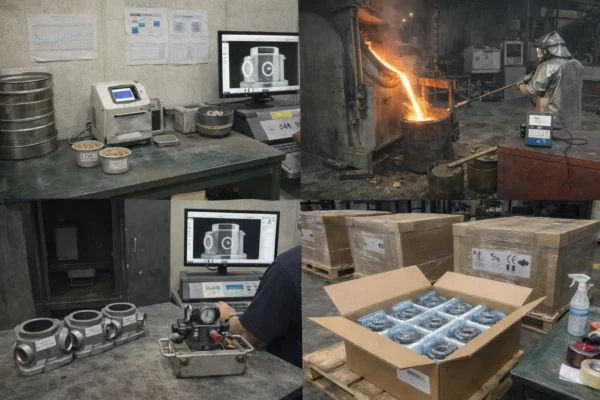
At Shandong Prime International Trade Co., Ltd., we built our process on those lessons. We run ten production lines across stamping parts, CNC parts, casting parts, welding parts, and fasteners. So we can supply complete hardware kits under one ISO quality system.
We follow a clear five step flow:
| Step | Stage | What we do |
|---|---|---|
| 1 | Requirement and drawing review | Confirm loads, materials, coatings, and hole details |
| 2 | Sampling and testing | Produce samples and test torque, pull out, and corrosion |
| 3 | PPAP and approval | Prepare PPAP files when required by key customers |
| 4 | Mass production and in process QA | Use SPC, gauges, and optical checks where needed |
| 5 | Packing, labeling, and shipment | Use strong cartons, pallets, labels, and photo records |
Our quality work follows ISO rules for threaded fasteners, including tapping screw standards like ISO 1478 and related documents managed by ISO/TC 2 Fasteners. We also align with customer specific standards from groups like ASTM and SAE when needed.

What to Check in a Custom Self Tapping Screw Manufacturer in China
When you search for a “custom self tapping screw manufacturer in China”, you see many names. I suggest this simple checklist.
| Area | What you check | Why it protects you |
|---|---|---|
| Technical support | Ability to read 2D / 3D, suggest hole sizes, test plan | Avoids hidden design mistakes |
| Quality system | ISO certificates, control plans, lab and PPAP ability | Supports audits and big client approvals |
| Product range | Screws plus stamping, CNC, casting, welding | Enables full kit supply and design freedom |
| Packing strength | Carton grade, strapping, pallet design, labels | Reduces damage and customs trouble |
| Communication | Fast replies, clear English, stable contact window | Saves time and avoids confusion |
If a supplier scores well on all five points and shows real delivery cases, you can build a safer long term partnership instead of starting from zero each season.
What Are the Key Self Tapping Screw FAQs for Metal Projects?
Many new customers send similar questions after they find us through search or trade shows. They ask about thickness limits, materials, torque tests, and order size. I collected the most common questions here and answered them from both a buyer and factory angle.
This FAQ covers thickness ranges, material choices, torque and pull out tests, B2B minimum orders, and kit shipments. I also map typical long tail search phrases to clear buyer questions. You can use this section as an internal guide before you upload an RFQ or contact Prime.
FAQ 1: What thickness of metal can self tapping screws handle?
I see many searches like “best self tapping screws for thin sheet metal”. I first check sheet thickness and total stack.
| Sheet thickness range | Typical approach |
|---|---|
| Below 1.0 mm | Use threads for thin sheet and control drive torque |
| 1.0–3.0 mm | Use common self drilling or self tapping screw designs |
| Above 3.0 mm | Use pre drilled holes and machine screws or bolts instead |
I then fine tune pilot hole size using both internal test data and trusted thread tables for tapping screws. That way, you get safe pull out strength, not just easy driving.
FAQ 2: Which material should I choose for outdoor projects?
Many buyers search “stainless self tapping screws for outdoor metal”. My simple rule:
- For indoor dry panels, I choose carbon steel with zinc plating.
- For outdoor mild climate, I choose A2 stainless self tapping screws.
- For coastal or aggressive zones, I move to A4 stainless or special coated alloy.
I also match screw material and panel material to control galvanic corrosion. So I always ask about location, humidity, and target lifetime before I confirm the final choice.

FAQ 3: How do you control torque and pull out strength?
Engineers often ask for clear “self tapping screw torque and pull out test data”. At Prime, we always test new projects.
We check:
- Drive torque and strip torque in real panel stacks.
- Pull out and shear in actual holes and coatings.
- Corrosion performance with salt spray or other agreed tests.
Our test logic follows guidance from manuals like the NASA Fastener Design Manual and similar engineering references. We then record results in control plans and, when needed, PPAP reports for your quality team.
FAQ 4: What are typical B2B minimum order quantities?
For standard sizes, our B2B self tapping screw wholesale usually starts from one to two pallets per size. For custom heads, drive types, or coatings, we discuss MOQ based on tooling and line setup. I also look at your yearly volume and combine sizes in one production and packing plan when possible.
If you want a clear answer for your project, you can send basic data through our contact page and ask our team for a quick estimate.
FAQ 5: Can I combine self tapping screws with stamping parts and CNC parts?
Many trading companies search for a “one stop supplier for self tapping screws and metal partshowstuffworks.com/what-are-self-tapping-screws.htm) and metal parts”. Prime supports this model. We ship:
- Self tapping screws and other fasteners
- Custom stamping brackets, plates, and terminals
- CNC precision parts and inserts
- Casting parts and welded frames
Your warehouse team then receives complete hardware kits in one container. You reduce supplier count, simplify PPAP work, and cut coordination time between different factories.
FAQ 6: Which standards should my team know when we design with self tapping screws?
Design teams often ask which standards matter for tapping screws. I usually point to:
- ISO 1478:1999 Tapping screws thread for basic thread sizes and ends
- ISO fastener work under ISO/TC 2 Fasteners for related screw standards
- The Industrial Fasteners Institute profile for background on IFI as a standards body
I then help your team turn these standards into clear drawings, tolerance tables, and test plans that fit your real products.
FAQ Keyword Map for Your Team
To align SEO, sourcing, and engineering, I map some long tail keyword ideas to real buyer questions.
| Search keyword idea | Real buyer question |
|---|---|
| best self tapping screws for thin sheet metal | Which screw type fits my 0.8–1.2 mm steel panels? |
| custom self tapping screw manufacturer in China | Who can design and produce my own screw geometry and coating? |
| ISO certified fastener factory for metal panels | Which supplier can pass big client audits for control cabinets? |
| self tapping screws for Siemens control cabinet enclosures | Which screws and coatings match those enclosure standards and tests? |
| B2B self tapping screw wholesale with strong export packing | Who protects my brand with stable packing and on time delivery? |
You can use this table when you plan content, qualify suppliers, or train new buyers inside your company.
Conclusion
Self tapping screws still drive fast, flexible metal fastening, so upload your RFQ and contact Prime for ISO backed, on time supply.