
Many buyers chase low prices and then fight hidden costs. I faced the same painful pattern for many years.
Cost and quality in metal parts stamping move together over time. Low unit prices often create hidden costs in rework, returns, line stops, and loss of trust. When buyers define tolerances clearly and choose a stable custom stamping parts supplier, they reduce risk and still protect budgets. Good practice in quality systems, like the ISO 9000 family of standards, supports this view and helps companies keep performance stable. ([International Organization for Standardization][1])
I learned these lessons in real projects, not from theory. So I now share clear rules that you can use in your next order. When you understand how stamping, CNC parts precision machining, materials, and packing link to final cost, you gain control. Then you can talk with suppliers in a calm way and protect both your customer and your margin.
Why Do Cheap Stamping Parts Often Cost More in the End?
I used to chase the lowest price for every bracket and clip. I felt proud when I found a very low quote. Then I watched a customer line stop because of burrs, wrong holes, and weak plating. My “cheap” decision turned into air freight, overtime, and urgent calls with angry buyers.
Cheap metal stamping parts often increase total cost because quality issues move through the full supply chain. Burrs, wrong dimensions, and poor surface treatment slow assembly and increase scrap. When buyers track rework hours, complaint rates, and line stops, they see how a low piece price can destroy profit. Many quality studies on the cost of poor quality show that hidden quality costs can reach a large share of revenue, far beyond simple scrap. ([ASQ][2])

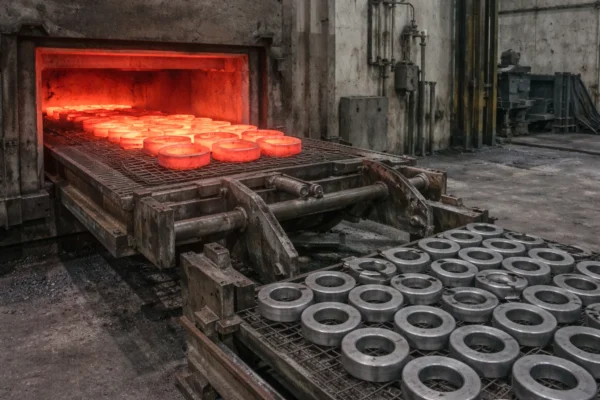
Prime high speed progressive stamping line running multi-cavity dies for export orders.
So now I always ask one simple question first. How will this stamped part behave inside the final machine or device? When we think this way, we see cost in a wider frame and not just as a number on a quote. For many projects, I now send customers to our stamping parts product page first, so they can compare similar parts and see real cases.
How Hidden Costs Eat the “Savings” From Cheap Parts
I like to draw a clear picture when I speak with new buyers. I place the nice low unit price on the left side. Then I list the hidden items on the right side. The right side often grows much larger.
| Cost Item | Focus on “Cheapest” Supplier | Focus on Stable Supplier |
|---|---|---|
| Unit price | Very low | Fair and transparent |
| Rework and sorting | High and repeated | Low and controlled |
| Line stop risk | High | Very low |
| Claims and returns | Common and complex | Rare and simple |
| Emergency logistics | Frequent air freight | Planned sea or air |
| Brand and reputation | At serious risk | Protected and growing |

Cheap stamping often uses weaker tooling, poor coils, and loose inspection. So burrs and warping appear more often and operators slow down or stop lines. Sorting teams rush in and managers work late on complaint reports. The extra cost does not show on the quote, but it hits your profit and your stress level.
On the other side, a serious low cost metal stamping service invests in better dies, stable material, and strict in-process checks. Scrap stays low and shipments arrive stable. You may pay one or two cents more per piece. However, you avoid thousands of dollars in overtime, air freight, and line downtime. I watched this change many times when customers moved from pure “cheap” vendors to long term partners like Prime and placed follow-up orders through our contact page.
How Do I Balance Tolerance Requirements With Real Budget Pressure?
Every project pulls in two directions at the same time. Engineers push tight tolerances to keep machines safe and smooth. Buyers push strong price targets to keep margin and win orders. I often stood between drawings and purchase orders and felt this daily tension.
You can balance tolerance and cost by splitting each part into critical and non-critical features. Critical dimensions that affect safety, sealing, or assembly need tight control and stable tooling. Non-critical surfaces and edges can accept wider tolerances and simpler operations. This method follows design for manufacturability ideas used in many engineering and industry guides, and it helps teams avoid over-specification. ([aiag.org][3])

So when a new drawing arrives, I ask the engineer several direct questions. Which dimensions keep the machine safe? Which faces touch other components? Which areas only matter for appearance? Then we sit with our toolmakers and build a plan that supports both performance and price.
How Tolerance Choices Drive Tooling, Cycle Time, and Final Cost
I learned that tolerance is not just a number on a drawing. It sends a strong message to the shop floor. A tight number demands stronger dies, better material, slower presses, and more checks. So cost moves up fast. A wider number allows faster speed and simpler tools. So cost comes down.
| Feature Type | Typical Tolerance Range | Process Choice | Cost Impact |
|---|---|---|---|
| Safety critical hole | Very tight | Fine blanking or CNC reaming | Higher but stable |
| Assembly slot | Medium | Normal progressive die | Balanced |
| Cosmetic edge | Wide | Simple blanking and deburring | Lowest |
| Sealing surface | Tight flatness | Stamping plus CNC finish grinding | Medium to high |

When we handle CNC parts precision machining, the story stays the same. Tight tolerances need more passes, slower feeds, and stronger fixtures. So cycle time rises and cost per piece climbs. When I show this link with simple tables, most buyers quickly agree to classify features.
In Prime, our stamping, welding, casting, fasteners, and plastic parts teams sit under one roof. So we can move a feature from stamping to CNC or from CNC to stamping when it helps. Sometimes we change a heavy machined block into a near net shape casting from an ISO certified casting line and then add small CNC finishing where needed. You keep function and save cost at the same time. Many customers later check the same logic against parts on our CNC machining parts page.
What Makes a Custom Stamping Parts Supplier Truly Reliable?
Many buyers ask how they can judge suppliers fast on Alibaba or at trade shows. The booth looks nice and the website seems fine. The prices also look attractive. However, they still feel unsure about long term risk. I understand this completely, because I also source partners for special tools and materials.
A reliable custom stamping parts supplier shows stable systems, not only nice samples. Clear ISO certificates, in-house tooling support, standard inspection reports, and strong export packaging all signal real strength. Industry groups like the Precision Metalforming Association say that stable processes, trained staff, and good tooling support long term success more than simple low prices. ([Precision Metalforming Association][4])

So when I review a new factory, I look behind the first shipment. I ask how they control every step, from coil storage to final container loading. I also ask how they handle PPAP for automotive style projects, because this shows how deep their system really goes.
How to Check Systems, Not Just Samples, Before You Trust a Supplier
Good samples can still come from a weak process. I once received perfect brackets from a new vendor. We placed a large order after a short review. The first shipment looked fine. Then the second lot showed cracks around bends and rough edges. Later I learned they borrowed tools from another factory for the samples.
Now I use a fixed checklist when I review stamping and ISO certified casting parts manufacturer candidates.
| Check Point | What I Ask Clearly | What Good Suppliers Show |
|---|---|---|
| Certification | ISO status, scope, and audit date | Valid ISO and fresh audits |
| PPAP ability | Which PPAP level they can support | PPAP Level 3 for key projects |
| Process control | Key checks in each step | Written control plan and records |
| Tooling capability | Who designs and maintains dies | In-house or fixed stable partner |
| Packaging design | How they avoid rust and damage | Tested export packaging solutions |
| Communication style | How they report issues and delays | Fast, honest, solution focused |
| One-stop ability | Range from stamping to fasteners | Real multi-process workshop |
We also talk about packing and logistics because quality can still fail inside the container. So we design export cartons, pallets, and labels together.

For automotive and high risk projects, some buyers ask about the Production Part Approval Process, or PPAP. The method, widely used in the automotive supply chain, sets a standard way to prove that the production process can meet requirements before full launch. ([aiag.org][5]) We already support PPAP packages, including process flow, FMEA, control plan, and full dimensional reports. These tools help buyers feel safe before mass production starts and match global automotive practice.
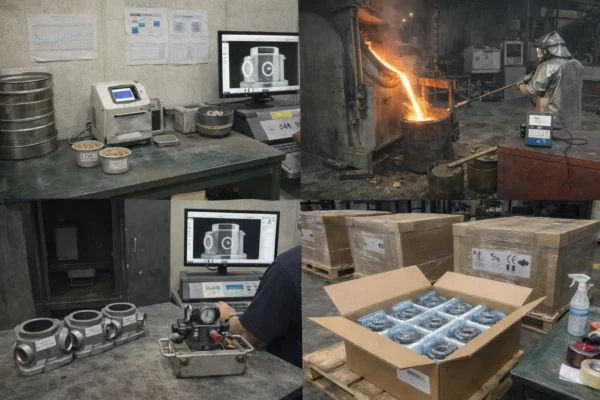
In Prime, we share real photos and videos from our ten production lines with new buyers. We send sample quality reports, including material certificates, in-process checks, and final inspection sheets. Buyers can quickly see how their stamping parts, CNC parts, casting parts, screws, and plastic parts move through one stable system. Many of them later request custom kits through our casting and fastener product page.
When Should I Upgrade From Basic Stamping to CNC Precision Machining?
Some buyers stay too long with basic stamping, even while defect rates grow and fit problems repeat. Other buyers jump to CNC too early and spend more than needed. I stood on both sides of this mistake many times in my 30-year journey.
You should move from simple stamping to CNC parts precision machining when tolerance, surface finish, or flexibility needs pass normal die limits. Complex 3D shapes, very tight fits, and low volumes with many design changes often justify CNC. Stamping still works best for high volume, flat or simple forms, and stable designs. A mixed route, with stamping plus secondary CNC, often offers the best balance between cost and performance. ([aiag.org][3])
So I now start with two simple checks. I first check yearly volume and design change risk. I then check functional needs for each surface.
How to Choose Between Stamping, CNC, and Casting for Best Total Value
Many customers come to me and ask for CNC parts because they fear stamping quality. Others ask for casting because they see heavy parts. After I review the drawing, I often suggest a different path.
| Process | Best For | Typical Volume | Cost Style |
|---|---|---|---|
| Stamping | Flat parts, clips, small brackets | Medium to very high | Higher tooling, low unit cost |
| CNC machining | Precise 3D parts, tight fits | Low to medium | Low tooling, higher unit cost |
| Casting | Thick or complex shapes | Medium to high | Medium tooling, medium unit cost |
I also like to map the full process from RFQ to shipment so buyers see where cost sits.
| Step | What We Do at Prime | How It Affects Cost and Quality |
|---|---|---|
| 1. RFQ review | Check drawing, volume, and function | Avoid wrong process choice |
| 2. Costing | Compare stamping, CNC, and casting routes | Select best cost and risk mix |
| 3. Tooling design | Design dies and fixtures | Secure stable quality from day one |
| 4. Sample making | Run trial and measure all points | Fix issues before mass production |
| 5. Mass production | Follow control plan and SPC | Keep variation small and predictable |
| 6. Packing | Use export packing and labels | Reduce damage and claim risk |
| 7. Logistics | Coordinate sea, air, or train shipping | Balance speed and cost |

Operator setting up CNC machining center for secondary operations on stamped parts.
When volume is low and design may change, I advise CNC or casting plus CNC. You avoid heavy die cost and long lead time. When volume is high and shapes are simple, I push hard for stamping. Sometimes I guide customers to a hybrid route, where we use stamping or casting for the base shape and CNC only on critical faces. This approach supports both cost goals and strict performance needs. After these talks, buyers often review similar mixed-process parts on our CNC machining parts page.
How Do Material Choices Affect Both Cost and Long Term Performance?
During many projects, I saw buyers choose stainless steel where coated carbon steel worked well. I also saw the opposite mistake. Both cases wasted money or reduced life. So I now spend more time on material choice at the start.
Material choice in stamping parts strongly affects price, corrosion life, strength, and forming behavior. Carbon steel often offers the best price and wide forming range. Stainless steel supports harsh environments but costs more and forms harder. Aluminum gives low weight but needs careful design. Basic technical overviews of metal stamping and materials confirm these simple trade-offs and help teams choose better. ([International Organization for Standardization][6])
So I always ask where the part will work and how long it must last.
Simple Material Comparison for Stamping, CNC, and Casting Parts
I like to use a clear table that buyers can share with engineers.
| Material | Relative Cost | Corrosion Resistance | Formability / Machining | Typical Use Case |
|---|---|---|---|---|
| Carbon steel | Low | Needs coating or plating | Easy to stamp and machine | Indoor brackets, general hardware |
| Stainless steel | High | Very strong | Harder to form and machine | Food, medical, outdoor, high humidity |
| Aluminum | Medium | Good with right coating | Easy to machine, careful forming | Lightweight structures and covers |
We also talk about surface treatment for total cost control.
| Finish Type | Main Benefit | Cost Level | Typical Use |
|---|---|---|---|
| Zinc plating | Basic corrosion protection | Low | Indoor fasteners and brackets |
| Powder coating | Strong coating and color | Medium | Visible parts and panels |
| E-coating | Uniform thin film protection | Medium | Complex shapes and automotive parts |
| Nickel plating | Higher corrosion and hardness | Higher | Connectors, precision CNC components |
With this view, buyers can align quality needs with budget. Many times, we moved customers from full stainless designs to coated carbon steel. We kept function and saved serious cost. In other projects, we upgraded from basic zinc to e-coating and reduced field rust claims. These changes also helped their own PPAP or internal approval steps move faster.
Industry Resources and High-Quality Domains for Further Study
From my side as a factory, I like buyers who learn from solid sources. So I often share links like these when we discuss projects:
-
ISO 9000 quality management family – overview of the ISO 9000 series and how it supports consistent quality systems. ([International Organization for Standardization][1])
https://www.iso.org -
Precision Metalforming Association (PMA) – trade association for the North American metalforming industry with training and news. ([Precision Metalforming Association][4])
https://www.pma.org -
Automotive Industry Action Group (AIAG) – key source for PPAP, FMEA, APQP, and other automotive quality tools. ([aiag.org][5])
https://www.aiag.org -
SAE International – global professional association for mobility and automotive standards. ([sae.org][7])
https://www.sae.org -
ASQ (American Society for Quality) – practical explanations and guides on ISO 9001 and quality methods. ([ASQ][2])
https://asq.org
You can also learn from ASTM International at https://www.astm.org and ASME at https://www.asme.org when your projects involve material and mechanical standards.
When you combine this outside knowledge with real factory feedback from partners like Prime, you get a balanced view. Then you can set smart specs, build better RFQs, and choose suppliers with more confidence.
FAQs: Cost vs Quality in Metal Stamping and CNC Parts
What is the best way to choose a custom stamping parts supplier in China?
I suggest you check four main points. You check ISO certification and audit date. You review real workshop photos and process flow. You request standard inspection reports for stamping parts, CNC parts, and fasteners. You also ask for packing photos and sample labels. When a supplier like Prime shares these items quickly and clearly, you can trust them more and then move to RFQ on our stamping parts page.
How can I control quality without raising the price too much?
You can control quality by targeting the real risk points instead of pushing everything to the maximum. You mark critical dimensions and surfaces on the drawing. You agree with the supplier on a control plan for these points. You keep non-critical features more flexible. You also design strong packaging and realistic inspection levels. This method keeps quality high and cost still under control.
When should I move from stamping to CNC parts precision machining?
You should consider CNC when you see very tight tolerances, smooth fit requirements, low volume, or many design changes. You also think about CNC when you need complex 3D shapes or deep pockets. In many cases, we use stamping for the base shape and CNC for local precision. This path keeps cost balanced and supports function. You can see such mixed cases on our CNC machining product page.
How does an ISO certified casting parts manufacturer help my project?
An ISO certified casting parts manufacturer follows fixed rules for process control and traceability. You get stable chemical composition, better dimensional control, and clear records for each heat and batch. When casting and machining sit together with stamping and fasteners in one group, you reduce coordination work. You also improve lead time and packaging consistency.
How many quality checks should I expect for export stamping parts?
You should expect checks at raw material receiving, first piece approval, in-process sampling, and final inspection. You should also ask for packing inspection to protect labels, barcodes, and cartons. At Prime, we send these records together with shipments. So buyers can trace each lot by date, machine, and operator if needed.
What can I do to reduce damage and rust during long sea shipments?
You can agree on export grade cartons, pallets, moisture barriers, and rust protection oils or VCI bags. You also ask for clear loading photos for each container. When we design packing with our customers, we simulate worst case routes and seasons. This way, we avoid carton collapse, water damage, and rust during long trips.

About Prime
If you need a partner who understands both factory detail and buyer pressure, you can reach out to us. I am always glad to review drawings, discuss tolerance trade-offs, share PPAP experience, and build a practical plan that balances cost and quality for your market.
Conclusion
Work with Prime now for stable quality, fast delivery, and honest support on every stamping and CNC project, worldwide orders.
If you want to reduce hidden costs and protect your brand, you can talk with us now. You can send your drawings and questions through our contact page and get free technical review, clear quotations, and custom packaging plans. Our team answers fast, and our ten production lines support urgent delivery for stamping parts, CNC parts, casting parts, screws, and plastic parts. When you work with Prime, you do not just buy parts. You gain a long term partner who stands with you in every season of your business.
Contact Us
🌐 Visit: https://primecustomparts.com
Get a free quote, custom tool configuration, and fast delivery worldwide. Every order comes with setup support.