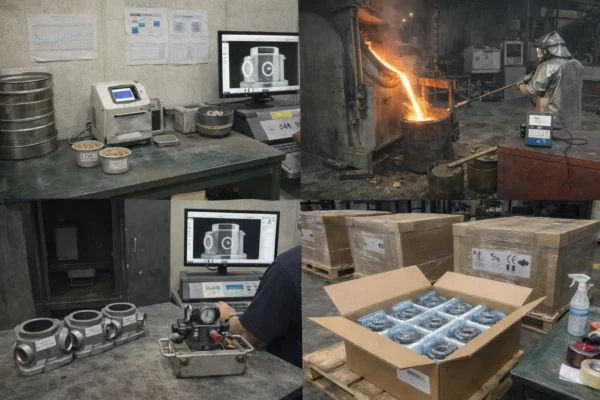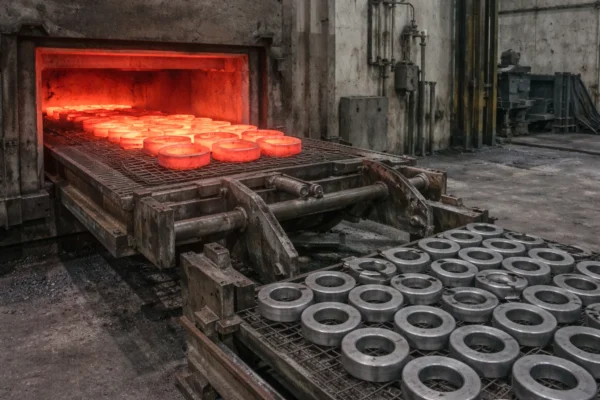
Finding a trusted stamping parts supplier on Google feels overwhelming. A bad choice means delays, poor quality, and lost money, but my 10-point checklist will help you find the right strategic partner.
To quickly screen Chinese manufacturers on Google, verify their authenticity online. Check for a current ISO 9001:2015 certificate1, look for real factory photos, and confirm their operational history. A legitimate supplier’s website will transparently display their in-house tooling capabilities2, main export markets3, and detailed contact information4.
This is just the first step. To truly vet a supplier, you need to dig deeper into the details that separate a simple workshop from a long-term manufacturing partner. As the founder of Prime with over 30 years in custom metal fabrication5, I’ve helped hundreds of buyers navigate this process. I’m going to share the exact inspection points I recommend to buyers who want to avoid costly mistakes.
How can you verify a manufacturer’s authenticity and experience online?
Many websites look professional but are just middlemen without a factory. I’ve seen buyers waste months communicating with a trading company, only to discover they have no control over production, leading to higher costs and missed deadlines.
Verify authenticity by looking for a "Factory Tour6" or "Workshop" section with real photos and videos. Find their ISO 9001 certificate and check the company name and founding date. A long history, like our 30+ years since 1993, indicates stability and real-world experience.

Verifying who you are talking to is the most critical first step. From a buyer’s perspective, an ISO 9001 certification isn’t just a logo; it’s your assurance of process control and risk management. For an extra layer of security, you can verify a company’s registration on official government portals like China’s National Enterprise Credit Information Publicity System. This simple, 5-minute check is what separates professional buyers from rookies.
| Red Flag | Green Flag |
|---|---|
| No physical address listed | Detailed address with map |
| Using stock photos of factories | Real photos/videos of their workshop |
| Vague history ("leading supplier") | Specific founding date (e.g., Since 1993) |
| No certifications shown | Clearly displayed and verifiable ISO 9001 |
What tooling and engineering capabilities should you look for?
Your custom part has a complex design that needs precision. A supplier who outsources their tool making will cause unpredictable delays, higher costs, and serious quality control issues for your project.
A reliable manufacturer must showcase their in-house tooling and mold-making capabilities. Look for technical case studies7, a detailed list of materials they work with, and engineering support8 like Design for Manufacturability (DFM)9 analysis.
A supplier’s control over tooling tells you everything about their technical strength. Their expertise in specific techniques, such as high-volume progressive die stamping, reveals their true capabilities. I remember a case for an automotive client where our DFM review identified a potential weak point in their design. A minor adjustment to a radius not only strengthened the part but also improved material flow in the die, reducing the risk of stress fractures and saving them a potential recall down the line. This proactive engineering is the signature of a true partner.
Material Expertise Matters
Their website should list the specific materials they handle, showing deep technical knowledge.
| Material | Key Properties & Link | Common Applications |
|---|---|---|
| Stainless Steel | Corrosion resistance, strength | Medical devices, food-grade equipment |
| Carbon Steel | High strength, low cost | Automotive brackets, structural parts |
| Aluminum | Lightweight, good conductivity | Electronic enclosures, heat sinks |
| Brass / Copper | High electrical conductivity | Electrical terminals, connectors |
You receive a quote that seems too good to be true. You approve it, only to be hit with extra charges later for "setup," "packaging," or "inspection," which completely ruins your budget.
A trustworthy quote is detailed and transparent. It should clearly separate one-time tooling costs from the per-piece price. It must also specify the material grade11, finish, payment terms, and lead time. A single, vague number is a major red flag for hidden costs10.
A quote is more than just a price; it’s a reflection of the manufacturer’s professionalism. I once helped Kevin, a buyer from the U.S., review a quote from another supplier. The price was incredibly low, but it didn’t specify the material grade11 (304 vs. 201 stainless steel) or shipping terms. It was a trap designed to win the order and make up the margin through compromises later. A good quote builds trust. It is a plan for success, not just a number on a page. Always ask for an itemized breakdown12.
What are the key signs of reliable logistics and compliance?
Getting your parts made is only half the battle. Shipping delays, problems at customs, or parts that fail compliance standards can completely ruin your project and your reputation.
Check their website for information on shipping terms (known as Incoterms) and their main export markets3. A reliable supplier will have clear, documented quality control processes13, including pre-shipment inspections.

An exporter experienced with North America or Europe will understand packaging requirements and have all necessary paperwork ready. For our automotive clients, a full PPAP (Production Part Approval Process) submission, a quality framework established by the Automotive Industry Action Group (AIAG), is non-negotiable. It’s the documented proof that our process is repeatable and reliable. This level of quality management is what you should expect from a real partner. Look for mentions of RoHS or REACH compliance, especially for products sold in Europe as managed by the European Chemicals Agency (ECHA).
Conclusion and Your Next Step
Using this checklist helps you see past the marketing and evaluate a supplier’s true capability. It allows you to focus your time on building a partnership with a true Chinese manufacturing expert who can help you succeed.
My name is Kevin, founder of Prime. Since 1993, my team and I have been dedicated to bringing our 30+ years of experience to projects for clients worldwide. We believe in transparent communication and engineering-led solutions.
If you are ready to work with a proven manufacturing partner, we are ready to help.
Upload Your RFQ / Contact Prime Today
Frequently Asked Questions
What are typical payment terms when working with Chinese factories?
For custom projects, a common structure is 50% of the tooling cost upfront to begin design and manufacturing the die, with the remaining 50% due upon approval of the first samples (T1). For mass production, terms are typically a 30-50% deposit before raw material procurement, with the balance due before shipment (T/T against Bill of Lading copy).
What are the most common quality issues with stamped parts?
Common issues include burrs (sharp edges), cracks, and dimensional inaccuracies. You can avoid these by choosing a supplier with in-house tooling and a robust quality system. Providing a clear drawing with GD&T (Geometric Dimensioning and Tolerancing) and requiring a First Article Inspection (FAI) report with your samples are essential steps.
What is the typical process for a custom stamping project?
| Stage | Action | Typical Duration |
|---|---|---|
| 1. Inquiry | You send RFQ with 2D/3D drawings. | 1 day |
| 2. Quotation | Factory provides a detailed quote with DFM feedback. | 1-3 days |
| 3. Tooling | After PO, factory designs and builds the die. | 3-5 weeks |
| 4. Sampling | First samples (T1) and FAI report sent for approval. | 1 week |
| 5. Mass Production | After sample approval, full production begins. | 2-4 weeks |
| 6. Shipment | Parts are inspected, packed, and shipped. | 1 week (air) / 4-6 weeks (sea) |
-
Understanding ISO 9001:2015 certification can help you ensure quality management in your supplier. ↩
-
In-house tooling capabilities indicate a manufacturer’s control over quality and production timelines. ↩
-
Knowing the export markets helps in understanding compliance and customer expectations. ↩ ↩
-
Having detailed contact information ensures transparency and facilitates communication with suppliers. ↩
-
Custom metal fabrication allows for tailored solutions that meet specific project requirements. ↩
-
A factory tour can provide insights into the actual production capabilities and authenticity of a supplier. ↩
-
Technical case studies provide evidence of a manufacturer’s capabilities and past performance. ↩
-
Engineering support can enhance product design and manufacturing efficiency, ensuring better outcomes. ↩
-
DFM is crucial for optimizing designs for efficient manufacturing, reducing costs and improving quality. ↩
-
Identifying hidden costs can save you from budget overruns and ensure transparency in supplier quotes. ↩ ↩
-
Understanding material grades is essential for ensuring the right balance of cost and quality in production. ↩ ↩
-
An itemized breakdown helps clarify costs and prevents misunderstandings regarding pricing. ↩
-
Effective quality control processes are vital for maintaining product quality and customer satisfaction. ↩