Are your metal parts failing due to rust1? Corrosion can destroy your products, damage your reputation, and lead to costly replacements. You need a reliable shield to ensure lasting quality.
Galvanization is the process of applying a protective zinc coating to steel or iron to prevent rusting. This zinc layer acts as a physical barrier and a sacrificial anode, meaning it corrodes first to protect the underlying steel, massively extending the part’s service life.

That’s the textbook definition. But after founding Prime Fabworks in 1993, I’ve seen firsthand how a proper galvanizing job can be the difference between a product that lasts five years and one that lasts fifty. For buyers, understanding the why behind the process is critical for making a smart investment. It’s not just a coating; it’s an engineered system for longevity.
How does galvanization really work and why do we use it?
You know your steel parts can rust, but do you know why? It’s a chemical reaction called oxidation. Without a tough protective shield, this reaction will compromise your product’s strength and integrity.
Galvanization provides a two-level defense. First, the zinc coating creates a physical shield. Second, if that shield is scratched, the zinc provides what is known as sacrificial protection, corroding first to protect the exposed steel from any rust formation.

This dual action is why it’s so effective. When we use the hot-dip method, the steel and molten zinc react to form a series of zinc-iron alloy layers. Governed by international standards like ASTM A123/A123M, this process creates a coating that is metallurgically bonded to the steel. I remember a client, Kevin from the U.S., who needed robust housings for Siemens electronics. For his order of custom stamping parts, the toughness of this bonded layer was critical to prevent damage during assembly—a common failure point with simple painted parts.
The Metallurgical Bond Layers
This multi-layered structure is the secret to its long life. Each layer has a different hardness, creating a gradient from the tough outer coat to the base steel.
| Layer Name | Composition | Hardness (DPN) | Characteristic |
|---|---|---|---|
| Base Steel | Iron (Fe) | ~159 | The core material being protected. |
| Gamma | ~75% Zinc, 25% Iron | ~250 | Thin, innermost layer providing a powerful chemical bond. |
| Delta | ~90% Zinc, 10% Iron | ~244 | The hardest layer, providing primary abrasion resistance. |
| Zeta | ~94% Zinc, 6% Iron | ~179 | A key layer for impact resistance and ductility. |
| Eta | 100% Zinc | ~70 | The pure zinc outer layer that provides the initial barrier and sacrificial protection. |
What are the different ways to galvanize steel?
Choosing the right galvanization process is crucial. If you pick the wrong one, you might get a finish that isn’t durable enough for outdoor use or pay for a thick coating you don’t need for an indoor part.
The most common method is hot-dip galvanizing for a thick, durable coat. Other options include electrogalvanizing for a thinner, smoother finish (per standards like ASTM B633), pre-galvanizing for sheet metal, and sherardizing for small, threaded parts.

The method we choose at Prime Fabworks depends entirely on the part’s final use. For our automotive clients in Europe, the smooth, uniform finish of electrogalvanizing is essential for their parts to pass the rigorous PPAP (Production Part Approval Process) submissions that are standard in the industry. For large structural projects in the Middle East, only hot-dip galvanizing provides the extreme durability required. Making the right selection is a key part of our engineering support.
Steps in the Hot-Dip Galvanizing Process
To achieve a perfect metallurgical bond, surface preparation is everything. Our ISO 9001 certified process ensures every step is controlled and verified.
| Step | Action | Purpose |
|---|---|---|
| 1. Degreasing | The steel is cleaned in a hot alkaline solution. | To remove dirt, oil, and organic residues. A clean surface is non-negotiable for a good bond. |
| 2. Rinsing | The part is rinsed in water. | To prevent carrying cleaning agents into the next crucial stage. |
| 3. Pickling | The part is dipped in an acid bath. | To remove mill scale and iron oxides (rust). This step etches the surface at a micro-level. |
| 4. Rinsing | Another water rinse. | To remove the pickling acid completely. |
| 5. Fluxing | The steel is dipped in a zinc ammonium chloride solution. | To provide a final cleaning and a protective layer before the molten zinc bath. |
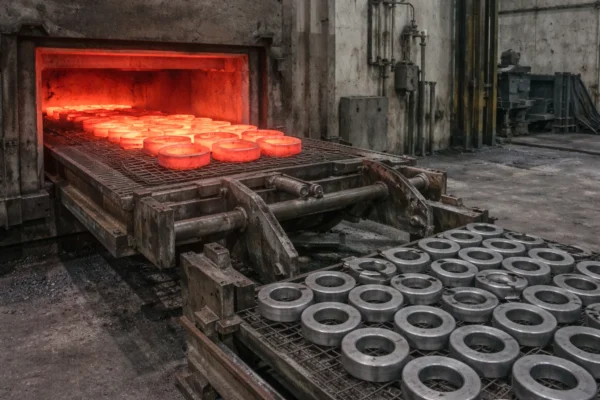
| 6. Galvanizing | The part is fully immersed in a bath of molten zinc at ~450°C (840°F). | To form the protective zinc-iron alloy layers through a diffusion reaction. |
| 7. Cooling & Inspection | The part is cooled and inspected for coating thickness, adherence, and appearance. | To ensure it meets ASTM standards and our client’s specific quality requirements. |
Why should you choose galvanization for your products?
Your products have to survive in the real world. Corrosion causes failures, which lead to warranty claims and a damaged brand reputation.
The key benefits are superior corrosion resistance and an incredibly long service life. It provides a tough, damage-resistant coating, complete coverage, and is often the most economical choice when measured over the product’s entire life.

This isn’t just an opinion. We use data from authoritative bodies like the American Galvanizers Association (AGA) to provide clients with "Time to First Maintenance" charts. These charts prove that a standard galvanized coating can last over 70 years in many environments. It’s this predictable, data-backed reliability that makes it such a powerful choice for industrial hardware, from structural components to custom industrial fasteners.
Life-Cycle Cost Analysis (LCCA) – 20-Year Example
Smart buyers always perform a Life-Cycle Cost Analysis. Let’s compare the real costs for a steel structure over two decades.
| Protection System | Initial Cost | Year 10 Maintenance | Year 20 Maintenance | Total 20-Year Cost |
|---|---|---|---|---|
| Hot-Dip Galvanizing | $120 / ton | $0 | $0 | $120 / ton |
| Industrial Paint System | $100 / ton | Full Repaint: $80 / ton | Full Repaint: $80 / ton | $260 / ton |
The story is clear: the initial savings from painting are quickly consumed by maintenance costs.
Galvanized Steel vs. Other Surface Treatments?
You have different options for corrosion protection. Choosing between them requires understanding the trade-offs in performance, appearance, and cost.
Galvanization offers better durability and self-healing protection compared to paint or powder coating. While stainless steel is more corrosion-resistant in extreme chemical environments, it is also significantly more expensive. Galvanized steel provides the best balance of performance and cost for the vast majority of industrial applications.

The right choice is not what is "best" overall, but what is "right" for your specific project.
Head-to-Head Comparison of Surface Treatments
| Feature | Galvanized Steel | Painting | Powder Coating | Stainless Steel |
|---|---|---|---|---|
| Protection | Sacrificial & Barrier (Bonded) | Barrier Only (Surface Layer) | Barrier Only (Surface Layer) | Inherent Alloy Resistance |
| Durability | Excellent abrasion resistance | Fair. Can be chipped or scratched. | Good. More durable than paint. | Excellent. The material is inherently resistant. |
| Initial Cost | Medium | Low | Medium | High to Very High |
| Life-Cycle Cost | Lowest. No maintenance needed. | High. Requires regular repainting. | Medium. May need touch-ups. | High. Very high initial cost. |
| Best Use Case | Structural steel, infrastructure, outdoor hardware, industrial components. | When specific colors are a priority and the environment is not harsh. | Automotive parts, appliances, where a durable, colorful finish is needed. | Food processing, medical, marine, highly corrosive chemical environments. |
Conclusion
Galvanization is an engineered solution that offers unmatched long-term value. By creating a tough, bonded coating, it protects your steel parts for decades, saving you money and protecting your professional reputation.
Frequently Asked Questions (FAQs)
Can you weld galvanized steel?
Yes, but you must follow specific safety procedures. The zinc coating near the weld must be ground off first. Welding zinc-coated steel creates fumes, so it is crucial to work in a well-ventilated area with proper respiratory protection, following safety standards like those from the U.S. Occupational Safety and Health Administration (OSHA). After welding, the corrosion protection must be restored using a zinc-rich paint.
How long does galvanization last?
The service life is predictable and depends on the environment’s corrosivity. According to the globally recognized ISO 9223 standard on the corrosion of metals, a standard hot-dip galvanized coating can last over 70 years in a mild, rural atmosphere. You can still expect 30 to 50 years of maintenance-free performance even in harsh industrial zones.
Is galvanized steel safe for drinking water applications?
No. For any application involving potable (drinking) water or direct food contact, stainless steel is the required material. Modern plumbing codes and safety standards prohibit galvanized steel‘s use in these cases due to the potential for zinc to leach into the water over time.
Can you paint over galvanized steel?
Yes, this is called a duplex system. It offers the ultimate in corrosion protection and aesthetics. However, the surface must be properly prepared—either by letting it weather or by treating it with a specific wash primer or sweep blasting—to ensure the paint adheres correctly.
What is the difference between galvanizing and galvannealing?
Galvannealing is a two-step process. After hot-dip galvanizing, the still-hot steel is passed through an annealing furnace. This converts the entire zinc coating into a zinc-iron alloy. The result is a dull gray, matte finish that is harder and an excellent base for painting, which is why it’s a popular choice in the automotive industry.
Tired of parts failing from corrosion? Let’s build something that lasts.
> Upload Your RFQ and Get a Quote from Prime Fabworks <
-
Explore this link to discover effective strategies for rust prevention, ensuring the longevity and quality of your metal products. ↩