Worried your new supplier isn’t reliable? Fake certificates and poor management can ruin your projects and brand reputation. Verifying their certifications is your first crucial step to ensure quality and avoid costly mistakes.
Yes, a supplier should have valid certifications like ISO 90011 for general quality management or IATF 169492 for automotive parts. Always verify the certificate’s authenticity and scope online through the issuing body’s database. This simple check confirms their commitment to consistent quality standards.
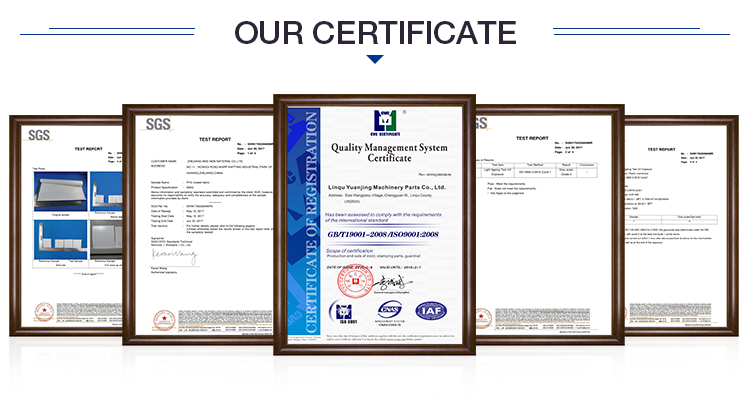
Verifying a certificate might seem simple, but in my three decades in metal fabrication, I’ve learned that the paper is just the start. Many buyers get burned by overlooking the small details. It’s important to understand what these certifications really mean for your business and how they reflect a supplier’s core culture. Let’s break down how you can be sure a supplier genuinely meets these high standards and protect your supply chain from predictable failures.
Does system certification1 represent management level?
Think a certificate is just for show? Many suppliers get one but then ignore the daily processes. A real ISO 9001 certification2 isn’t just paper; it shows a factory’s true commitment to high-level management.
Absolutely. A valid system certification1 is a direct reflection of a company’s management maturity. It proves they have structured, repeatable processes for everything, not just quality control. This systematic approach, as outlined by the International Organization for Standardization (ISO), leads to fewer errors, consistent output, and a more reliable partnership [1].

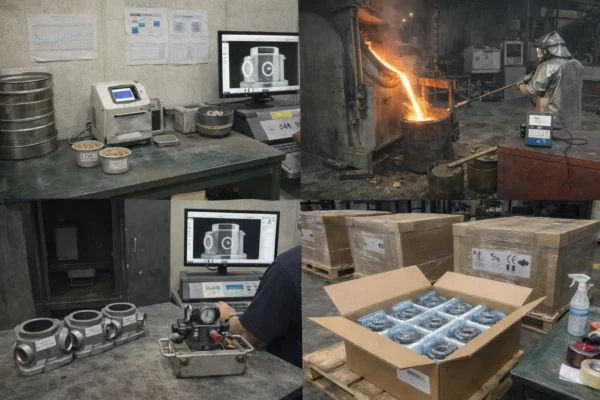
In my experience, a factory’s commitment to its quality system is the single best indicator of its reliability. A real certified factory has a "culture of quality." This means every worker is empowered to stop the production line if something isn’t right. It’s a proactive approach. I remember a new buyer from the U.S. who was very skeptical. He’d been burned by a supplier whose quality faded after the first order. I didn’t just show him our certificate; I showed him our process control station2 where real-time data from the production line for his custom CNC parts is monitored using SPC charts. He saw how every step was managed and recorded according to our ISO 9001 system. That’s what convinced him.
| Feature | With Strong ISO 9001 System | Without ISO 9001 System |
|---|---|---|
| Process Control | Documented, consistent, and data-driven. | Ad-hoc, inconsistent, relies on individuals. |
| Quality Issues | Proactive detection, root cause analysis. | Reactive, often just fixes the bad parts. |
| Customer Input | Systematically collected for improvement. | Ignored or handled inconsistently. |
| Employee Training | Ongoing, role-specific, and fully recorded. | Minimal or a one-time event. |
How do you verify the authenticity and scope of a certificate3?
A supplier proudly shows you their ISO certificate. But is it real? An expired or fake certificate, or one that doesn’t even cover the product you need, can lead to complete disaster and wasted money.
You must verify every certificate’s authenticity and scope. Go to the website of the issuing certification body, like SGS or TUV. Use their public database to search for the supplier’s company name or certificate number. Check the validity dates and, most importantly, the "scope" to ensure it covers your specific product.

This is a step you can never skip. Verifying the source takes only five minutes and can save you from a major headache. The official ISO website1 itself warns users about fraudulent certificates and provides resources for checking accredited bodies [2]. The "scope" is the most critical part. I once helped a buyer from Australia who was comparing our price for custom stamping parts with a supplier who was 15% cheaper. I urged him to check their certificate scope. It turned out they were only certified for "Trading of metal parts," not "Manufacturing." He was about to give a manufacturing contract to a middleman. He realized the lower price wasn’t worth the risk.
| Step | Action | Why It’s Important |
|---|---|---|
| 1 | Ask for a clear copy of the full certificate. | You need the exact company name, certificate number, and issuing body. |
| 2 | Go to the official website of the issuing body (e.g., sgs.com). | Avoids fake verification sites. Be sure the URL is correct. |
| 3 | Find their "Certified Client Directory2" or "Certificate Validation." | This is the public database for checking validity. |
| 4 | Enter the certificate number or company name. | It will pull up the official record. |
| 5 | Check status, dates, and Scope of Certification4. | Confirms it’s active and covers the product you are buying. |
What is the significance of IATF 169493 for automotive-grade screws?
Sourcing screws for cars or other vehicles? A simple quality failure is not an option. Relying on a supplier with only a basic ISO 9001 certification for these critical parts is a huge and unnecessary risk.
IATF 169493 is the mandatory global quality standard for the automotive industry. For something like an automotive-grade screw, it’s non-negotiable. It requires extreme precision, full traceability, and rigorous risk management using specific "Core Tools" to prevent defects before they ever happen, a requirement set by the International Automotive Task Force [3].

You cannot compromise when it comes to automotive parts. IATF 169491 forces a manufacturer to think about every possible failure. Last year, a client from Germany in the agricultural machinery sector needed a special automotive screw and was considering a cheaper supplier. Our PPAP (Production Part Approval Process)2 submission was a 30-page binder; the competitor’s was a 3-page summary. Our report identified a high risk of hydrogen embrittlement from the specified plating process and included a mitigation plan backed by lab tests. The competitor completely missed this. The client realized our higher price included the engineering expertise to prevent a catastrophic field failure. This level of detail is exactly what the Core Tools4, championed by quality organizations like the ASQ, are designed to produce [4].
| IATF 169491 Core Tool | What It Is (Simple Terms) | Example for an Automotive Screw |
|---|---|---|
| FMEA3 | A risk assessment to predict and prevent potential failures. | Identifies risk of thread stripping and implements torque testing. |
| PPAP | A full validation report proving the process is capable. | Submitting 18 documents, including material certs, to prove conformity. |
| SPC | Using statistics to monitor and control the process in real-time. | Real-time charts to ensure head diameter stays within a 0.05mm tolerance. |
| MSA | Analysis to ensure measurement tools are accurate. | Regularly calibrating the calipers and CMMs used for inspection. |
Does the lack of a certificate necessarily preclude cooperation?
What if a supplier has great prices and seems capable, but has no ISO certificate? It’s a major red flag for quality and consistency. Proceeding without this basic assurance is a big gamble for your business.
Not absolutely, but it creates enormous work and risk on your end. You would have to conduct an extensive, in-person factory audit yourself or hire a professional third party. For most buyers, it is far safer and more cost-effective to partner with a supplier who has already invested in a certified management system.

I understand the temptation. Early in my career, I tried to give a chance to a small, uncertified workshop for a simple, non-critical bracket for an electronics enclosure. The first small order was okay. The second, larger order was a disaster. Shipments were late, and nearly 30% of the parts had misaligned holes. There was no system, no records, no way to find the root cause. The money I thought I saved was lost ten times over in sorting parts and production downtime. That experience taught me a hard lesson: a quality system1 isn’t an expense; it’s an investment in your peace of mind. Without it, you, the buyer, pay for their lack of system. If you need reliable parts without the headache, it’s best to work with a proven supplier.
| Aspect | Risk of Uncertified Supplier | Potential Reward (If Managed Perfectly) |
|---|---|---|
| Quality | Highly inconsistent, dependent on the day/worker. | Potentially acceptable quality on a good day. |
| Cost | Hidden costs: your time, travel, 3rd party audits, rework. | Lower initial piece price. |
| Reliability | Unpredictable delivery times and process control. | Could be flexible if they are small. |
| Management Effort | Very high. You are effectively the external quality manager. | Low, assuming you are willing to accept high risk. |
Frequently Asked Questions
What’s the main difference between ISO 90012 and IATF 169494?
ISO 90012 is a general quality management standard for any industry. IATF 169494 is specifically for the automotive industry and is much stricter, focusing heavily on defect prevention, full traceability, and risk management through specific tools like FMEA and PPAP.
Can I check a supplier’s ISO certificate online for free?
Yes. All major, reputable certification bodies have a free public database on their official websites. You can search by the certificate number or the supplier’s exact company name to verify its status and scope.
What does "scope of certification3" mean and why is it important?
The scope defines what products or services the certificate covers. It’s critical because a supplier might be certified for "Trading" but not for "Manufacturing." You must ensure the scope explicitly covers the process for your product, whether for custom casting parts or another service.
If a supplier has ISO 90012, are they good enough for automotive parts?
No. For any part that goes into a vehicle, you should always require IATF 169494 certification. ISO 90012 is a good foundation but lacks the specific, stringent requirements for safety, risk mitigation, and traceability demanded by the auto industry.
How much does ISO certification cost a factory?
The cost is a significant investment, including internal costs (training, system development, dedicated staff) and external costs (auditor fees). This investment is why our price includes the guarantee of a reliable quality system1, which saves you money in the long run.
End Your Sourcing Worries Today
Stop gambling on supplier quality. Partner with a certified factory5 that has over 30 years of proven experience. Let my team and I handle the complexities of manufacturing, so you can receive high-quality parts, on time, every time.
> > Upload RFQ / Contact Prime < <
References
[1] International Organization for Standardization. "ISO 9001 and related standards — Quality management." ISO.
[2] International Organization for Standardization. "Certification." ISO.
[3] International Automotive Task Force. "About IATF." IATF.
[4] American Society for Quality. "What Are the Core Tools?" ASQ.
-
Understanding a quality system can help you appreciate its importance in ensuring reliable and consistent product quality. ↩ ↩ ↩ ↩ ↩ ↩ ↩ ↩
-
Exploring ISO 9001 can provide insights into quality management standards that can enhance your business operations. ↩ ↩ ↩ ↩ ↩ ↩ ↩ ↩ ↩
-
Understanding the scope of certification is crucial for ensuring that your suppliers meet the necessary standards for your products. ↩ ↩ ↩ ↩ ↩
-
Learning about IATF 16949 can help you understand the specific quality requirements for the automotive industry. ↩ ↩ ↩ ↩ ↩
-
Discovering the advantages of certified factories can guide you in choosing reliable partners for your manufacturing needs. ↩