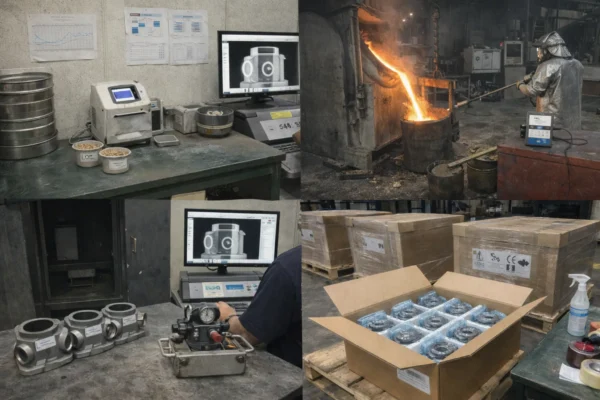

You need high-strength parts, yet every process looks risky and expensive. Wrong choices cause failures, delays and costly warranty claims.
Forging squeezes hot metal in dies and aligns grain flow. Casting solidifies liquid metal in a mold and forms complex shapes. Machining from solid cuts bar or plate with CNC and keeps tooling flexible. Each route changes strength, fatigue life, cost, tooling, lead time and risk in a different way. For real projects, you should match process to loads, geometry, volume and risk level, not only unit price.
In my work with buyers and engineers, I see the same struggle again and again. People must keep machines safe, but they also must defend budgets and schedules. In this article, I share how I compare forged vs cast vs machined options from both a buyer view and a factory view. I also show real numbers, a mini case study, and how my team at Prime manages PPAP, NDT, packaging and global delivery.
What is the real difference between forging, casting and machining from solid?
Many drawings receive three very different quotes. One supplier suggests forging, one suggests casting, and one offers pure machining. Prices vary a lot. If you do not understand the real difference, then you face a hard decision and slow internal debates.
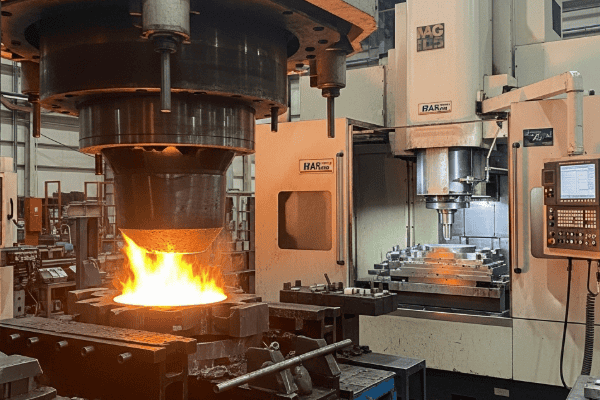
Forging shapes hot billets in closed dies and bends grain flow around the part. Casting pours liquid metal into a mold and creates complex internal and external features. Machining from solid removes material from rolled bar or plate using CNC. Forging favors strength, casting favors complexity, and machining favors flexibility and speed.
Process definitions in buyer language
I avoid heavy theory when I explain processes to purchasing teams. I use simple words and link them to your daily work.
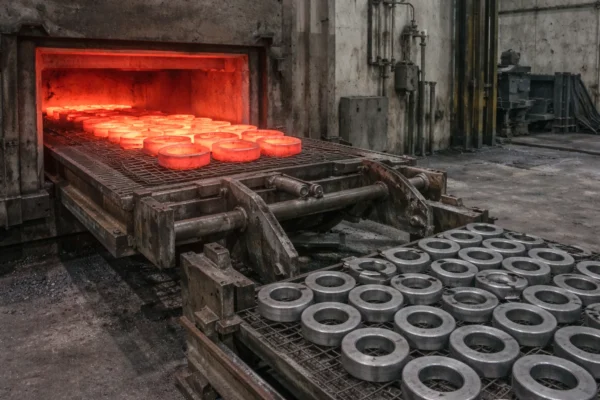
- Forging heats a steel or aluminum billet. A press or hammer pushes the hot metal into dies. Metal flows, and grain follows the shape. We then trim, heat treat and machine faces, bores and threads.
- Casting melts the alloy in a furnace. Liquid metal fills a sand, die or investment mold. After solidification, we remove the mold, clean the casting, heat treat when needed and then machine critical surfaces.
- Machining from solid starts with rolled bar, plate or block. We saw blanks and fix them in CNC machines. Tools remove material until the final geometry appears. We deburr, clean and inspect the parts.
Side-by-side process flow and key differences
Here is a process overview you can show to your team.
| Step | Forging route | Casting route | Machined-from-solid route |
|---|---|---|---|
| 1 | Cut and heat billet | Melt alloy | Cut bar or plate |
| 2 | Forge in one or more dies | Pour into mold | Clamp blank in CNC fixture |
| 3 | Trim, straighten, shot blast | Let casting solidify and cool | Rough machine shape |
| 4 | Heat treat as required | Remove mold, clean, heat treat if required | Finish machine faces, bores and threads |
| 5 | CNC finish critical features | CNC finish critical features | Deburr, clean and inspect |
| 6 | Final inspection and export packing | Final inspection and export packing | Final inspection and export packing |
And a quick role summary:
| Aspect | Forging | Casting | Machined from solid |
|---|---|---|---|
| Main role | High-strength, fatigue critical parts | Complex shapes with good strength | Flexible, precise, low to mid volume |
| Typical shapes | Lugs, hubs, shafts, arms | Housings, carriers, ribbed brackets | Brackets, flanges, adapters, blocks |
| Tooling need | High die cost | Medium mold cost | Low fixture cost |
| Design change speed | Slow | Medium | Very fast |
At Prime, we often begin projects with CNC machined parts from solid stock. Then, when you confirm loads and volumes, we can discuss forged or cast blanks as the next step. This staged plan gives you flexibility early and cost savings later.
How do forged, cast and machined parts compare in strength, toughness and fatigue?
High-strength parts do not forgive mistakes. Wrong process choices lead to cracks, downtime and expensive claims. Data sheets alone do not tell the full story. You must connect process, microstructure, defects and real load cases.
In our experience, forged parts almost always give the best fatigue performance for suspension arms, lifting lugs and wheel hubs. Cast parts can still achieve strong and reliable performance when porosity, inclusions and heat treatment stay under control. Machined parts from rolled stock offer stable properties and high precision, but grain flow does not follow the final shape. You should compare grain direction, defect risks and real stress zones before you decide.

How each process changes the metal
Forging bends and stretches grain flow. When the die follows the load path, grain wraps around holes and thick sections. This structure supports impact and cyclic loads very well. Poor forging practice, however, creates laps or fold lines that behave like cracks.
Casting starts from liquid metal. As metal cools, gas and shrinkage can form pores. Inclusions can also remain. A good foundry designs runners, risers and process windows to reduce these issues. Heat treatment then tunes strength and toughness. Good control yields strong cast parts, but fatigue scatter often remains higher than forgings.
Machining from solid uses rolled bar or plate. Mills control composition and heat treatment under quality systems like the ISO 9000 family. Grain runs mainly along the rolling direction, not around your final shape. Sharp shoulders and small radii then drive fatigue cracks if design is not careful.
Strength, toughness and fatigue comparison
Here is a simple comparison table I use with engineers.
| Factor | Forged part | Cast part | Machined from solid |
|---|---|---|---|
| Static strength potential | Very high for same alloy | Medium to high | High, depends on bar quality |
| Toughness | Very good, aligned grain flow | Variable, sensitive to porosity | Good, fairly uniform |
| Fatigue resistance | Excellent with right die and design | Medium, higher scatter | Good, needs strong geometry control |
| Typical defect risks | Laps, fold lines, local inclusions | Porosity, shrinkage, hot tears, inclusions | Surface marks, residual stress, sharp edges |
I then map load cases to process options.
| Load and risk case | Preferred starting process |
|---|---|
| High cyclic load, safety critical | Forging plus CNC |
| Shock loads with compact, strong shape | Forging plus CNC |
| Complex housing, moderate to high load | Casting plus CNC |
| Mixed load, low volume, design changes | Machining from solid |
If a customer tells me “We had fatigue failures in the field,” I treat that as a red flag. I then ask where the crack starts, which process they used, and what inspections they did. That information guides the next process choice.
How do cost, tooling and lead time differ between forging, casting and machining?
For most projects, cost and timing questions come right after strength. You must defend your choices with numbers. Tooling budgets, cash flow and sample dates all matter. A vague “forging dies cost more” answer does not help you in front of management.
Forging usually needs the highest tooling budget and longest die lead time. However, at high volume, unit price becomes very attractive. Casting needs medium tooling cost and offers good unit price for complex shapes at mid to high volume. Machining from solid uses cheap fixtures and short lead times, but unit price rises with part size and cycle time. You should think in total project cost and break-even points, not just today’s RFQ.

Typical tooling and piece cost ranges
Real numbers depend on part size and geometry. Still, typical ranges help.
| Process and size example | Tooling cost range (USD) | Typical unit price at volume (USD) |
|---|---|---|
| Small forged lug, 0.5–1 kg | 4,000–10,000 | 6–12 at 5,000+ pcs per year |
| Medium forged hub, 3–8 kg | 12,000–30,000 | 18–40 at 5,000+ pcs per year |
| Sand cast steel part, 3–8 kg | 3,000–12,000 | 15–40 at 1,000–10,000 pcs |
| Investment casting, 0.2–1 kg | 5,000–15,000 | 4–15 at 5,000+ pcs |
| CNC from solid bar, 1–5 kg | 500–3,000 (fixtures) | 30–120 at 50–1,000 pcs |
These figures are not quotes, but they give you order-of-magnitude support for internal planning.
Numeric example: three routes for one high-strength hub
Let us use a 5 kg wheel hub. Material is 42CrMo equivalent. Bearing seats need close tolerances.
| Option | Tooling cost | Est. unit price | Good yearly volume range | Break-even vs machining |
|---|---|---|---|---|
| A: CNC from solid | 1,500 | 110 | 10–300 pcs per year | Base case |
| B: Cast steel + CNC | 8,000 | 70 | 300–5,000 pcs per year | Around 200–250 pcs |
| C: Forged blank + CNC | 25,000 | 55 | 2,000+ pcs per year | Around 600–700 pcs |
If your forecast is 120 pcs per year, machining from solid remains safer. At 500 pcs per year, cast plus CNC often wins. At 5,000 pcs per year, forging plus CNC usually gives the best total cost.
If you want a similar calculation for your own part, you can send us your drawing and yearly volume. I can prepare a simple “A vs B vs C” cost and break-even table as a free pre-study. That report helps your internal approval flow and builds a realistic budget.
Lead time view: tools, samples and cycle time
Lead time matters as much as cost.
| Item | Forging | Casting | Machined from solid |
|---|---|---|---|
| Tooling design and build | 6–10 weeks for dies | 3–8 weeks for molds | 1–3 weeks for fixtures |
| First samples (FAIR / PPAP) | 2–4 weeks after dies | 2–4 weeks after molds | 1–2 weeks after fixtures |
| Typical part cycle time | Seconds per forging stroke | Seconds to minutes per casting | Minutes to tens of minutes |
| Design change response | Slow | Medium | Fast |
In our quotations, we always list tooling lead time, sample date target and mass production takt time. You see the full timeline from day one.
How do material choice, waste and complexity affect process selection?
Many buyers feel unhappy when they see full drums of steel chips. At the same time, they do not fully trust complex castings with thin ribs. The truth sits between these feelings. Material choice, waste and complexity all influence forged vs cast vs machined decisions.
Near-net-shape processes like forging and casting reduce material waste, especially for heavy parts. However, they require clear design rules, stronger early engineering and stable volume. Machining from solid supports many grades and fast design changes, but produces more scrap. Some alloy steels prefer forging, while some irons and stainless grades work better in casting. You should match material, geometry, waste and process risk together.

Material and process pairing from real projects
Here is a simplified map based on frequent parts we see.
| Material group | Strong process choices | Notes |
|---|---|---|
| Medium carbon steels | Forging, machining from bar | Great for strong lugs and hubs |
| Alloy steels (e.g. 42CrMo group) | Forging, machining, some cast steels | Very good for high-strength parts |
| Ductile iron | Casting plus CNC | Good fatigue, cost effective, easy to cast |
| Gray iron | Casting | Good damping, not for tension critical parts |
| Aluminum alloys | Casting, forging, machining | Light weight, heat treatment sensitive |
| Stainless steels | Machining, some forging and casting | Strong and corrosion resistant, slower to cut |
For example, I rarely recommend gray iron for a heavy lifting bracket. I would rather suggest alloy steel forging or machined bar. But I am happy to use ductile iron castings for carriers, housings and axle parts when loads match.
Material waste, complexity and geometry
Now let us connect shape to material utilization and complexity.
| Part type | Preferred processes | Waste and complexity notes |
|---|---|---|
| Heavy compact bracket | Forging plus CNC or machined bar | Forging cuts waste; machining stays flexible |
| Large gearbox housing | Casting plus CNC | Lower weight, less waste, more process steps |
| Simple thick flange | Machining or forging ring | Choice depends on volume and strength |
| Axle or suspension component | Forging plus CNC | Grain flow aligns with load, strong fatigue |
| Light cover with fine ribs | Aluminum casting plus CNC | Good material use, complex tooling |
In many programs, we combine routes. For one customer, we delivered forged steel hubs, ductile iron casting parts, structural welding parts and matching fasteners. We used export-grade pallets, corner protectors and moisture protection. We also arranged door-to-port or door-to-door shipments with clear documents, so their internal logistics stayed simple.
When do real projects switch from machining to casting or forging?
Slide models talk about ideal break-even points. Real programs rarely follow those neat curves. Forecasts shift, designs change and some parts never reach the planned volume. You want a realistic sense of when to keep machining from solid and when to invest in casting or forging.
Most projects start with CNC machining from solid, then move to casting for mid volumes and later to forging for very high volumes and fatigue critical parts. Some parts stay with machining for their full life because volume stays low or design keeps changing. The right switch point depends on cumulative volume, failure history, cash flow and your product roadmap.

Three typical change paths I see
Here is a real-world style summary.
| Case type | Starting route | New route | Main driver |
|---|---|---|---|
| Cost and efficiency | Machined from solid | Casting plus CNC | Material and cycle time reduction |
| Fatigue and safety | Cast steel plus CNC | Forged blank plus CNC | Crack and failure reduction |
| High mix, low volume | Machined from solid | Stay with machining, improve design | Avoid tooling, keep flexibility |
Sometimes the safest choice is to improve geometry and stay with machining. In one project, a customer used a machined block as a lifting lug. Fatigue cracks appeared near sharp corners. We added larger radii and improved surface finish. Fatigue life increased greatly, and machining remained the best option because volume was only about 80 pieces per year.
Mini case study: turning a failing cast arm into a forged solution
Stories often explain more than charts. Here is one case that shows forged vs cast vs machined decisions in real life, with details adjusted for privacy.
A customer had repeated field failures on a cast suspension arm. We reviewed loads, material and fracture pictures. Then we proposed a forged 42CrMo arm with optimized grain flow and CNC finished bores. The result was a threefold increase in fatigue life, zero field breaks over three years and total program cost reduction.

Problem
A European agricultural machine maker used a cast steel suspension arm. The part weighed about 6 kg. It saw cyclic bending loads and shock impacts in field use. After two seasons, several arms cracked near the joint area. Their team faced warranty claims, downtime and dealer pressure.
Solution
We asked for drawings, load cases and failed samples. We checked fractures and microstructure in our lab. Cracks started from porosity and sharp transitions in the cast arm. Our proposal was:
- Change to a forged 42CrMo style alloy arm.
- Set die design so grain flow followed the main load path.
- Use CNC for all bores, faces and critical radii.
- Apply UT and MPI on defined control zones in each batch.
Tooling cost was higher, but yearly volume exceeded 5,000 pieces, so the business case worked.
Result
After PPAP and trial batches, the OEM released the forged arm into production. Over three years, they reported no field breaks from fatigue. Warranty claims dropped. Unit cost fell compared with the original cast and machined part, after tooling recovery. They later asked us to review other high-load parts with the same method.
If you face similar issues with casting cracks or welded part failures, you can send us failed part photos and drawings. I can give you a first opinion on whether forging, casting or machining fits best for the next design round.
How does Prime control risk, testing, PPAP and “what if things go wrong”?
As a senior buyer, you do not care only about normal days. You also care about bad days. You want to know how we catch defects, how we react when samples fail, and how we protect your line when something goes wrong.
Prime controls risk with ISO-based quality systems, NDT methods, dimensional checks, clear control plans and PPAP-style documentation when required. We define acceptance criteria with you using international or OEM standards. If a tool is delayed or a sample fails, we open a structured problem report, correct the cause and update the plan together. We also manage industrial packaging and international logistics, so parts reach your plant safe and on time.

Testing methods and standards we align with
We select test methods by process and risk level.
| Process and risk level | Main methods | Typical defects we target |
|---|---|---|
| Forgings, fatigue critical | Visual, hardness, UT, MPI where required | Laps, cracks, internal voids |
| Castings, pressure or safety use | Visual, dimensional, X-ray, UT, DPI, leak | Porosity, shrinkage, hot tears, leaks |
| Machined from solid | Dimensional, hardness, surface checks | Tool marks, wrong radii, stress risers |
We follow customer standards and common codes. For deeper background, you can check ASTM for material and test methods, SAE International for vehicle and off-highway standards, and ASM International for metal and heat treatment knowledge.
PPAP, communication and issue handling
For automotive-style or high-risk projects, we support PPAP. A typical package includes:
| PPAP style element | What we can provide |
|---|---|
| Process flow diagram | Clear steps from raw material to packing |
| Control plan | Key features, sampling plans, reaction rules |
| Dimensional report | Full layout for samples or pilot lots |
| Material and test reports | Mill certs, lab results, NDT records |
| Capability data | Cp / Cpk on critical features when you require it |
If a sample fails or a die is late, we do not hide it. We inform you early, explain the cause and propose actions, such as rework, extra inspection or temporary machining from solid. We then agree on a revised plan. This open style protects your internal reputation and your final customers.
For shipping, we design industrial packaging that fits long-distance transport. We use strong cartons, pallets, rust protection and clear labels. We support sea, air and combined shipments. We help with export documents and, if needed, cooperate with your forwarder for door-to-door terms.
FAQs: Forging vs casting vs machining for high-strength parts?
Engineers and buyers search variations of “forged vs cast vs machined” every day. These questions come up again and again in my calls and meetings. Here I answer the most common ones in a direct way.
These FAQs use real search wording like “forging vs casting cost comparison” and “when to switch from CNC machining to casting”. Each answer starts with a short, clear sentence, then adds helpful context.

What is the strength of forged steel vs cast steel vs machined steel?
Forged steel usually offers the highest fatigue strength for the same grade. Cast steel can reach similar static strength but often shows more scatter in fatigue. Machined steel from rolled bar sits in between, with good static and fatigue performance if you design radii, surfaces and stress paths well.
How does the cost compare between forging and casting?
Forging often needs higher up-front die cost and longer development time. But at high volume, each forged part becomes cheaper than a casting or a machined block. Casting molds cost less and suit medium to high volumes with complex shapes. For many parts, casting wins at a few hundred pieces per year, while forging wins above a few thousand pieces per year.
When should I switch from CNC machining to casting or forging?
You should consider switching when three things happen together. Volume grows beyond a few hundred pieces per year. The design stays stable across several orders. Material waste or cycle time starts to hurt your budget. At that point, we can compare casting and forging options with clear tooling, price and break-even points.
How do you choose process for high-strength parts in practice?
I ask for drawings, loads, safety factors and working conditions. I check yearly volume, material preferences and geometry. Then I build a small table that compares forging, casting and machining for your specific part. I share one or two best routes with pros, cons, cost and timing, so you can decide with facts, not guesswork.
Can Prime supply forged parts, castings, CNC parts and related components together?
Yes. Prime works as a one-stop B2B supplier for CNC machined parts, casting parts, metal stamping parts, welding parts and related fasteners and plastic parts. We run 10 production lines and export to North America, Europe, the Middle East, Australia and other regions. You can send one RFQ and receive a coordinated solution with shared packing and shipping plans.
Conclusion
A clear comparison of forging, casting and machining helps you balance strength, cost, risk and lead time for critical parts.
If you want a concrete recommendation for your own drawings, I invite you to contact Prime now. Please upload your RFQ with 2D or 3D files, target materials, yearly volumes and key working conditions such as loads, temperature and environment. I will review your parts and compare forged, cast and machined routes with real numbers, risks and timelines. Then my team will send you a clear proposal, including samples, PPAP or approval steps, packaging plans and shipping options for your market.
Explore the two most common “next steps” buyers take
If your project requires maximum fatigue strength, impact resistance, and stable grain flow, start with our forging capability overview here: Metal Forgings—it explains what to send in an RFQ, how we control die wear and consistency, and how we manage inspection and delivery for repeat lots.
If your design needs complex geometry, internal features, or cost efficiency at medium-to-high volume, review our casting capability page here: Metal Casting Parts—you’ll see which casting routes fit different part types, what defect controls matter most, and what quality evidence you can request for safe approval.