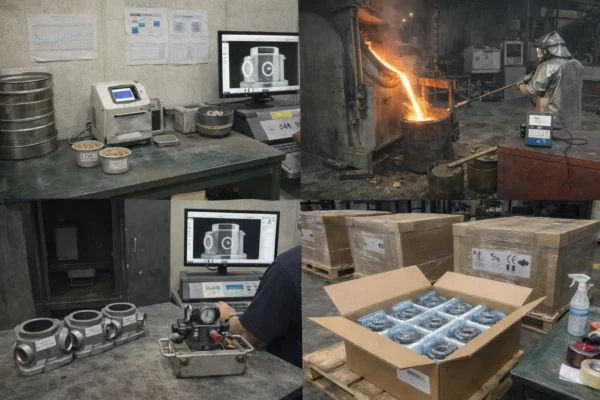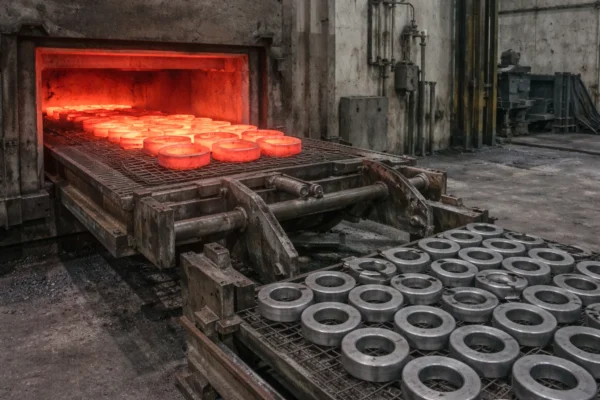

I need custom forged parts1 from China, but quality, lead time, and risk sometimes feel hard to control.
When I source custom forged parts1 from China, I control risk with three pillars. I send a complete RFQ, I agree a clear quality plan, and I map a realistic lead time. I also choose an ISO certified forged components manufacturer2 and align my process with ISO 9001 quality management. With these steps, I protect each shipment and keep my local customers satisfied.
So in this guide, I share my full workflow from RFQ to first shipment. I speak as a buyer and as a factory project manager at Prime, so you see both sides and avoid expensive trial and error.
How Do I Build a Clear RFQ for Custom Forged Parts from China?
I used to send short RFQs and hope suppliers filled the gaps correctly. Then samples failed, and I lost time and money. So now I treat the RFQ for every custom forged parts1 supplier in China as a small engineering project.
A strong RFQ for custom forged parts1 includes drawings, material, annual volume, and target price. It also covers surface treatment, packaging standards, inspection level, and logistics terms. When I send this full RFQ pack, serious suppliers quote faster, and I compare ISO certified forged components manufacturer2s on equal terms.
I always start with clean drawings. First, I send 2D drawings1 with all critical tolerances marked clearly. Then I add 3D models when possible, so the forging engineer understands real shape and draft. I also state if I only need forged blanks or if I also need Precision machining of CNC parts2 inside the same factory.
Next, I describe material, surface, and tests in simple numbers. I write the steel grade3, required heat treatment4, and any impact or hardness tests. I describe surface in measurable ways, like Ra roughness or coating thickness, not vague words. So the supplier can design the forging and machining route with confidence.
Then I share commercial details. I include annual demand, expected first order size, and my target price range. I tell them my preferred Incoterm5 and destination port. I also describe packaging rules6, because Kevin and many other buyers care a lot about strong cartons and clear labels.
What technical data do I always include in an RFQ?
I follow the same RFQ structure with Prime and with other partners.
| RFQ Section | Details I Share | Why It Helps Me |
|---|---|---|
| Drawings and files | 2D with tolerances, 3D models, special notes | Supplier designs forging dies correctly |
| Material and treatment | Steel grade, standard, heat treatment4, tests, NDT needs | I secure strength and safety for my customers |
| Process scope | Forging only, or forging plus CNC and surface | I compare one-stop quotes on equal terms |
| Volume and price | Year volume, first batch size, target price | Supplier plans tooling and capacity with real numbers |
| Quality and documents | Standards, PPAP level, certificates, test reports | I align with my ISO system early |
| Packaging and labels | Cartons, pallets, crates, labels, barcodes | I avoid damage and customs delays |
| Logistics and terms | Incoterm5, port, expected shipment window | Supplier plans production and booking clearly |
So when I send this information, I usually get fewer questions and more complete offers. Prime can reply even faster, because we already work this way for stamping parts, CNC parts, casting parts, and fasteners.
How do material choices change cost and lead time?
I also think about material at the RFQ stage, because it drives cost and risk.
| Material Type | Typical Use Case | Cost Level | Lead Time Impact |
|---|---|---|---|
| Carbon steel (e.g. 45#) | General shafts, brackets | Low | Short, widely stocked |
| Alloy steel (e.g. 42CrMo) | High strength, heavy load parts | Medium | Medium, heat treatment4 critical |
| Stainless steel (e.g. 304) | Corrosion resistant outdoor assemblies | Higher | Longer, slower machining |
| Special alloys | High tech or safety parts | Highest | Longest, strict control chain |
I often ask suppliers to quote one main grade and one optional grade. Then we discuss each option and adjust together. When the part family is clear, I later link it on my site to pages like forged parts and CNC parts, so buyers and search engines see one clear product structure.
How Can I Control Forged Parts Quality Before Mass Production?
I once trusted nice photos and low prices without a real quality plan. Then the first forged flanges arrived with wrong hardness and rough surfaces. My customer rejected the shipment, and I paid twice. So I changed my approach for forged parts quality control from China.
Now I control quality in three layers. I audit the supplier and confirm ISO and process strength. I agree a written control plan with clear responsibilities. I test samples and lock the process before mass production. This method works best with an ISO certified7 forged components manufacturer or an ISO certified7 casting parts manufacturer that understands PPAP thinking.

First, I verify the supplier beyond price. I ask for ISO 9001 certificates1 and check the scope. I request process flow charts, typical inspection reports, and photos of test equipment. I also check if they run CNC machining2 and heat treatment in-house, or if they outsource.
Next, I perform a practical audit. Sometimes I visit the plant; sometimes I use a long video call. I walk through raw material storage, forging lines, heat treatment, machining, and packing. I look for clear work instructions, stable flows, and simple visual management. If I only see chaos, I stop the project.
Then I build a control plan together with the supplier. I mark critical dimensions, critical properties, and packaging checks. I define sample sizes at each stage and decide which results we must record. For demanding customers, I follow a light PPAP logic3 similar to the public description from AIAG, but I keep documents simple and focused.
How do I audit a forging supplier in practice?
I use one checklist every time, so I do not miss steps.
| Area | What I Look For | Why It Matters For Me |
|---|---|---|
| Raw material control | Heat number tracking, dry storage, clear labels | I keep traceability for critical parts |
| Forging process | Work instructions, die maintenance, temperature checks | I reduce risk of internal defects |
| Heat treatment | Furnace charts, hardness tests, distortion control | I secure strength and toughness |
| Machining | CNC machines, fixtures, gauge control | I hit tight tolerances reliably |
| Final inspection | CMM, gauges, clear reports, calibration records | I defend myself with data if issues arise |
| Packaging | Clean area, strong cartons, pallets, rust control | I avoid transport damage and rust |
So when these points look stable, I feel ready to approve samples. For safety critical parts, I also review public information from bodies like ASTM International or SAE International, and then I convert those ideas into simple checks inside my plan.
How do I turn ISO and PPAP ideas into a simple control plan?
I do not copy textbook forms, because buyers like Kevin dislike heavy paperwork. Instead, I keep structure but simplify content.
First, I split the process into clear stages.
| Stage | Main Checks | Owner | Action If Problem Appears |
|---|---|---|---|
| Raw material incoming | Material grade, certificates, heat number | Supplier QC | Stop use, change batch |
| Pre-forging preparation | Cut length, surface condition | Supplier QC | Adjust cutting, clean material |
| Forging and trimming | Shape, flash, visible defects | Supplier QC | Correct die and forging settings |
| Heat treatment | Hardness range, structure, deformation | Supplier QC | Rework when possible, or scrap |
| CNC machining | Key dimensions, threads, surface roughness | Supplier QC | Adjust tools, fixtures, program |
| Final inspection | Sampled dimensions, function checks | Supplier QC / Me | Sort, rework, or remake |
| Pre-shipment inspection | Random pieces, packaging, labeling | Me or third party | Block shipment until issue closes |
Then I add two simple tools. I ask for photos from each key stage during the first order. I also ask for scanned inspection reports1 in English. So I see real evidence that the plan runs, not only words.
Because Prime also produces stamping parts, CNC parts, welding parts, casting parts, and fasteners, I can reuse many control ideas. On my site, I link this section to stamping parts and CNC parts. So buyers understand that our quality system2 covers every process, not only forging.
How Can I Manage Lead Time, Cost, and Logistics Risk from China?
I used to focus mainly on unit price and trusted promised lead time3s blindly. Then one delayed shipment destroyed a full selling season and hurt my biggest customer. So now I treat lead time3, cost, and logistics risk as one package.
I manage lead time3 for custom forged parts4 by mapping every step from RFQ to warehouse. I assign realistic days, highlight risks, and agree milestones with my custom forged parts4 supplier in China. I also break total cost into tooling, material, processing, quality, and logistics, so I avoid “cheap piece price, expensive project” traps.

First, I build a simple timeline. I include RFQ, quotation, tooling design, tooling manufacture, sample production, sample approval, mass production, inspection, and sea shipment. Then I share this with the supplier and ask them to adjust based on real capacity.
Next, I list all cost drivers. I include tooling, raw material, forging, machining, surface treatment, inspection, packaging, and logistics. I also consider possible air freight for emergencies. So I see total landed cost1, not just the number on the quote sheet.
Then I review logistics and Incoterms2. I check port options and basic rules on the ICC Incoterms2 overview. I decide when FOB makes sense and when CIF or DAP supports my risk profile better. So I avoid confusion about who pays if a risk event appears.
What does my RFQ-to-delivery timeline look like?
I keep the same timeline table for every forged parts project.
| Step | Typical Time (Days) | Key Actions I Take |
|---|---|---|
| RFQ preparation | 2–5 | I collect drawings, volumes, standards, and photos |
| Supplier quotation | 3–7 | I answer questions fast and push for full breakdown |
| Tooling design and making | 15–30 | I confirm 3D models and approve die drawings |
| Sample forging and machining | 10–20 | I review reports and test parts locally |
| Sample approval | 3–10 | I gather feedback and freeze design |
| Mass production | 20–30 | I track status weekly with photos and updates |
| Pre-shipment inspection | 2–5 | I arrange third party or my own inspector |
| Sea shipment and customs | 20–40 | I choose route and check documents early |

I add a small buffer on top for peak seasons. Then I share this timeline with my own sales team. So everyone understands when the first shipment can realistically arrive and when repeat orders must start.
Which cost factors do I watch most closely?
I like to keep cost discussions honest and clear. So I always bring a cost breakdown table1 to each negotiation.
| Cost Factor | What Drives It | How I Optimize It With Prime |
|---|---|---|
| Tooling cost | Part complexity, size, die material | I group similar parts in one tooling family |
| Material cost | Grade, weight, market price | I review alternative grades within safe limits |
| Forging process cost | Press size, blows, scrap rate | I improve die design to reduce flash and scrap |
| Machining cost | Tolerances, roughness, cycle time | I relax non-critical tolerances when safe |
| Surface treatment cost | Coating type, thickness, preparation | I match coating with real environment needs |
| Quality control cost | Inspection depth, lab tests | I focus heavy checks on critical features |
| Logistics cost | Volume, weight, route, packaging | I improve packing density without risking damage |
With Prime, I often move some work from machining into forging design. So I cut CNC time while I keep mechanical performance. This cooperation makes Prime more than a Custom stamping parts supplier; it makes Prime a long term engineering partner for forged and machined parts.
On my site, I link this planning advice to forged parts and casting parts. I also point readers to our contact page, so they can request a concrete lead time and cost plan for their own drawings.
What FAQs Do Buyers Ask About Sourcing Custom Forged Parts from China?
When I meet buyers at trade shows, on Alibaba, or through Google, I hear the same questions again and again. Many buyers worry about unclear quotes, hidden tooling rules2, weak packaging, and unstable delivery. So I built a simple FAQ set that I share at the start of each forged parts project.
Typical questions cover quotation data, tooling ownership, quality control, payment terms, and packaging strength. Buyers also ask how Prime applies ISO, PPAP ideas, and real delivery cases. When I answer these FAQs early, cooperation feels transparent, and we avoid conflicts later.
First, buyers ask what data I need for a quick and accurate quote. Then they ask who owns the tooling if they pay for it. Next, they ask how we control every shipment and which payment terms we can support. Finally, they ask what packaging we use for heavy forged parts and combined orders.
I answer from both sides. I speak as a buyer, because I once stood in Kevin’s position. I also speak as a project manager inside Prime, because I know what our engineers and production team can really do.
What commercial and technical questions do I hear most?
I keep the main questions and answers in one table for my team.
| Question | How I Answer From Buyer and Factory View |
|---|---|
| Data needed for quotation | I need drawings, material, volume, surface, port |
| Who owns the tooling | You own it after payment; we store and maintain it |
| How we control quality | We follow ISO logic, PPAP thinking, and control plans |
| Which payment and Incoterms we support | We support T/T or L/C, usually with FOB or CIF |
| How strong our packaging really is | We design packing by weight, route, and handling |
Then I share real examples. I show how we changed a customer’s packaging to reduce damage, or how we adjusted die design to improve tolerance. These stories are simple, but they build trust.

How do I turn FAQ answers into faster projects?
I now send this FAQ link inside our first email exchange. So buyers see clear rules for RFQ data, tooling, quality, and payment before we start. On our site, I link this FAQ section directly to forged parts and to the contact page. So readers who find this article through Google can move to real action in one click and upload their RFQ.
Who Am I and Why Can You Trust Prime on Custom Forged Parts?
Many guides online repeat theory and copy definitions from public sites. However, buyers like Kevin need field experience, not textbook words. So I want you to know who stands behind this article and behind Prime.
I work as a senior sourcing and project manager at Prime, and I handle forged parts, stamping parts, CNC parts, welding parts, casting parts, and fasteners. I started sourcing industrial components in the early 2000s, so I now bring more than twenty years of combined buyer and factory experience. Prime began in 1993 and runs 10 production lines with strong export history.
I spent many years between Western buyers and Chinese workshops. So I saw both the frustration from late shipments and the pressure inside the factory during peak season. I handled RFQs, PPAP files, ISO audits, and urgent shipments that needed air freight. I made mistakes, and I learned.
What background does Prime bring to my projects?
Prime operates as a B2B focused factory and one-stop metal components supplier.
| Prime Attribute | What It Means For You |
|---|---|
| Founded in 1993 | You work with a stable, long-term factory |
| 10 production lines | We combine processes and cut internal transfer |
| ISO quality system | We follow global quality logic and traceability |
| One-stop capability | We handle forging, stamping, CNC, casting, and more |
| Export markets worldwide | We understand documentation, packing, and customs |
Because of this background, I do not see forged parts sourcing as a stand-alone activity. I see it as part of a wider supply chain that also includes Siemens electronic parts, stamping parts, and many other items. So I design solutions that work at full project level, not only at one part number level.
I also respect external knowledge. So I sometimes share public resources like ISO 9001, Forging Industry Association, and Wikipedia on forging when I train new staff. However, I always translate those ideas into simple checklists and tables that match real factory life.
So when you send an RFQ to Prime, you do not only receive a price. You also receive suggestions on material, process route, control points, and packaging. My goal is simple. I want you to receive your first shipment on time, with stable quality, and with clear cost, so you feel safe to repeat orders.
Conclusion
Control RFQ quality, define clear controls, plan timelines, and work with Prime to secure stable, profitable forged parts from China.
-
Understanding a cost breakdown table can enhance your negotiation skills and ensure transparency in discussions. ↩ ↩ ↩ ↩ ↩ ↩ ↩ ↩ ↩
-
Understanding hidden tooling rules can prevent unexpected costs and ensure smoother project execution. ↩ ↩ ↩ ↩ ↩ ↩ ↩ ↩
-
Understanding lead time management can help streamline your production process and improve customer satisfaction. ↩ ↩ ↩ ↩ ↩
-
Discovering best practices can optimize your sourcing strategy and reduce risks associated with custom manufacturing. ↩ ↩ ↩ ↩ ↩
-
Get familiar with Incoterms to better understand shipping responsibilities and costs in international trade. ↩ ↩
-
Learn about effective packaging strategies to prevent damage and ensure smooth logistics. ↩
-
Explore the benefits of working with ISO certified manufacturers for quality assurance and reliability. ↩ ↩