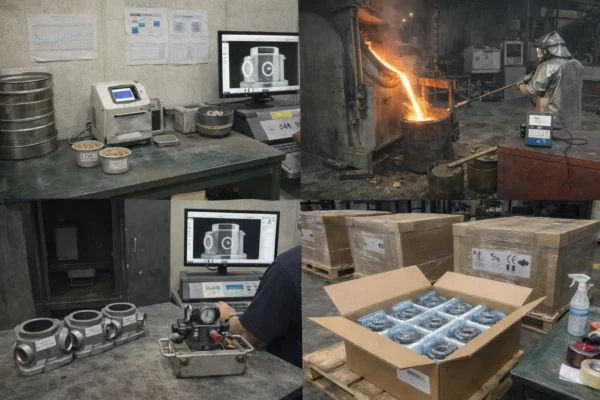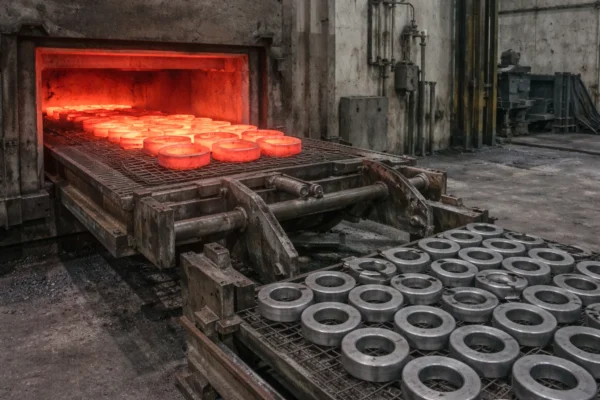

Many buyers tell me their casting spare parts fail far too early.
They lose money, stop lines, and face pressure from their own customers.
I see these failures almost every week inside real foundries.
Most casting spare parts fail because design, alloy choice, and process control do not match real working conditions. Many buyers look only at drawing size and unit price, so they ignore porosity, machining allowance, heat treatment, and surface quality. When we build our system on standards like the ISO 9000 quality management family, we cut this variation and protect customers.
So I wrote this guide from both buyer and factory views.
I want you to see where risk hides in drawings, RFQs, PPAP files, and trial lots.
Then you can talk with any custom casting spare parts supplier from a stronger position.
So you protect your lines, your margin, and your reputation.
What Root Causes Make Casting Spare Parts Fail So Often?
Many people blame “bad quality” when a casting fails in service.
But I usually find a repeatable pattern behind each broken part.
So I group most failures into design mistakes, wrong material, and weak process control.
Then I test each idea against real data from failed parts and service hours.
Most casting spare parts fail because local stress, temperature, and vibration differ from drawing assumptions. The main root causes include sharp corners, sudden section changes, unsuitable alloys, and unstable pouring or feeding. When we link failures with clear standards and a structured review, we usually solve over eighty percent of repeated issues before the next order.

Common failure modes I see in foundries
I like to give each failure mode a simple clear name.
So I classify problems into four main groups during each investigation.
Then I match these groups with your photos, samples, and operating conditions.
| Failure mode | What you see on site | Main technical driver |
|---|---|---|
| Cracking | Splits near holes or sharp corners | Stress peaks and low toughness |
| Abrasive wear | Surfaces lose material and change shape | Wrong hardness or soft surface layer |
| Deformation | Parts bend, twist, or creep over time | Low stiffness or high continuous load |
| Corrosion | Rust pits, leaks, or surface flaking | Alloy not suited to environment |
I start every failure review with samples and service history from your site.
So I ask about load, speed, medium, temperature, cleaning, and maintenance.
Then I compare this real picture with your drawing and material callout.
I also check which rules could guide the redesign.
So I look at casting tolerances from ISO 8062 or other casting tolerance guides and material rules from standards like ASTM A536 ductile iron.
I still remember one pump client whose cast impeller arms broke every six months.
He first blamed “cheap castings from Asia” and pushed hard on price.
But we cut his failed impellers and saw shrinkage near every heavy hub section.
We also saw sharp transitions between the thick hub and the thin vanes.
So the real problem came from geometry and feeding, not only surface finish.
Then we added larger fillets, changed riser layout, and tightened pouring rules.
After these changes, his impellers ran over eighteen months with no cracks.
This one case paid back all engineering time within the first year.
To keep things clear, I often summarize root causes like this.
| Root cause group | Typical signs in failed parts | Simple next step with Prime |
|---|---|---|
| Design geometry | Cracks at corners, arms, or holes | Rebuild fillets, ribs, and transitions |
| Material and hardness | Fast wear or brittle fracture | Change grade and heat treatment |
| Process variation | Random defects across batches | Tighten process window and inspection |
So this structure turns a painful failure into a simple action list.
And it gives you concrete points to discuss with any foundry.
How Do Design and Material Choices Decide Casting Spare Parts Life?
When I review new RFQs, I often see drawings copied from old suppliers.
So dimensions look safe, but no one checks stress hot spots or thermal cycles.
Then the same failures appear again, even after changing factories.
I learned that design and alloy choice decide most of the real service life.
Design and material control section thickness, stress distribution, and surface hardness. Simple changes, like stronger fillets or extra ribs, often increase life more than exotic alloys. When we align drawings, standards, and material data from sources like ASTM International or Ductile iron reference pages, we move from guesswork to predictable performance. ([ASTM International)

Design checkpoints before any pattern order
I like to walk through key design checks with buyers in a simple checklist.
So we mark high risk zones before we cut any tooling or patterns.
Then we reduce late changes and save both time and money.
| Design factor | What I check in the drawing | Typical fix I suggest |
|---|---|---|
| Section transitions | Sudden thickness jumps | Add fillets or gradual tapers |
| Hole and boss layout | Holes near corners or edges | Move holes or thicken local area |
| Ribs and stiffeners | Long flat plates or arms | Add ribs along load direction |
| Machining allowance | Very thin walls after machining | Increase raw casting stock |
| Tolerance stack | Tight fits without clear reason | Relax non critical dimensions |
I also review how your team will machine the castings later.
So I check clamping points, reference faces, and chip flow together.
Then I fine tune draft angles and machining allowance with our CNC engineers.
When you also buy tight tolerance pieces, you can bundle them with CNC parts precision machining.
So one team handles casting, machining, and even industrial fasteners and screws as one kit.
How I pair alloys with real working conditions
Next, I focus on alloy and heat treatment for every RFQ I see.
Many buyers send only “cast steel” or “ductile iron” inside their email.
So they allow huge variation between different foundries and heats.
Then hardness, weldability, and toughness move around from batch to batch.
I prefer clear standards for each OEM industrial casting component.
So I define grade, mechanical properties, and test methods in the control plan.
For ductile iron, I match grades with ASTM A536 ductile iron rules and foundry data.
For casting tolerances and draft angles, I use ISO 8062 based guides or similar technical notes.
Here is a simple comparison I like to show during meetings.
| Material type | Main features | Best use cases | Key remark |
|---|---|---|---|
| Gray iron | Good damping, easy machining | Housings, covers, low stress parts | Not good for high impact loads |
| Ductile iron (ASTM A536) | High strength, good toughness | Gears, brackets, general machinery | Needs correct nodular structure |
| Low alloy cast steel | High strength, good toughness | Structural and safety parts | Needs controlled heat treatment |
| Stainless steel | Strong corrosion resistance | Food, chemical, marine systems | Higher cost, longer life |
| High chromium cast iron | Very high wear resistance | Liners, crusher parts, slurry systems | Needs careful casting process |
I also look beyond unit price when I talk about materials.
So I connect design choices to total cost for several years.
| Cost factor | How design and material influence it | What I usually suggest |
|---|---|---|
| Tooling and patterns | Complex shapes raise tooling cost | Simplify geometry where possible |
| Scrap rate | Risky design raises scrap and rework | Add fillets and better feeding |
| Machining time | Harder materials slow cutting tools | Balance hardness with machining needs |
| Service life | Right alloy extends replacement interval | Choose grade by real loads |
| Warranty claims | Poor design raises field returns | Review weak points before SOP |
So a small change in alloy or section can save your whole program.
And it helps you defend price to your own customers.
When you also need stamped brackets or covers, you can group them with stamping parts.
So we balance casting, stamping, and CNC parts under one supply plan.
How Do Process Control and Inspection Prevent Premature Casting Failures?
Even the best design and alloy fail if the process window stays wide open.
I walked through many foundries where each shift poured metal differently.
So pouring temperature, sand moisture, and shakeout time changed every day.
Then buyers wondered why test parts looked fine but later batches failed.
Stable process control turns a good drawing into a reliable casting spare part. Key steps include stable molding, controlled pouring, correct feeding, and consistent cooling. When we build our shop rules on the ISO 9001 quality management standard and similar guides from bodies like NIST, we create repeatable quality instead of lucky samples. ([International Organization for Standardization][4])

What I control every day on the shop floor
I treat process control as seriously as drawing review and material choice.
So we build clear work instructions, check sheets, and heat records.
Then we can trace any problem back to a real cause, not just a guess.
| Process step | What I watch on site | Risk if control stays weak |
|---|---|---|
| Molding | Sand strength, venting, mold hardness | Veins, sand inclusion, rough surface |
| Pouring | Temperature, pouring time, metal flow | Gas holes, cold shuts, misruns |
| Feeding | Riser size and placement | Shrinkage cavities in heavy sections |
| Cooling and shakeout | Cooling time and sequence | Internal stress and distortion |
| Cleaning and grinding | Grinding depth and method | Local cracks and size change |
I also look at how operators move parts between stations.
So I check handling marks, impact risk, and mixing of different batches.
Then I adjust racks, tags, and floor layout together with our supervisors.

PPAP style approvals in non automotive projects
After casting and machining, I treat inspection as the last gate before shipment.
So I align inspection plans with your real risk, not just default templates.
Then I share documents that buyers and engineers can read quickly.
For key parts, I follow a PPAP style approval even outside automotive work.
The production part approval process first came from auto and uses sample runs, process flow, and control plans to prove capability.
So for your first shipment, I build a compact but strong package.
I include process flow, control plan, dimensional results, material reports, and test data.
Then we sign off together before mass production.
Here is a step flow that we often use for precision machined casting parts.
| Step no. | Process step | Prime action | What you can check easily |
|---|---|---|---|
| 1 | Incoming material | Check certificates and random chemical tests | Compare grades with your drawing |
| 2 | Molding and pouring | Record key parameters for each heat | Ask for sample records and photos |
| 3 | Rough casting inspection | Visual and dimensional checks after shakeout | Review defect charts and scrap reasons |
| 4 | Heat treatment | Record furnace curves and hardness | Confirm hardness range with reports |
| 5 | Machining | Use control plans and gauging tools | Review first article or PPAP reports |
| 6 | Final inspection and packing | 100% visual check and sampling tests | Check packing photos and labels |
For very critical castings, I add X ray, magnetic particle, or ultrasonic tests.
So we catch hidden shrinkage or cracks before parts reach your plant.
When you send us drawings through our Upload RFQ page, you can also ask for a PPAP level.
So we match our documentation with your own customer and audit needs.
How Can You Build a Reliable Global Casting Spare Parts Supply Chain?
Many owners like you source from developing countries to stay competitive.
So you search platforms, visit fairs, and handle many quotes each month.
Then you feel trapped between low prices, long distance, and real quality risk.
I saw the same struggle when I helped one American client rebuild his supply chain.
A reliable casting spare parts supply chain starts with clear standards, a stable core supplier, and honest data. Buyers should check certifications, foundry capacity, and technical depth, not only unit price. When we combine guidance from bodies like the American Foundry Society with our own delivery cases, we move from short term buying to long term cooperation.

Selecting suppliers with a simple scorecard
I like simple tools that busy buyers can really use.
So I often build a scorecard together with your team.
Then we compare different factories using the same rules.
| Factor | What I check in Prime and other factories | Why it matters for you |
|---|---|---|
| Technical depth | Real casting cases and engineer support | Better solutions, not only castings |
| Capacity and lead timee](https://www.mrpeasy.com/blog/lead-time/) | Number of lines and typical cycle | Stable delivery in peak season |
| Certification and traceability | ISO system, batch records, test reports | Easier audits and customer trust |
| Communication | English level, response time, clarity | Faster problem solving |
| Total cost | Price plus tooling, scrap, and downtime | Real profit, not just low price |
I still remember one client from North America with Siemens related spare parts.
He bought from three small foundries with no shared standards at all.
So he faced mixed packaging, random delays, and frequent returns every quarter.
Then he asked me to help consolidate his supply base.
Real delivery case from “cheap and risky” to “lean and predictable”
Together we analyzed his top fifty casting spare parts by volume and risk.
Then we moved them into one program under Shandong Prime International Trade Co., Ltd.
My team integrated casting, CNC parts precision machining, and industrial fasteners and screws.
So we shipped full kits instead of single parts, with unified labels and cartons.
| Item | Before consolidation | After working with Prime |
|---|---|---|
| Active casting suppliers | Three small foundries | One main ISO driven partner |
| Average lead time | 45–60 days with big swings | 28–35 days with stable planning |
| Annual complaint rate | Around 5–7% of shipments | Below 1.5% of shipments |
| Average stock level | High stock to cover risk | Lower stock with reliable supply |
| Total yearly profit | Cut by returns and air freight | Higher through fewer hidden costs |
Today he enjoys shorter lead times, fewer complaints, and better margins.
He still negotiates price, but we talk about process and design first.
So his casting spare parts moved from “cheap and risky” to “lean and predictable.”
When you choose a custom casting spare parts supplier, I suggest one fast step.
You can send us your most painful failed part, with photos and service history.
So my team and I can share a clear redesign or process improvement plan for free.
Then you see our real level before you move more projects to Prime.
FAQs: How Do I Reduce Casting Spare Parts Failures and Risk?
Why do my custom casting spare parts crack after a few months?
Cracks often grow at sharp corners, thin arms, and machined holes.
So I first check stress peaks, alloy toughness, and heat treatment.
Then I review real service load, temperature, and vibration with your engineers.
A good ISO based casting parts manufacturer will share test data and design advice.
How can I choose a reliable casting spare parts supplier//www.rapiddirect.com/blog/17-types-of-casting-defects/) supplier in China?
I always check three areas before any trial order.
First, I review ISO documents, foundry lines, and real industrial cases.
Second, I test communication speed with drawings, RFQs, and simple questions.
Third, I ask for a first article or PPAP style run with full reports.
You can start that process through our Upload RFQ page or contact page.
So we link our internal system with your quality and sourcing rules.
What information should I send for accurate casting spare parts quotations?
I get better results when buyers share more than just drawings.
You can send 2D drawings, 3D models, and material standards.
You also add annual volume, working conditions, and packing needs.
So I can balance process, tooling, and delivery to fit your plan.
If you already buy CNC or stamped parts, you can include them too.
Then we can quote a full kit, not only one casting item.
How do I balance price and quality for casting spare parts?
I split “must have” and “nice to have” points with every buyer.
So we protect safety, service life, and key tolerances as first priority.
Then we adjust non critical surfaces, looks, and packing levels.
This way you get strong quality from Prime with competitive total cost.
Why do some casting spare parts arrive with damage or rust?
Damage often links to weak packing design or rough handling.
So I design inner bags, corner guards, and strong cartons for export.
Then I add anti rust oil, desiccant, and pallet protection when needed.
We share packing photos before shipment so your team feels safe.
How can I improve long term reliability of my casting spare parts program?
I suggest a simple yearly review with your main casting partner.
We track failures, returns, and cost changes in one shared file.
Then we pick top problem parts and improve them step by step.
Over time, your casting spare parts program becomes stable and predictable.
Conclusion
Most casting spare parts fail from design, material, and process gaps; I close them with stable engineering, quality systems, and delivery control.
If you want stable casting spare parts, steady lead times, and clear technical support, you can contact Prime now.
You can send drawings, RFQs, and failure photos through our Upload RFQ page or contact page.
My team and I will prepare failure analysis, cost ideas, and a lead time plan for you.
We rely on ISO based quality control, ten production lines, and proven export cases in many markets.
So you receive consistent quality, safe export packing, and fast delivery on every shipment from Prime.