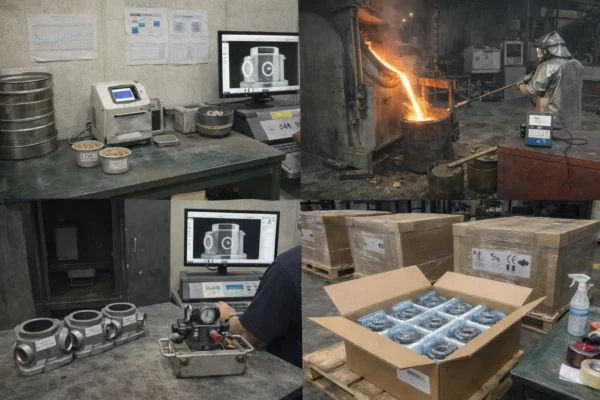

Leaks and fatigue cracks can stop your line.
A wrong casting choice often hides inside a clean drawing.
I will show how I prevent PPAP pain.
For automotive parts, die casting fits high-volume thin-wall aluminum or zinc parts. Investment casting fits complex geometry and steel or stainless needs. However, sealing CTQs, fatigue corners, draft limits, and machining cuts usually decide the safer option. Use the tables here to build a clearer RFQ and reduce SOP risk.
If you buy engine, gearbox, or chassis parts, risk beats theory.
So I will share my audit steps and micro cases from real programs.
Then you can compare suppliers with fewer blind spots.
What is your drawing hiding that changes the best casting process?
A drawing can look “perfect” and still fail in production.
Because the drawing often hides sealing and fatigue triggers.
When suppliers guess those triggers, PPAP slips.
So I start by pulling the hidden CTQs into the open.
Most casting mistakes come from missing inputs, not weak factories. Hidden items like leak targets, fatigue corners, and machining stock change yield and scrap. When you define them early, you cut redesign loops and shorten PPAP timing. I use a simple screening checklist to align process choice with functional risk.

The five hidden CTQs I ask for in the first email
I ask for leak targets, not “no leakage.”
Also, I ask you to mark fatigue corners on the 3D.
Then I ask for alloy grade and heat treat targets.
Next, I ask for machining datums and max stock removal.
Finally, I ask for volume, ramp plan, and SOP window.
| Hidden item | What I ask you to state | Why it changes the process choice | What it saves |
|---|---|---|---|
| Leak requirement | X cc/min at Y kPa | Sets porosity risk level | Sorting and rework |
| Fatigue zones | Mark corners on 3D | Drives gating and fillets | Field returns |
| Alloy + heat treat | Grade + target property | Locks capability | Material disputes |
| Machining plan | Datums + max stock | Prevents pore exposure | Scrap after CNC |
| Volume + SOP | Annual + ramp dates | Picks tooling strategy | Missed launches |

Micro case: the seal groove that looked harmless
A customer sent a valve body RFQ with a clean drawing.
So the team assumed die casting and a fast schedule.
However, the oil seal groove sat under a deep CNC cut.
Then the cut would break the dense surface skin.
I asked for the leak test method and target rate.
Also, I asked if impregnation was allowed.
Then I flagged a leak fallout risk above 5% in pilot.
So we reviewed gate placement and machining stock together.
After that change, PPAP stayed on schedule.
Also, SOP avoided a late ECO and a line stop.
That single groove taught me a lasting rule.
Your drawing never shows porosity exposure risk directly.
Sealing words that protect your RFQ
| Risky wording | What happens | Better wording | Why buyers like it |
|---|---|---|---|
| “No leaks” | Endless debate | “X cc/min at Y kPa” | Clear pass/fail |
| “Pressure tight” | Undefined scope | Method + duration | Stable validation |
| “Seal later” | Hidden scrap | Design-for-seal note | Fewer surprises |
When does die casting win for automotive parts, and when does it bite you?
Die casting can crush unit cost at high volume.
So buyers love it for thin-wall housings and covers.
However, ejection limits and porosity can flip the outcome.
That is why I approve it only after a leak-risk review.
Die casting usually wins when volume is high, walls are thin, and aluminum or zinc alloys fit. It often fails when sealing CTQs are strict, draft changes are impossible, or machining cuts expose pores. A DFM review focused on ejection, gating, and CNC stock reduces those risks. Use the cost table below to compare total program cost.

I treat die casting as “design for ejection”
Ejection decides draft, pin marks, and parting lines.
So I map pull directions on the 3D model early.
Also, I define pin-safe zones away from seals and cosmetics.
Then I align ribs and transitions to reduce hot spots.
| DFM item | What I check | What fails in production | What I recommend |
|---|---|---|---|
| Draft | Pull map per face | Sticking and tool wear | Add draft early |
| Ejector pins | Contact zones | Pin marks on function | Define safe faces |
| Wall transitions | Thick-to-thin jumps | Warp and sinks | Smooth blends |
| Ribs | Cooling balance | Distortion | Balanced ribs |
| Seal lands | Porosity sensitivity | Leaks after CNC | Venting and stock control |
Micro case: “We will seal it later” on a gearbox cover
A buyer sent a thin-wall gearbox cover drawing.
So everyone expected die casting to be “easy.”
However, the sealing face needed heavy CNC cleanup.
Then the cut could open pores near the gasket land.
I asked for the leak pressure and hold time.
Also, I asked where the CNC would remove the most stock.
Then I warned that “seal later” would raise scrap fast.
So we reduced the CNC cut and improved venting.

Pilot fallout dropped, and PPAP moved smoothly.
Also, the buyer avoided sorting during ramp builds.
That is why I never treat leak CTQs as an afterthought.
In die casting, sealing risk lives inside machining choices.
Total cost drivers I show buyers during sourcing
| Cost bucket | What raises cost | What lowers cost | What you can do |
|---|---|---|---|
| Tooling | Slides and deep undercuts | Simple parting line | Simplify geometry |
| Yield | Porosity near seals | Better vents and vacuum | Define leak CTQ |
| CNC time | Deep cuts and many datums | Near-net functional faces | Reduce machining scope |
| Inspection | Too many CTQs | Ranked CTQs | Focus on function |
| Change control | Late ECOs | Early DFM | Lock CTQs sooner |
In practice, buyers often search for an aluminum die casting housing supplier.
So they want speed, finish, and repeatability.
However, I still insist on a leak-risk checklist.
Because “cheap” dies can create expensive SOP problems.
When does investment casting win, and how do I keep CNC as “finish” only?
Investment casting can look slower in a timeline slide.
So buyers sometimes skip it during early RFQs.
However, it often saves time when CTQs get strict.
That is why I use it to reduce redesign and PPAP churn.
Investment casting often wins when you need steel or stainless, complex geometry, or fatigue-sensitive corners. It also helps when you cannot accept draft changes. When I plan gating, hot spots, and stock bands early, CNC becomes a finishing step. This approach reduces scrap and stabilizes repeat orders.

Material fit matters more than slogans
Material choice can end the debate fast.
So I ask about corrosion, heat, and strength targets early.
Also, I confirm if you truly need steel or stainless.
Then I match the process to the alloy, not the other way.
| Buyer requirement | Die casting typical fit | Investment casting fit | My QA note |
|---|---|---|---|
| Aluminum lightweight | Strong | Good | Volume still matters |
| Zinc small parts | Strong | Limited | Heat limits apply |
| Stainless corrosion | Weak | Strong | Great for harsh zones |
| Alloy steel strength | Weak | Strong | Better for fatigue parts |
| High heat exposure | Limited | Strong | More stable properties |
Micro case: the fatigue corner that failed the first design
A buyer sent a chassis bracket with sharp transitions.
So the quote looked fine, and the schedule looked safe.
However, that corner sat on a high load path.
Then cracks could appear under road vibration.
I asked the engineer to mark load direction on 3D.
Also, I asked for the target life or test cycle count.
Then we increased fillets and moved gating away.
So the corner quality improved before CNC touched it.
CNC removed less material near that corner.
So we kept surface integrity where fatigue mattered.
Also, the buyer reduced recall risk and warranty exposure.
That is the real payoff of early corner review.
Process steps that help you plan lead time
| Step | What happens | What I confirm | Risk if ignored |
|---|---|---|---|
| Pattern | Wax tooling | Shrink and stock bands | Wrong CNC stock |
| Shell | Ceramic build | Surface class needs | Over-spec cosmetics |
| Pour | Melt and pour | Alloy and target properties | Variation |
| Clean | Knockout and clean | Cleaning access | Trapped shell |
| Finish | Cut and inspect | CTQ methods | PPAP delays |
This is where CNC parts precision machining supports casting well.
So we use CNC to finish datums, holes, and threads.
Then casting carries the geometry, and CNC adds accuracy.
That is how I keep costs predictable for repeat shipments.
Many buyers prefer an ISO certified investment casting manufacturer for this work.
Because traceability and change control matter in automotive supply.
Also, investment casting supports custom investment casting for automotive parts with complex geometry.
So you can qualify a safer long-term source.
How do I pass PPAP, meet ISO expectations, and protect SOP delivery?
A strong process choice still needs strong control.
So I align CTQs, inspection, and packaging before SOP.
Also, I treat delivery as part of quality control.
That mindset protects buyers from line stops and claims.
PPAP success depends on stable CTQs, stable measurement methods, and clear reaction plans. ISO discipline supports traceability, document control, and repeatability across lots. When you align packaging with functional surfaces, you cut false rejects at receiving. Use the tables below as your supplier audit checklist.
I build PPAP evidence around ranked CTQs
Buyers do not need a thick folder of noise.
They need clear evidence on the few real CTQs.
So I ask which CTQs stop the line if they drift.
Then I link each CTQ to a method and reaction plan.
| PPAP element | What I provide | Why it matters to buyers |
|---|---|---|
| Dimensional results | CMM on ranked CTQs | Faster approval |
| Material evidence | Certs, heat treat, hardness | Audit support |
| Process flow | Control points per step | Predictability |
| Control plan | Method, frequency, reaction | Fewer disputes |
| Visual standard | Photos with defect limits | Less sorting |
| Packaging spec | Pack photos and labels | Fewer claims |
Micro case: packaging created a “fake defect”
A buyer reported edge chips after delivery.
So their team blamed the casting process.
However, the parts shipped in bulk cartons.
Then metal-on-metal contact caused the damage.
I requested unpacking photos and lot labels.
So we proved the damage came from packing, not casting.
Also, we added partitions and corner protection.
Then incoming rejects dropped quickly during ramp.
Packaging checklist for stable receiving
| Receiving risk | Typical cause | My control | Buyer benefit |
|---|---|---|---|
| Rub marks | Bulk packing | Trays or partitions | Less sorting |
| Edge chips | Loose cartons | Foam and corner guards | Fewer claims |
| Rust | Humidity swings | VCI and sealed bags | Cleaner surfaces |
| Mixed lots | Weak labels | Lot labels plus photos | Better traceability |

Prime holds ISO quality certification and runs 10 production lines.
So we keep traceability tight and capacity stable.
Also, we respond fast during sampling and PPAP loops.
Then buyers can protect SOP timing with less stress.
FAQs: What do buyers search before they choose a casting supplier?
Buyers search short questions before they share drawings.
So I answer them in direct sourcing language.
Also, I include practical RFQ wording you can reuse.
That helps you compare suppliers “apples to apples.”
These FAQs cover tolerance control, sealing risk, supplier qualification, and RFQ structure. Each answer focuses on buyer actions that reduce quote delays and scope disputes. Use them when you source custom casting parts from China or any global market.
Which process gives tighter tolerances for automotive parts?
Both processes can hit tight datums with CNC.
However, datum strategy and stock bands decide success.
So I treat tolerance as a system, not a casting promise.
Then I align fixtures, gauges, and CTQs early.
| Tolerance driver | What helps most | What hurts most | Buyer action |
|---|---|---|---|
| Datum plan | Simple datum chain | Too many datums | Rank CTQs |
| Stock control | Stable stock bands | Random stock | Ask for stock limits |
| Fixture design | Repeatable clamping | Flexible setups | Confirm fixture plan |
| Measurement | CMM on CTQs | Hand tools on CTQs | Define methods |
Can die casting meet pressure-tight automotive requirements?
Yes, but you must define the leak target.
So I ask for rate, pressure, duration, and method.
Also, I ask where CNC cuts near seals.
Then I evaluate porosity risk with your real plan.
If someone says “we will seal it later,” I slow down.
Because that phrase often hides a process mismatch.
So I push design-for-sealing from the first quote.
Then you avoid late PPAP resets.
What should I include in an RFQ for faster, cleaner quotes?
First, send 2D and 3D with revision history.
Then list CTQs, leak targets, and fatigue zones.
Also, share annual volume and SOP timing.
Finally, state packaging and label needs.
This detail matters in custom investment casting for automotive parts sourcing.
It also helps buyers evaluating custom casting parts from China.
Because it reduces guessing and removes scope drift.
So your quote comparison becomes fair and faster.
How do I reduce total cost, not just unit price?
I compare tooling, yield, CNC hours, and inspection load.
So I focus on total program cost and risk.
Also, I include delivery stability and packaging claims.
Then I pick the process that protects SOP.
| Total cost factor | Die casting trend | Investment casting trend | My buyer note |
|---|---|---|---|
| Tooling | Higher, amortized | Lower-to-moderate | Volume decides payback |
| Yield risk | Porosity-driven | Hot-spot-driven | CTQs decide |
| CNC hours | Can rise fast | Often lower | Stock planning matters |
| PPAP speed | Fast with clear DFM | Fast with clear CTQs | Clarity wins |
| Claims risk | Packing sensitive | Packing sensitive | Pack control matters |
Conclusion
Choose the process that protects sealing, fatigue, and CNC stock first, then optimize cost, PPAP timing, and SOP delivery.
Upload your 2D + 3D, annual volume, and CTQ list.
Also, add leak targets, fatigue zones, and packaging rules.
Then I will send a free Risk + Cost Optimization Report.
You will get leak and fatigue risk flags, plus a PPAP-ready control plan outline.
Contact Us
🌐 Visit: High-Quality Custom Metal Casting Services
Get a free quote, custom tool configuration, and fast delivery worldwide. Every order comes with setup support.