Worried your steel parts will rust too soon? This failure costs money and hurts your reputation. Let me guide you through galvanized coatings1 to ensure your parts last.
To choose the right galvanized steel parts, you must consider the environment they will be in. Match the coating type, like hot-dip or electro-galvanizing, and the required coating thickness to the level of corrosion protection2 needed. Salt spray test data confirms this protection.

That is the short answer. But the details really matter. If you want to avoid costly mistakes, you need to understand what these terms actually mean for your business. Over my 30 years in this industry, I’ve seen how a small detail in coating can make a huge difference in performance. Let’s break down the real-world considerations so you can make the best choice every time.
What Are the Different Types of Galvanized Coatings?
Confused by different galvanizing terms? Choosing the wrong type means your parts might fail unexpectedly. Let’s look at the most common options to protect your investment.
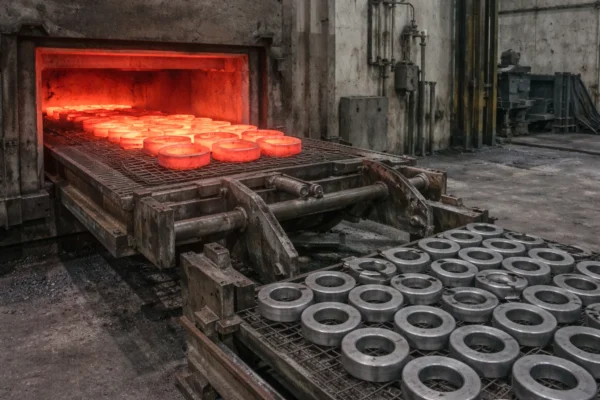
The main types are [hot-dip galvanizing (HDG)](https://www.shortspansteelbridges.org/top-3-reason-hot-dip-galvanizing/)1 and electro-galvanizing (zinc plating)2. HDG provides a thick, durable, and highly corrosion-resistant layer. Electro-galvanizing offers a thinner, smoother, and more cosmetic finish with less protection. Each has a specific application and cost.

When a customer comes to me, the first thing we discuss is the end-use of their part. This tells me which type of galvanizing1 is best. Not all coatings are created equal, and the manufacturing process is very different for each one. We produce a wide range of custom galvanized stamping parts, and the first step is always a deep dive into the application requirements.
The Manufacturing Process Showdown
To understand the final product, you need to see how it’s made. The journey a steel part takes for each process is completely different, which explains the differences in cost, appearance, and protection.
| Process Step | Hot-Dip Galvanizing (HDG) | Electro-Galvanizing (Zinc Plating) |
|---|---|---|
| 1. Surface Prep | Intensive chemical or mechanical cleaning | Degreasing and acid pickling |
| 2. Fluxing | Part dipped in a zinc ammonium chloride solution | Not applicable |
| 3. Main Process | Fully immersed in a bath of molten zinc (450°C) | Placed in a zinc salt solution (electrolyte) |
| 4. Coating | A Zinc-Iron alloy layer forms metallurgically | An electrical current deposits a thin zinc layer |
| 5. Finishing | Cooled in air or a quench tank | Rinsed and dried; often a chromate passivate is added |
How Does Coating Thickness Affect the Durability of Galvanized Steel Parts?
Is thicker always better for galvanized coatings? Making the wrong assumption can be costly, either by overspending or receiving parts that fail early. Let’s see how thickness directly impacts lifespan.
Coating thickness is directly proportional to the part’s service life. A thicker zinc coating provides more protective material to sacrifice itself before the steel underneath begins to rust. This longevity is measured in microns (μm), and standards specify minimum thicknesses for different environments.

The core job of zinc is to act as a sacrificial barrier. It corrodes first, protecting the steel. So, it’s simple: the more zinc you have, the longer that protection lasts. This is why our entire process is governed by the global standard for hot-dip galvanized coatings, ISO 1461:2022. It’s not just a guideline for us; it’s a guarantee to our clients of predictable, reliable performance.
A Real-World Example: Quality Beyond the Spec Sheet
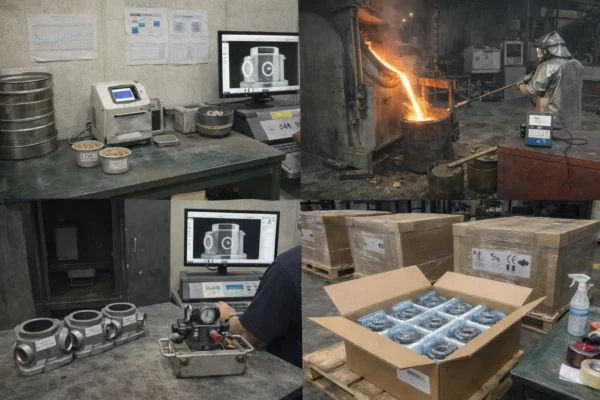
We recently worked with a client, Kevin from the U.S., on a critical component for the energy sector. His previous supplier’s parts were failing prematurely. Our analysis showed inconsistent coating. For his first order with us, we provided a full Production Part Approval Process (PPAP) package. This wasn’t just a simple certificate; it included dimensional reports from our CMM machine, material certifications, detailed coating thickness measurements, and certified salt spray test reports. This level of quality documentation is essential for many of our clients and is a standard part of our service for all our custom metal fabrication solutions.
What is a Salt Spray Test and Why is it Important for Galvanized Parts?
A supplier says their parts resist rust. But how can you trust their claim before you commit to a large order? The salt spray test1 is the industry standard for getting proof.
A salt spray test1 is an accelerated corrosion test2 that simulates harsh, salty environments. It measures how many hours a coated part can withstand a salt fog before showing signs of rust. It is a crucial quality control tool to verify the effectiveness of a galvanized coating.

In our quality lab, the salt spray test, conducted according to the rigorous ASTM B117 standard, is a cornerstone of our quality assurance. By placing parts in this controlled corrosive environment, we can rapidly verify the consistency and quality of our galvanizing process.
A Tool for Comparison, Not Prediction
As emphasized by industry bodies like the American Galvanizers Association (AGA), it’s crucial to understand the role of this test. A 500-hour salt spray result does not mean the part will last "X" years in the field. The test is too aggressive to simulate real-world conditions. Its true power is for quality control. It provides an objective benchmark to ensure the coating you receive today has the same high level of protection as the one you received last month.
Frequently Asked Questions About Galvanized Steel Parts?
Over the years, I’ve answered thousands of questions from clients. Here are some of the most common ones that come up, which might help you avoid potential issues.

Can you paint over galvanized steel?
Yes, but it requires proper surface preparation1. To paint galvanized steel2 successfully, the surface must be cleaned, profiled with a light abrasive, or treated with a special wash primer designed for galvanized surfaces.
What is "white rust" and is it a problem?
White rust is a powdery deposit that can form on newly galvanized surfaces when tightly stacked and exposed to moisture. It is zinc hydroxide. While it looks bad, it’s usually just a surface issue and, as the Galvanizers Association explains, will not reduce the long-term protective life of the coating.
Hot-dip galvanizing vs. zinc plating: which is cheaper?
For the initial purchase, zinc plating is cheaper. However, hot-dip galvanizing provides up to 10 times the protection. For any outdoor application, HDG is far cheaper over the product’s lifetime because you avoid costly replacements.

Conclusion
Choosing the right galvanized coating means matching the type and thickness to the environment. Rely on standard-based testing and a manufacturing partner who provides transparent documentation, like PPAP, to ensure quality and long-term value.
Partner with an Expert
Confusing specifications and unreliable quality can derail a project. Let my team take the guesswork out of your next order. We provide clear documentation, expert guidance, and parts that meet the standards you expect, every single time.