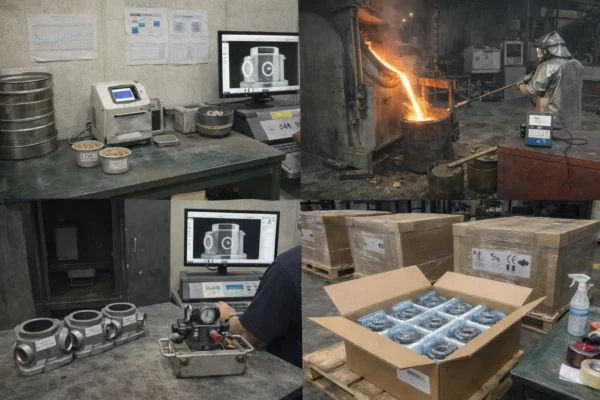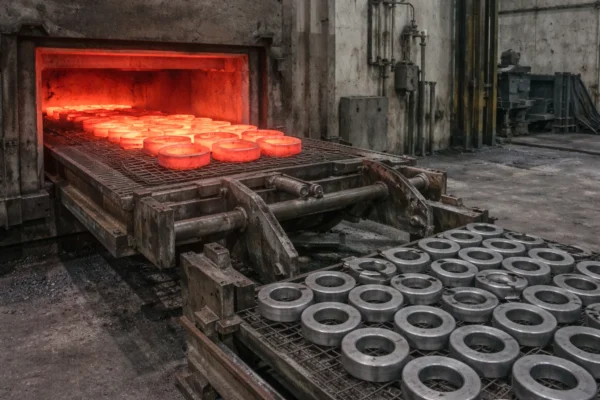

Forged blanks look cheaper on paper. However, many buyers still lose money after machining. So scrap rises, and schedules slip.
I see the same root causes again and again. Datums drift, stock runs out, and heat treat moves the part. So I wrote this guide to cut risk, protect delivery, and lower TCO.
Snippet-ready answer: Machining forged parts succeeds when you match forging tolerance to machining allowance, create stable manufacturing datums early, control heat-treat deformation with staged machining, and verify drift with in-process inspection. One-stop forging + machining service reduces disputes and protects schedules.
Core takeaways for buyers
- Match forging tolerance with machining allowance per surface.
- Build manufacturing datums first, then protect them.
- Plan heat-treat deformation before final cuts.
- Use fixtures that absorb variation, plus probing each setup.
- Choose one accountable owner for forging + machining.
Quick definitions buyers can reuse in RFQs
Buyers often lose time on unclear terms. So I define the key words in plain language. Then your RFQ becomes easier to quote.
- Manufacturing datum: A stable, machined reference surface or feature. So every setup measures from the same “truth.”
- Machining allowance: Extra stock left on a forging surface. So finishing always removes material, not air.
- Parting line: The split line from forging dies. So it often creates a raised ridge.
- Decarb: A softened surface layer from heating. So it can affect hardness and measurements.

How does machining forged parts differ from machining solid bar?
Bar stock starts straight and predictable. However, machining from forgings starts with variation. So I treat every blank like a measured input.
Snippet-ready answer: Machining forged parts differs because draft, scale, and parting lines change contact points, and die wear shifts blank geometry. So machining tolerance for forged components depends on real remaining stock and stable datums, not nominal drawings.

Forged scale can trick basic measurement. So a caliper often reads only a high spot. Also, a probe can slide on rough areas.
So I change the plan early. First, I create clean datum pads or a datum bore. Then I probe multiple points to map variation.
| Planning item | Bar stock machining | Machining forged parts |
|---|---|---|
| Starting geometry | Consistent | Variable, draft-driven |
| Surface condition | Smooth | Scale, decarb, parting line |
| Setup approach | Standard | Datum creation + probing |
| Main risk | Tool deflection | Blank variation + deformation |
| Best control | Simple fixture | Staged process + checks |
Also, I ask for forging information whenever you have it. So I want a forging drawing or blank model. Then I can price risk instead of guessing.
How do I match forging tolerance with machining allowance for forged components?
Many buyers tighten machining tolerance to feel safe. However, forging tolerance stays loose. So the shop runs out of stock on critical faces.
Snippet-ready answer: To match forging tolerance with machining allowance, define allowance per critical surface, include heat-treat movement, and reserve finishing stock for tight GD&T. So you protect yield and keep delivery predictable.

I start from your functional story. So I ask which features stop your line when they fail. Then I mark those features as stock priorities.
Also, I separate “must clean up” from “can remain as-forged.” So you avoid unnecessary machining cost. Then you focus inspection where it matters.
| Feature type | Typical allowance per side | Why buyers care |
|---|---|---|
| Large flange faces | 1.5–3.0 mm | Covers warp and scale |
| Alignment bores | 1.0–2.0 mm | Protects position control |
| Shaft journals | 0.8–1.5 mm | Supports runout after HT |
| Threads and taps | 0.5–1.0 mm | Prevents breakouts |
| Datum pads | 1.0–2.0 mm | Builds stable references |
Tight requirements need matching controls. So I map each tolerance risk to a shop-floor action. Then you can audit the plan quickly.
| Tight requirement | What I do on the floor | How it lowers TCO |
|---|---|---|
| Flatness on sealing face | Semi-finish before HT | Fewer leak failures |
| Runout on shaft | Centers + steady support | Less rework and scrap |
| Position on bolt circle | Datum bore first | Fewer assembly issues |
| Coaxiality of bores | Probe every setup | Less drift across lots |

If you want one buyer rule, I use this. I never plan a finish pass without guaranteed material removal. So I avoid “finish cuts on air.”
What fixturing and datum strategy works best for machining from forgings?
Most disputes start with datums. So forging says the blank meets spec. Then machining says the blank cannot hold position.
Snippet-ready answer: The best datum strategy for machining from forgings is to create manufacturing datums first, reuse them for every setup, and use fixtures that absorb blank variation. So you stabilize location and reduce rework.

I avoid draft faces as primary datums. So I do not locate on sloped forged walls. Instead, I machine a datum bore, pads, or a ring early.
Then I apply stable locating logic. So I control translation and rotation without forcing the blank. Also, I keep clamping forces reasonable to avoid distortion.
| Part type | Primary datum | Secondary datum | Tertiary datum |
|---|---|---|---|
| Forged flange machining | Datum bore | Faced ring | One hole |
| Forged shaft machining | Centers | Turned journal | Keyway flat |
| Forged yoke | Machined bore | Machined pad | Side face |
| Forged bracket | Two pads | One hole | Slot center |
Probing turns variation into data. So I probe before roughing and after roughing. Then I adjust offsets based on measured datum location.

How do I control deformation for heat-treated forgings?
Heat treat improves strength, but it moves geometry. So “perfect roughing” can still lead to failed finishing. Then lead time slips.
Snippet-ready answer: To reduce distortion in heat treated forgings, use staged machining, symmetric stock removal, and inspection checkpoints after heat treat. Also, keep finishing stock until the part stabilizes, then finish with light cuts.

First, I scan the model for stress traps. Thin rings, thick hubs, and deep bores raise distortion risk. So I flag those features during DFM.
Then I pick a control lever that fits your TCO. So I avoid over-processing low-risk parts. However, I protect critical parts with stronger controls.
| Control method | Best use case | What it improves | Buyer benefit |
|---|---|---|---|
| Stress relief mid-process | Tight runout or flatness | Lower spring-back | Fewer late rejects |
| Symmetric stock removal | Uneven sections | Balanced release | More stable lots |
| Straightening window | Long shafts | Restored axis | Less emergency rework |
| Extra stock reserve | Unknown warp | Safe finish cut | Predictable delivery |
| Early CMM checkpoint | Critical GD&T | Early drift capture | Faster containment |

I also time inspection for decision points. So I check after datum creation and after heat treat. Then I avoid discovering failures at final inspection.
Typical “forging + machining” process flow we provide
Buyers hate finger-pointing between suppliers. So one-stop forging + machining service reduces disputes. Then you get one owner for root cause and fix.
Snippet-ready answer: A reliable forging + machining flow includes DFM review, incoming blank inspection, datum creation, rough machining, heat treatment, semi-finish verification, finish machining, and final inspection with documented evidence. So buyers gain predictable delivery and lower TCO.

Here is the flow I run from blank to shipment. It works for customer-supplied blanks and sourced blanks. Also, it supports repeat orders with stable control.
- RFQ review and DFM notes.
- Blank sourcing, or customer blank intake.
- Incoming inspection and traceability record.
- Datum creation machining and probing record.
- Rough machining and stock verification checks.
- Heat treat or stress relief, if required.
- Semi-finish machining and deformation measurement.
- Finish machining, deburr, and surface treatment.
- Final inspection, reports, and packing validation.
- Export logistics and delivery follow-up.
| Step | Key output | Control point | Buyer evidence |
|---|---|---|---|
| DFM review | Allowance + datum plan | Drawing review | DFM summary |
| Incoming | Accepted blank lot | Size + defects | Incoming report |
| Datum build | Stable references | Probing | Setup record |
| Rough | Controlled stock | In-process checks | Check sheet |
| Heat treat | Target properties | Spec match | HT certificate |
| Finish | Final geometry | GD&T focus | CMM report |
| Packing | Damage control | Packing spec | Packing photos |

This flow reduces your internal workload. So you manage one supplier and one schedule. Then you spend less time on escalation calls.
Case snapshot: Off-highway transmission components
General stories feel weak to experienced buyers. So I make this case specific. I still protect customer privacy.
Snippet-ready answer: In an off-highway vehicle transmission program, leak failures and late deliveries came from post-heat-treat flatness drift and weak datums. So we changed sequencing, added checkpoints, and improved yield and on-time delivery.

A buyer supplied forged flanges and shafts for a transmission line. However, their old setup located from irregular forged faces. So bolt patterns drifted and sealing faces lost flatness after heat treat.
The buyer also faced leak test failures. So they quarantined assemblies and paid overtime. Then expediting costs rose and credibility dropped.
So I proposed three changes:
- Create the datum bore first, then lock all setups to it.
- Semi-finish the sealing face before heat treat.
- Add a post-HT deformation check before finish cuts.
Here is what we measured over early lots. Results vary, but the pattern repeats.
| Metric | Before change | After change |
|---|---|---|
| Rework rate | ~15% | < 2% |
| Leak test failures | Frequent | Rare |
| Average delivery slip | ~3 days | < 1 day |
| Expedite events | Frequent | Occasional |
| Buyer escalation time | High | Low |
The buyer also wanted launch evidence. So we supported PPAP-style items for the first lot. Then their internal approval moved faster.
How do these controls reduce total cost of ownership?
Unit price matters, but TCO decides profit. So I translate technical controls into cost outcomes. Then procurement can defend decisions internally.
Snippet-ready answer: Stable datums increase first-pass yield, staged machining reduces rework after heat treat, and one-stop ownership reduces supplier management time and expediting. So TCO drops even when unit price looks similar.
| TCO bucket | Typical buyer pain | What I do differently |
|---|---|---|
| Scrap and rework | Low stock, drift | Allowance + probing + datums |
| Expedite freight | Missed dates | Stable process and planning |
| Line downtime | Late or failed parts | Early checkpoints and containment |
| Supplier management | Two vendors, two stories | One-stop ownership |
| Quality admin | Slow approvals | ISO records + PPAP options |
| Warranty exposure | Hidden drift | Trend checks and controls |
Also, DFM time saves money later. So I treat DFM as a cost tool, not a meeting. A short review can prevent weeks of delay.
Materials and process choices that change risk
Material affects machining load and distortion. So I prefer to discuss it early. Then I avoid surprise tool wear and surprise movement.
| Material | Common buyer goal | Machining note | Distortion note |
|---|---|---|---|
| 4140 / 42CrMo4 | Strength + toughness | Stable chips | Moderate HT movement |
| 4340 | Higher toughness | Higher tool load | Higher stress risk |
| 316 stainless | Corrosion resistance | Work hardening risk | Heat control needed |
| 17-4PH | Strength + corrosion | Predictable cutting | Aging shifts size |
| 1045 / C45 | Cost control | Easy machining | Lower warp risk |
If you want fast quoting, tell me the heat treat condition. So I want “as-forged,” “normalized,” or “Q&T.” Then I can plan deformation controls correctly.
PPAP and ISO evidence buyers can request
Buyers need proof, not slogans. So I align evidence to program risk. Then you avoid paperwork overload.
Snippet-ready answer: For machined forgings, buyers often request ISO-controlled traceability, CMM reports, material and heat-treat certificates, and PPAP-style launch packs. So approvals move faster and risks drop.
| Evidence item | When buyers request it | What risk it reduces |
|---|---|---|
| Ballooned drawing + dims | New launch | Misread requirements |
| CMM report | Tight GD&T | Hidden drift |
| Material certificate | Alloy-critical | Wrong material |
| Heat-treat certificate | Strength-critical | Property mismatch |
| Process flow + control plan | Multi-step programs | Missed checkpoints |
| First article report | First lot release | Late containment |
If your customer requires PPAP, tell me during RFQ. So I plan pilot timing and measurement capacity. Then your release schedule stays stable.
Lead magnet for buyers: RFQ checklist PDF
Many buyers want a safe first step. So I offer a practical download. Then you avoid missing key inputs.
What you get inside:
- A forging tolerance vs machining allowance checklist.
- A datum and fixturing questions list for audits.
- A heat-treat deformation risk checklist.
- A PPAP and report request menu by program stage.
- A packing checklist that protects datum faces.
If you want it, just ask for the checklist. Then I will send it with a short explanation.
RFQ guidance for machining forged parts
A strong RFQ reduces padding in price and schedule. So you get a quote you can trust. Also, you reduce back-and-forth.
Snippet-ready answer: For machining forged parts RFQs, send the machining drawing, forging or blank info, material and heat-treat specs, and a list of critical tolerances. So the supplier can confirm allowance, fixturing, inspection plan, and lead time.
| What to send | Why it matters | What I do with it |
|---|---|---|
| Machining drawing with GD&T | Defines acceptance | Build datum and check plan |
| Forging drawing or blank model | Defines starting risk | Set allowance and fixture |
| Material grade | Drives tooling and HT | Lock process window |
| Heat treat spec | Drives distortion risk | Plan staging and checks |
| Critical features list | Focuses control | Prioritize inspection |
| Volume and cadence | Drives capacity | Lock delivery plan |
| Report requirements | Drives QA work | Plan PPAP or CMM |
| Packing needs | Protects datums | Design protective packing |
If you want a low-barrier start, send one drawing only. So send your top three tolerances as well. Then I will return a free DFM sanity-check outline.
FAQs buyers search before selecting a supplier
What is the biggest risk in machining forged parts?
Unstable datums drive most failures. Also, low remaining stock triggers late scrap. So I lock datums early and verify stock.
How do I choose machining allowance for forged components?
I set allowance per critical surface, not per part. Also, I include heat-treat movement in the plan. So finishing always removes material.
How do I reduce distortion in heat treated forgings?
I use staged machining and symmetric stock removal. Also, I inspect right after heat treat. Then I finish with light cuts from stable datums.
What is the best fixture design for forged flanges?
I prefer a datum bore plus a faced ring reference. Also, I use soft jaws or mandrels that absorb variation. Then I probe each setup.
Can you do machining from customer-supplied forgings?
Yes, I can machine from your forgings. However, I still run incoming inspection and traceability. So we prevent disputes and protect yield.
Do you support PPAP for machined forgings?
Yes, we support PPAP-style elements on request. Also, we scale the pack to risk and volume. So approvals stay efficient.
How do you protect delivery for repeat orders?
I lock the process window early and track trend data. Also, our 10 production lines support capacity planning. So schedules stay predictable.
What should I send first if I cannot share full drawings?
Send a simplified PDF with key sizes and tolerances. Also, share material and heat treat needs. Then I can give a safe direction fast.
Conclusion
If you want lower risk, stable delivery, and lower TCO, I can help. I will treat forging and machining as one system. Then I will propose allowance, datums, checkpoints, and reports.
➡️ Upload RFQ / Contact Prime
Option 1: Upload a full RFQ for a fast quote and lead time plan.
Option 2: Send one drawing for a free DFM sanity check outline.
Option 3: Request a 15-minute technical call with our engineers.
Next step: start from the right process, not the lowest unit price
If your project needs stronger grain flow and better material utilization, start here: Metal Forgings. If your priority is tight tolerances, repeatability, and clean GD&T control, start here: CNC Parts. Many successful programs use both—a controlled forging blank plus stable machining datums—so you get strength and predictable delivery with lower total cost.