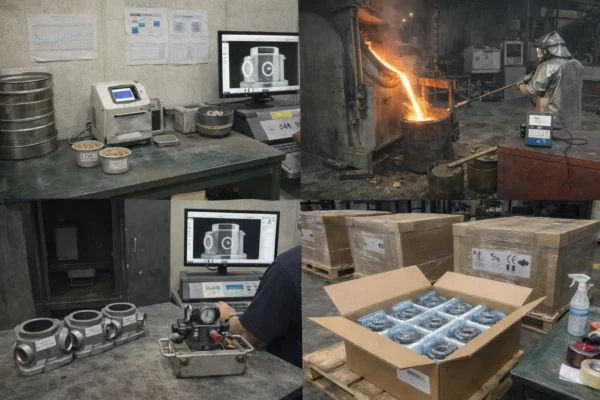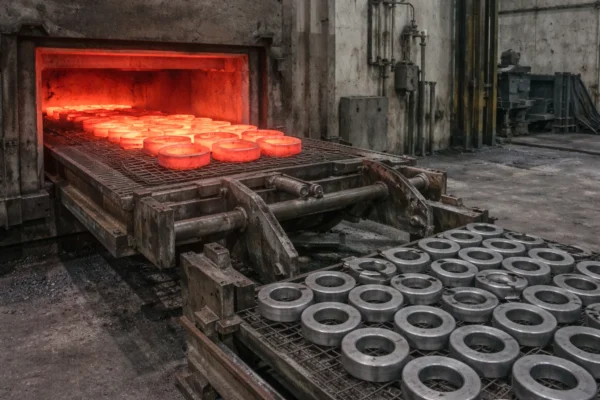
Standard screws don’t always fit your project’s unique needs. This mismatch can lead to product failure1 and damage your brand. Custom screws2 provide a precise solution for modern demands.
High-end custom screws are rising in popularity because they offer superior precision, advanced materials, and unique branding options like logo engraving. They enhance product performance, reliability, and brand identity in ways that standard, off-the-shelf screws cannot match in today’s competitive industrial markets.

You might be asking how the market shifted so much. For a long time, a standard screw was good enough for almost any job. But as technology improves and products become more complex, the demand for specialized components has grown. This isn’t just my observation; market analysis, like this report on the industrial fasteners market by Grand View Research, consistently points to a growing global demand, with significant expansion in specialized sectors. This change is a global trend. To make the best purchasing decisions for your company, it helps to understand this bigger picture. Let’s explore the global trends that are pushing custom screws into the spotlight.
Global Screw Industry Trends Review: North America, Europe, the Middle East, Australia market demand analysis?
Sourcing parts from around the world can be confusing. Every market has its own rules and needs, which can create big headaches. Understanding these regional differences helps you plan better.
North America and Europe need high-precision, certified screws for aerospace and automotive industries. The Middle East requires corrosion-resistant fasteners for construction. Australia demands robust screws for its mining and marine sectors. Knowing these specific needs is vital for smart global sourcing.

A Look at Regional Demands
Over my 30 years in this business, I’ve seen how different the world can be when it comes to a simple screw. A buyer in Germany has very different concerns than a buyer in Dubai. Our automotive clients in Europe and North America require full PPAP (Production Part Approval Process) packages, a quality framework detailed by the Automotive Industry Action Group (AIAG), to ensure traceability and part-to-part consistency. In the Middle East, the extreme heat and coastal construction projects mean everything is about fighting galvanic corrosion, a costly process that occurs when dissimilar metals are in contact. There, we see high demand for stainless steel and special coatings. In Australia, the powerful mining and marine industries require fasteners that meet stringent standards for strength and durability.
My Experience with Global Buyers
I remember working with Kevin, a business owner from the United States. He sources electronic parts for Siemens and needs absolute reliability. His main pain point was inconsistent quality and poor documentation from previous suppliers. When we showed him our quality control process and provided a complete capability study with our samples, it built immediate trust. We’ve been his partner for over a decade.
| Region | Key Industries | Primary Demand | Material/Coating Preference |
|---|---|---|---|
| North America | Automotive, Aerospace, Electronics | High Precision, PPAP, Traceability | High-tensile alloys, Zinc-nickel plating |
| Europe | Automotive, Manufacturing, Medical | Strict Quality Standards, Certification | Stainless steel, Geomet coating |
| Middle East | Construction, Oil & Gas | Corrosion Resistance, Heat Tolerance | 316 Stainless Steel, Hot-dip galvanizing |
| Australia | Mining, Marine, Construction | Strength, Resistance to Harsh Elements | High-grade steel, Heavy-duty coatings |
Custom screws (including logo engraving, special materials, surface treatment) in the B2B procurement why stand out?
Your product can easily look like everyone else’s. In a crowded marketplace, it’s difficult to make your brand stand out. Custom screws can add unique value and branding to your product.
Custom screws are essential in B2B procurement because they solve specific engineering problems standard parts cannot. Features like logo engraving boost brand identity, special materials increase durability, and custom surface treatments improve performance, giving your product a clear competitive edge and higher perceived value.
More Than Just a Fastener
A screw is no longer just a screw. It has become a key component of product design and branding. Just last year, an engineer from a medical device company came to us. They needed a tiny, non-magnetic, and biocompatible screw for a surgical instrument. We engineered a solution using 316LVM stainless steel, compliant with ASTM F138, which solved their specific problem and helped them pass strict regulatory hurdles.
The Practical Benefits of Customization
Let’s break down why customization is so powerful.
- Logo Engraving: This simple feature communicates quality and protects your aftermarket revenue.
- Special Materials: The material is the heart of the screw. For an aerospace client, we produced fasteners from Grade 5 Titanium (Ti-6Al-4V), a material whose properties are detailed by sources like AZoM, because its incredible strength-to-weight ratio is critical for fuel efficiency.
- Surface Treatments: This is where we apply science for durability. Coatings like Geomet, a non-electrolytic zinc-flake technology, prevent the hydrogen embrittlement that can plague high-strength fasteners.

| Surface Treatment | Primary Benefit | Common Application |
|---|---|---|
| Zinc Plating | Basic corrosion resistance, cost-effective | Indoor electronics, general hardware |
| Black Oxide | Aesthetic appeal, mild corrosion resistance | Automotive interiors, firearms |
| Hot-Dip Galvanizing | Excellent corrosion resistance, thick coating | Outdoor construction, structural steel |
| Geomet/Dacromet | High-performance corrosion resistance, no hydrogen embrittlement | High-tensile automotive parts, wind turbines |
Comparison of standard batch screws and custom screws: cost, lead time and quality analysis?
You need screws for your project, and you want them cheap and fast. But choosing the wrong screw can lead to failures and replacements, which costs more in the long run. Let’s compare to see what’s best.
Standard screws have a lower initial cost and are available immediately, making them suitable for general-purpose use. Custom screws have a higher upfront cost and longer lead time but offer superior quality, perfect fit, and long-term reliability for critical applications, making them a worthwhile investment.
The True Cost of a Screw
Smart buyers don’t just look at the price per unit; they consider the Total Cost of Ownership (TCO), a financial estimate explained by resources like Investopedia. The TCO of a standard screw includes the risk of product failure, brand damage from a recall, and potential liability claims. When you factor in these risks, a custom-engineered screw—designed and manufactured to exact specifications—is often the more economical choice over the product’s lifecycle.
Making the Right Investment
Think of custom screws1 as an investment in quality and peace of mind. Our 10 production lines2 give us the flexibility to handle custom orders efficiently. The table below provides a simple comparison to help you decide what is right for your project.
| Factor | Standard Screws | Custom Screws |
|---|---|---|
| Cost | Low initial price per unit. | Higher initial price, lower Total Cost of Ownership. |
| Lead Time | Immediately available from stock. | Longer lead time, from weeks to months. |
| Quality & Precision | General tolerances, meets basic standards. | High precision, manufactured to exact specifications. |
| Performance | Adequate for general applications. | Optimized for specific loads, materials, and environments. |
| Best Application | Non-critical assemblies, prototyping. | Critical applications, unique designs, high-performance products. |
How to choose the right screw supplier? Selection guidelines from certification (e. g. ISO) to line size to delivery capability?
Finding a good supplier you can trust is a major challenge. The wrong partner can cause huge problems with delays, poor quality, and frustrating communication. Here is a simple guide to help you choose wisely.
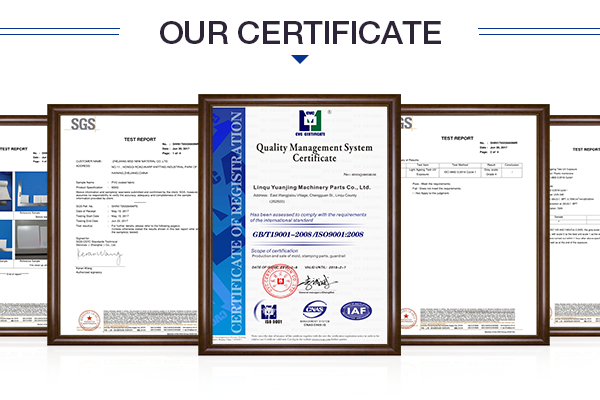
Select a supplier with key certifications like the internationally recognized ISO 9001 for guaranteed quality. Evaluate their production capacity and technical expertise by consulting resources like the Industrial Fasteners Institute (IFI) for industry best practices.

The Supplier Vetting Checklist
After three decades of manufacturing, I’ve seen countless buyers get burned by focusing only on price. This checklist is what I use when evaluating any new partner, and it’s what I recommend to any serious buyer.
| Step | Action Item | Why It Matters |
|---|---|---|
| 1. Verify Certification | Ask for a copy of their ISO 9001 certificate. | This is independent proof of a working Quality Management System. |
| 2. Assess Technical Skill | Discuss your technical drawing with their engineers. Can they provide a full PPAP package? | A true partner adds value by understanding your technical needs and documentation requirements. |
| 3. Request Samples | Always ask for production samples before placing a large order. | This allows you to test the fit, finish, and material in your actual product. |
| 4. Inquire About Capacity | Ask about their production line size and current workload. | This ensures they can meet your volume needs and deliver on time. |
| 5. Clarify Communication | Establish a single point of contact and ask about their process. | Clear, prompt communication prevents misunderstandings and makes it easy to track your order. |
Look Beyond the Price Tag
At Prime, we’re not just a screw factory. We are a one-stop-shop for many types of industrial hardware, including metal stamping and casting parts. This simplifies the supply chain for our customers and ensures consistent quality.
Conclusion
The screw market is clearly shifting toward custom solutions. Understanding global trends, the benefits of customization, and how to choose a reliable supplier will give your business a strong competitive advantage.
Ready to Discuss Your Project?
Our team is ready to review your technical drawings and provide a competitive quote. Partner with a manufacturer who understands your quality and delivery needs.
Upload Your RFQ / Contact Prime Today
FAQs
What is the minimum order quantity (MOQ) for custom screws?
Generally, the MOQ depends on the complexity and material. For simpler designs, it might be 10,000 pieces. For highly specialized screws, it might be higher. The best way is to send your drawing for a specific quote.
How does the custom screw design process work?
It’s a simple, collaborative process: you send us your drawing, our engineers review it, we provide a quote and timeline, we produce samples for your approval, and then we begin full production.
What materials are best for anti-corrosion screws?
For excellent corrosion resistance, 304 and 316-grade stainless steel are top choices, with 316 offering superior protection against chlorides (like salt). For carbon steel, coatings like hot-dip galvanizing or Geomet offer very strong protection.
Can you replicate an existing screw from a sample?
Yes. If you don’t have a technical drawing, send us a sample. Our engineering team can use spectrometry to identify the material and digital metrology to create a precise drawing for manufacturing duplicates.
How long does it take to get a quote for custom screws?
We pride ourselves on fast service. For most inquiries with a clear technical drawing, we can provide a detailed quote within 24-48 hours.